
Chandrasekhara Venkata Raman
Indian physicist
About Chandrasekhara Venkata Raman
Lived 1888 – 1970 (aged 82). Chandrasekhara Venkata Raman was an Indian physicist, university teacher and crystallographer, known for Raman effect.
Early life and education Chandrasekhara Venkata Raman was born on 7 November 1888 in Tiruchirappalli, India. His parents were R. Chandrasekhar Iyer and Parvathi Ammal. He was the second of eight of their children. His father was a teacher at a local high school, and earned a modest income. He recalled: "I was born with a copper spoon in my mouth. At my birth my father was earning the magnificent salary of ten rupees per month!" In 1892, his family moved to Visakhapatnam (then Vizagapatam or Vizag) in Andhra Pradesh as his father was appointed to the faculty of physics at Mrs A. V. Narasimha Rao College.
Raman was educated at the St Aloysius' Anglo-Indian High School, Visakhapatnam. He passed matriculation at age 11 and the First Examination in Arts examination (equivalent to today's intermediate examination, pre-university course) with a scholarship at age 13, securing first position in both under the Andhra Pradesh school board (now Andhra Pradesh Board of Secondary Education) examination. In 1904, he obtained a B. A. from the University of Madras, where he stood first and won the gold medals in physics and English. He earned an M. A. from the same university with highest distinction in 1907. His second paper published in the same journal that year was on surface tension of liquids. It was alongside Lord Rayleigh's paper on the sensitivity of ear to sound, and from which Lord Rayleigh started to communicate with Raman, courteously addressing him as Professor.
Aware of Raman's capacity, his physics teacher Rhishard Llewellyn Jones insisted he continue research in England. Jones arranged for Raman's physical inspection with Colonel (Sir Gerald) Giffard. Raman often had poor health and was considered as a "weakling". The inspection revealed that he would not withstand the harsh weathers of England,
Career
Raman's elder brother C. Subrahmanya Ayyar had joined the prestigious Indian government service, Indian Finance Service (now Indian Audit and Accounts Service). Raman followed suit and qualified for the Indian Finance Service achieving first position in the entrance examination in February 1907. He was posted in Calcutta (now Kolkata) as Assistant Accountant General in June 1907. or produced any research paper. The work inspired IACS to publish a journal, Bulletin of Indian Association for the Cultivation of Science, in 1909 in which Raman was the major contributor. Soon after he resumed office at Rangoon, he was transferred back to India at Nagpur, Maharashtra, in 1910. Even before he served a year in Nagpur, he was promoted to Accountant General in 1911 and again posted to Calcutta. From the next year, other universities followed suit including University of Allahabad, Rangoon University, Queen's College (Indore), Institute of Science, Nagpur, Krishnath College, and University of Madras. By 1919, Raman had guided more than a dozen students. Following Sircar's death in 1919, Raman received two honorary positions at IACS — Honorary Professor and Honorary Secretary.
Raman was chosen by the University of Calcutta to become the Palit Professor of Physics, a position established after the benefactor Sir Taraknath Palit, in 1913. The university senate made the appointment on 30 January 1914, as recorded in the meeting minutes:In a friendly meeting with Mahatma Gandhi and Gilbert Rahm, a German zoologist, the conversation turned to religion. Raman spoke,
Controversies
The Nobel Prize
Independent discovery
In 1928, Grigory Landsberg and Leonid Mandelstam at the Moscow State University independently discovered the Raman effect. They published their findings in July issue of Naturwissenschaften, and presented their findings at the Sixth Congress of the Russian Association of Physicists held at Saratov between 5 and 16 August. In 1930, they were nominated for the Nobel Prize alongside Raman. According to the Nobel Committee, however: (1) the Russians did not come to an independent interpretation of their discovery as they cited Raman's article; (2) they observed the effect only in crystals, whereas Raman and Krishnan observed it in solids, liquids and gases, and therefore proved the universal nature of the effect; (3) the problems concerning the intensity of Raman and infrared lines in the spectra had been explained during the previous year; (4) the Raman method had been applied with great success in different fields of molecular physics; and (5) the Raman effect had effectively helped to check the symmetry properties of molecules, and thus the problems concerning nuclear spin in atomic physics. Evidence later appeared that the Russians had discovered the phenomenon earlier, a week before Raman and Krishnan's discovery. According to Mandelstam's letter (to Orest Khvolson), the Russian had observed the spectral line on 21 February 1928.
Role of Krishnan
Krishnan was not nominated for the Nobel Prize even though he was the main researcher in discovering the Raman effect. Krishnan himself never claimed himself worthy of the prize. But Raman admitted later that Krishnan was the co-discoverer.
The Raman–Born controversy
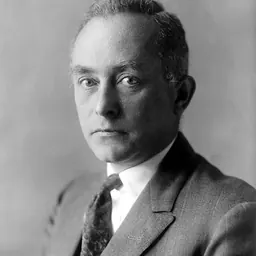
From October 1933 to March 1934, Max Born was employed by IISc as Reader in Theoretical Physics following the invitation by Raman early in 1933. Born at the time was a refugee from Nazi Germany and temporarily employed at St John's College, Cambridge. Since the beginning of the 20th century Born had developed a theory on lattice dynamics based on thermal properties. He presented his theory in one of his lectures at IISc. By then Raman had developed a different theory and claimed that Born's theory contradicted the experimental data.
In this dispute, Born received support from most physicists, as his view was proven to be a better explanation. Beyond the intellectual debate, their rivalry extended to personal and social levels. Born later said that Raman probably thought of him as an "enemy". Born was nominated several times for the Nobel Prize specifically for his contributions to lattice theory, and eventually won it for his statistical works on quantum mechanics in 1954. The account was written as a "belated Nobel Prize".
Indian authorities
Raman had an aversion to the then Prime Minister of India Jawaharlal Nehru and Nehru's policies on science. In one instance he smashed the bust of Nehru on the floor. In another, he shattered his Bharat Ratna medallion to pieces with a hammer, as it was given to him by the Nehru government. He publicly ridiculed Nehru when the latter visited the Raman Research Institute in 1948. There they displayed a piece of gold and copper against an ultraviolet light. Nehru was tricked into believing that copper which glowed more brilliantly than any other metal was gold. Raman was quick to remark, "Mr Prime Minister, everything that glitters is not gold".
On the same occasion, Nehru offered Raman financial assistance to his institute which Raman flatly refused by replying, "I certainly don't want this to become another government laboratory". He remained hostile to people associated with these establishments including Homi J. Bhabha, S. S. Bhatnagar, and his once favourite student, Krishnan. He even called such programmes as the "Nehru–Bhatnagar effect". In 1959, Raman proposed to establish another research institute in Madras. The Government of Madras advised him to apply for funds from the central government. But Raman clearly foresaw as he replied to C. Subramaniam, then the Minister for Finance Education in Madras, that his proposal to Nehru's government "would be met with a refusal". So ended the plan. In 1933, the Indian Science Congress Association (ISCA), at the time the largest scientific organisation, planned to establish a national science body, which would be authorised to advise the government on scientific matters. Sir Richard Gregory, then editor of Nature, on his visit to India had suggested Raman, as editor of Current Science, to establish an Indian Academy of Sciences. Raman thought that it should be an exclusively Indian membership as opposed to the general consensus that British members should be included. He resolved "How can India Science prosper under the tutelage of an academy which has its own council of 30, 15 of who are Britishers of whom only two or three are fit enough to be its Fellows". On 1 April 1933, he convened a separate meeting of the South Indian scientists. He and Subba Rao officially resigned from ISCA.
Raman registered the new organisation as the Indian Academy of Sciences on 24 April to the Registrar of Societies. He wanted research in physics at the level of those of western institutes, but at the expense of other fields of science.
The Council of IISc constituted a review committee to oversee Raman's conduct in January 1936. The committee, chaired by James Irvine, Principal and Vice-Chancellor of the University of St Andrews, reported in March that Raman had misused the funds and entirely shifted the "centre of gravity" towards research in physics, and also that the proposal of Born as Professor of Mathematical Physics (which was already approved by the Council in November 1935) was not financially feasible.
The Royal Society
Raman never seemed to have thought highly of the Fellowship of the Royal Society. One reason could be Raman's objection to the designation "British subjects" as one of the categories of the Fellows. Particularly after the Independence of India, the Royal Society had its own disputes on this matter.
According to Subrahmanyan Chandrasekhar, The London Times had once made a list of the Fellows, in which Raman was omitted. Raman wrote to and demanded an explanation from Patrick Blackett, the then President of the society. He was dejected by Blackett's response that the society had no role in the newspaper. According to Krishnan, another cause was a disapproving review Raman received on a manuscript he had submitted to the Proceedings of the Royal Society. It could have been these cumulative factors as Raman wrote in his resignation letter, and said, "I have taken this decision after careful consideration of all the circumstances of the case. I would request that my resignation be accepted and my name removed from the list of the Fellows of the Society".
Sohonie became the first woman to be admitted into the institute. She would later say, "Though Raman was a great scientist, he was very narrow-minded. I can never forget the way he treated me just because I was a woman. Even then, Raman didn't admit me as a regular student. This was a great insult to me. The bias against women was so bad at that time. What can one expect if even a Nobel Laureate behaves in such a way?" Also after a year, many women got their admission to the institution.
Honours and awards
Raman was honoured with many honorary doctorates and memberships of scientific societies. Within India, apart from being the founder and President of the Indian Academy of Sciences (FASc), he was a Fellow of the Asiatic Society of Bengal (FASB), and from 1943, a Foundation Fellow of the Indian Association for the Cultivation of Science (FIAS). In 1935, he was appointed a Foundation Fellow of the National Institute of Sciences of India (FNI, now the Indian National Science Academy. The Academy, however, continues to list him as a "deceased fellow." |group=n He was a member of the Deutsche Akademie of Munich, the Swiss Physical Society of Zürich, the Royal Philosophical Society of Glasgow, the Royal Irish Academy, the Hungarian Academy of Sciences, the Academy of Sciences of the USSR, the Optical Society of America (Honorary Member), the Mineralogical Society of America, the Romanian Academy of Sciences, the Catgut Acoustical Society of America and the Czechoslovak Academy of Sciences.
In 1924, he was elected a Fellow of the Royal Society.
He was the President of the 16th session of the Indian Science Congress in 1929. He was the founder and President of the Indian Academy of Sciences from 1933 until his death. In 1913, he received the Woodburn Research Medal, while still working in the Indian Finance Service. In 1930, he won the Nobel Prize in Physics "for his work on the scattering of light and for the discovery of the effect named after him". In 1957, he was awarded the Lenin Peace Prize. Postal stamps featuring Raman were issued in 1971 and 2009. A road in India's capital, New Delhi, is named C. V. Raman Marg. An area in eastern Bangalore is called CV Raman Nagar. The road running north of the national seminar complex in Bangalore is named C. V. Raman Road. A road in Mylapore, Chennai is named CV Raman Road. A building at the Indian Institute of Science in Bangalore is named the Raman Building. A hospital in eastern Bangalore on 80 Ft. Rd. is named the Sir C. V. Raman Hospital. There is also CV Raman Nagar in Trichy, his birthplace. Raman, a lunar crater is named after C. V. Raman. C. V. Raman Global University was established in 1997. In 1998, the American Chemical Society and Indian Association for the Cultivation of Science recognised Raman's discovery as an International Historic Chemical Landmark at the Indian Association for the Cultivation of Science in Jadavpur, Calcutta, India. The inscription on the commemoration plaque reads:At this institute, Sir C. V. Raman discovered in 1928 that when a beam of coloured light entered a liquid, a fraction of the light scattered by that liquid was of a different color. Raman showed that the nature of this scattered light was dependent on the type of sample present. Other scientists quickly understood the significance of this phenomenon as an analytical and research tool and called it the Raman Effect. This method became even more valuable with the advent of modern computers and lasers. Its current uses range from the non-destructive identification of minerals to the early detection of life-threatening diseases. For his discovery, Raman was awarded the Nobel Prize in Physics in 1930. Raman Science Centre in Nagpur is named after Sir C. V. Raman. Dr. C. V. Raman University, Bihar was established in 2018. Dr. C. V. Raman University, Khandwa was established in 2018.
In popular culture C. V. Raman: The Scientist and His Legacy, a biopic about Raman directed by Nandan Kudhyadi released in 1989. It won the National Film Award for Best Biographical Film. Beyond Rainbows: The Quest & Achievement of Dr. C. V. Raman, a documentary film on the physicist directed by Ananya Banerjee aired on Doordarshan, the Indian national public broadcaster, in 2004. Rocket Boys, an Indian Hindi-language biographical streaming television series on SonyLIV. The character of C. V. Raman was played by T. M. Karthik.
Don’t just read it —
keep it.
Full-length biographies made to live with: read them, listen on the way to work, watch them tonight.
- E-book
- Audio
- Video
Instant download · yours to keep · every purchase keeps this site free
Important facts
more
C V Raman, Sir CV Raman, Sir C.V. Raman, Sir C V Raman, Sir C. V. RamanFamily & relationships
People in Chandrasekhara Venkata Raman's life
Named in this biography and alive at the same time





Related people
Same field, nearest in time

Contemporaries
People whose lives overlapped Chandrasekhara Venkata Raman's




Frequently asked questions
Who was Chandrasekhara Venkata Raman?
Indian physicist (1888–1970)
When was Chandrasekhara Venkata Raman born?
Chandrasekhara Venkata Raman was born on 7 November 1888 in Tiruchirappalli.
When did Chandrasekhara Venkata Raman die?
Chandrasekhara Venkata Raman died on 21 November 1970 in Bengaluru.
What was Chandrasekhara Venkata Raman's occupation?
Chandrasekhara Venkata Raman was a physicist, university teacher and crystallographer.
What was Chandrasekhara Venkata Raman known for?
Chandrasekhara Venkata Raman was known for Raman effect.
What nationality was Chandrasekhara Venkata Raman?
Chandrasekhara Venkata Raman was Indian.
Sources & further reading
· Wikipedia: Chandrasekhara Venkata Raman
Cite this page
APA: Biography.guide. (2026). Chandrasekhara Venkata Raman. https://biography.guide/chandrasekhara-venkata-raman/
MLA: "Chandrasekhara Venkata Raman." Biography.guide, https://biography.guide/chandrasekhara-venkata-raman/.
Chicago: "Chandrasekhara Venkata Raman." Biography.guide. https://biography.guide/chandrasekhara-venkata-raman/.
Data last updated: 2026-09-20 · Spot an error? Report a correction.
Page generated 2026-09-27 05:21 UTC