
About Chai Trong-rong
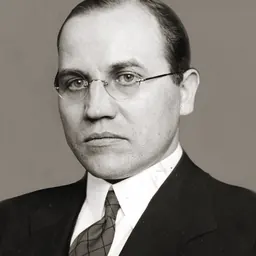
Lived 1935 – 2014 (aged 78). Chai Trong-rong was a Chinese and Taiwanese politician.
Chai Trong-rong (; June 13, 1935 – January 11, 2014), sometimes known in English as Trong Chai, was a Taiwanese politician.
Born in Japanese-era Taiwan, Chai earned his master's and doctorate degrees in the United States. He was a pro-democracy advocate and founded the Association for a Plebiscite and Formosa Television.
A member of the Democratic Progressive Party (DPP), Chai was elected a national legislator multiple times, serving in the Legislative Yuan from 1993 to 1996 and again from 1997 to 2012. He took part in three DPP chairmanship elections, but lost all three.
Early life and education Chai Trong-rong was born on June 13, 1935, in Hotei Village, Tōseki District, Tainan Prefecture, Japanese Taiwan (modern-day Budai, Chiayi County, Taiwan). At the time, Taiwan was still part of the Empire of Japan. After the Second World War, his father served as a Chiayi County council member for two terms.
After his graduation from the National Tainan First Senior High School, Chai studied political science at National Taiwan University (NTU). He later switched his major to law and graduated from the NTU College of Law in 1958. He was then conscripted and served in the Republic of China (Taiwan) Army for sixteen months. His doctoral dissertation, completed under professor Charles G. Mayo, was titled, "Professionals in Communist China: conflict and accommodation".
In 1986, Chai became a professor of political science at the City University of New York. He was issued a new passport and joined the Democratic Progressive Party (DPP) shortly after his arrival. He founded the Association for a Plebiscite in November. The goal of the association was to reform through the will of the people.
He supported the localization policies of the Chen Shui-bian administration. In 2005, he urged the Ministry of Education to get rid of contexts of "aboveboard Chinese" (; a Chinese nationalistic term imposed by the Chiang Kai-shek regime after World War II) from the back cover of elementary school workbooks. In response to the Anti-Secession Law of the People's Republic of China, Chai and legislator proposed draft for an "Anti-Annexation Law."
Chairmanship campaigns
Despite the fact that Chai was endorsed by renowned pharmacologist Chen-Yuan Lee, he lost the DPP chairmanship election in 1996.
Chai was one of the three candidates who registered. He was endorsed by vice president Annette Lu and foreign minister Mark Chen. The election was held in January 2006. Former Secretary-General of the Presidential Office Yu Shyi-kun won with over 54% of the votes while Chai received 36%.
In 2008, after the defeat of Frank Hsieh in the presidential election, DPP candidate Hsieh resigned as chairman and announced the date for the chairmanship election. Chai declared his candidacy on April 14.
Although the DPP passed a resolution to ban all factions within the party in 2006, discord between former members of different factions was still present, and was thought to be one of the factors that led to the DPP's loss in the presidential election. Chai, along with Koo Kwang-ming, emphasized the importance of consolidating the party's policy on independence, while Tsai Ing-wen focused on the cooperation of former factions and expansion of the party's support base.
Chai was supported by Tainan City mayor Hsu Tain-tsair, but decided to withdraw from the race in May and gave his support to another candidate, Koo Kwang-ming. However, it was too late to officially withdraw from the election, and Chai received 5% of the votes.
Personal life and death Chai married Tsai Li-jung in 1963. He had two Ivy League-educated daughters, Jessie and Justine, and, later, four grandchildren. Chai died on January 11, 2014, due to multiple organ failure.
Don’t just read it —
keep it.
Full-length biographies made to live with: read them, listen on the way to work, watch them tonight.
- E-book
- Audio
- Video
Instant download · yours to keep · every purchase keeps this site free
Important facts
People in Chai Trong-rong's life
Named in this biography and alive at the same time





Related people
Same field, nearest in time





Contemporaries
People whose lives overlapped Chai Trong-rong's




Frequently asked questions
Who was Chai Trong-rong?
Taiwanese politician (1935–2014)
When was Chai Trong-rong born?
Chai Trong-rong was born on 13 June 1935 in Hotei Village.
When did Chai Trong-rong die?
Chai Trong-rong died on 11 January 2014 in Taipei.
What was Chai Trong-rong's occupation?
Chai Trong-rong was a politician.
What nationality was Chai Trong-rong?
Chai Trong-rong was Chinese and Taiwanese.
Sources & further reading
Cite this page
APA: Biography.guide. (2026). Chai Trong-rong. https://biography.guide/chai-trong-rong/
MLA: "Chai Trong-rong." Biography.guide, https://biography.guide/chai-trong-rong/.
Chicago: "Chai Trong-rong." Biography.guide. https://biography.guide/chai-trong-rong/.
Data last updated: 2026-09-20 · Spot an error? Report a correction.
Page generated 2026-09-27 05:22 UTC