
About Cecily Bulstrode
Lived 1584 – 1609 (aged 24–25). Cecily Bulstrode was a writer.
Cecily Bulstrode (15844 August 1609) was a courtier and subject of poetry. She was the daughter of Edward Bulstrode (1550–1595) and Cecily Croke; she was a cousin of Lucy Russell, Countess of Bedford, in whose household she was a member in 1605. Two years later, she served as a Gentlewoman of the Bedchamber to Anne of Denmark.
Life Early life She was born to Edward Bulstrode (1550–1595) of Hedgerley in Buckinghamshire and Cecily or Cecill Croke (fl. 1575–1608), the daughter of Sir John Croke of Chilton, in Beaconsfield. Her parents Edward and Cecily produced nine other children, amongst them Edward (1588-1659), who served as a judge in the courts of chancery, king's bench, the Oxford assize circuits, and the Warwickshire quarter sessions throughout his lifetime. Cecily was the fourth of six daughters; the names of her nine siblings are recorded on her father's tomb at St Laurence's Church, Upton-cum-Chalvey.
Bulstrode was baptized at Beaconsfield on 12 February 1584,
Life at Court Bulstrode followed in the footsteps of her ancestors as a courtier. In 1605, she became part of the entourage of her mother's first cousin Lucy Russell, Countess of Bedford.
During her time at the court of Anne of Denmark, Bulstrode became the subject of works by poets such as Ben Jonson who threatened her reputation with rumours of promiscuity. Other writers, including John Donne, used the event of her death as an opportunity to gain favor with her friend and patron of the literary arts, the countess of Bedford. unable to hold down food or liquids.
According to Dr. Francis Anthony, who was called upon by Bulstrode's mother after treatment under the College of Medicine physicians was unsuccessful, she showed improvement in symptoms in her final days, "for in all the other administering of this medicine ... her spirits were relieved! She daily recovered strength. All passions, symptoms, and accidents of disease ceased. Her sickness fully left her, and she recovered perfect health!" Bulstrode's brother in-law, James Whitlocke noted her death, "Cecill Bulstrode, my wife’s sister, gentlewoman to Queen An, ordinary of her bedchamber, died at Twitnam in Middlesex, the earl of Bedford’s house, 4 August 1609", and she was buried at St Mary's, Twickenham two days later.
Although Sir Thomas Roe missed his chance to marry Bulstrode, his love for her remained, and he carried a miniature watercolour portrait of her around with him for the rest of his life, even after he married. The word "pucell" was an early modern term for prostitute, and "Cell" or "Sell" as short form for "Cecily", so Jonson seems to be calling Bulstrode a prostitute in this poem. His accusation of bisexuality stems from her close relationship with Lucy Russell, Countess of Bedford. Jonson wrote the Epitaph on Cecilia Bulstrode in response to her death. It seems to retract the charges Jonson made in the epigram point by point. The reason behind Jonson's supposed change of heart is unknown. The likely reason is that he wanted to gain the favor of Lucy Russell, which he had been attempting to do for years. Jonson may have experienced true regret for his slanderous words after hearing of her painful death.
John Donne John Donne was under the matronage of Lucy Russell, Countess of Bedford, during the time that Bulstrode fell ill and died. He visited her when she was sick at Twickenham Park and concluded that she was suffering from hysteria. The latter poem says that Death is no longer needed because Bulstrode was the epitome of virtue, and now that she is dead, it is as if the entire world is dead. Donne may have written these elegies in the hope of getting a reward from his literary matron Lucy Russell.
Donne's first Elegy for Bulstrode, opens with the image that Death's table is set with animals, vegetables, and the Human race, all alike;Death I recant, and say, unsaid by meWhate'er hath slipped, that might diminish thee.Spiritual treason, atheism 'tis, to say,That any can thy summons disobey.Th'earth's race is but thy table; there are setPlants, cattle, men, dishes for Death to eat.In a rude hunger now he millions drawsInto his bloody, or plaguey, or starved jaws.Now he will seem to spare, and doth more waste,Eating the best first, well preserved to last.
Donne's second Elegy addresses Sorrow personified, Bulstrode in life was a gem, clear and pure like a blue sapphire;Sorrow, to whom we owe all that we be,Tyrant, in the fifth and greatest monarchy,Was't, that she did possess all hearts before,Thou hast killed her, to make thy empire more?Knew'st thou some would, that knew her not, lament,As in a deluge perish th'innocent?Was't not enough to have that palace won,But thou must raze it too, that was undone?Hadst thou stayed there, and looked out at her eyes,All had adored thee that now from thee flies,For they let out more light, than they took in,They told not when, but did the day begin;She was too sapphirine, and clear for thee;Clay, flint, and jet now thy fit dwellings be;Alas, she was too pure, but not too weak;Whoe'er saw crystal ordinance but would break?
Lucy Russell The countess of Bedford wrote Elegy on Mistress Boulstred in response to Donne's first elegy characterizing Death as a gluttonous monster. In the poem, she refers to Donne's Holy Sonnet 10, which starts with the famous line, "Death be not proud". Russell argues that Donne's interpretation of Death was more accurate in the Holy Sonnet than in his elegy. Death is something that should not be proud, and that Donne's elegy gave Death too much credit. As a Christian, Bulstrode went to Heaven when she died, and Donne did not give her enough credit when he characterized her as a helpless victim of Death in his elegy. Perhaps responding to this criticism, Donne's second elegy focusses on Bulstrode's virtues instead of on Death.
Sir Edward Herbert Sir Edward Herbert was a friend of Jonson's as well as Sir Thomas and Sir John Roe. In July 1609 he commemorated Bulstrode's death with theEpitaph. Caecil. Boulser. Though the full Latin title of the poem implies that Bulstrode died with an "unquiet spirit and conscience", the poem itself characterizes her as a highly religious virgin who resisted all sin up until her "noble soul" entered Heaven. Like others, Herbert in his commemoration was most likely trying to win Russell's support. and in 1611 became involved with Bulstrode's sister Dorothy Bulstrode, driving her husband Sir John Eyre to assault him.
Works News of My Morning Work is the only known work credited to Bulstrode, though scholar John Considine says "more ... by her may lie undiscovered". In this "witty piece", Bulstrode utilizes the satirical news form then common that "flourished" in Russell's circle from 1605 to 1610. As per the genre, News of My Morning Work consists of a list of moral and satirical aphorisms. Several of them are humorous criticisms of court and of people who claim to be religious: For Victoria E. White, “how this [line] is” immediately “relevant to Jonson is not apparent." The publication itself only identifies the author of News of my Morning Work as a "Mris B."
According to Price, Bulstrode wrote the piece in the style conforming to what Halli calls "a precise formula, which includes a declarative beginning, a series of noun clauses, conceited similes and metaphors, and an effective concluding praise."
Don’t just read it —
keep it.
Full-length biographies made to live with: read them, listen on the way to work, watch them tonight.
- E-book
- Audio
- Video
Instant download · yours to keep · every purchase keeps this site free
Important facts
People in Cecily Bulstrode's life
Named in this biography and alive at the same time




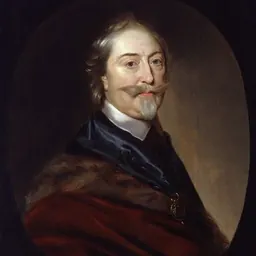

Related people
Same field, nearest in time
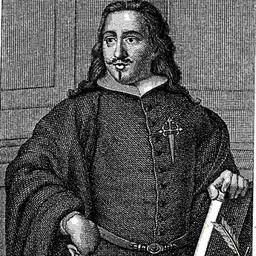
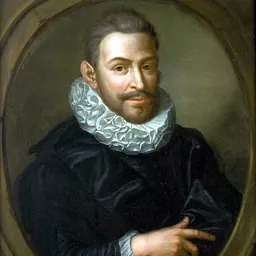
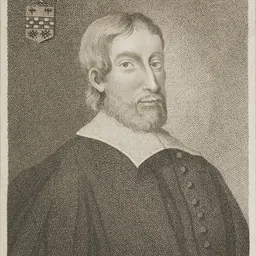
Contemporaries
People whose lives overlapped Cecily Bulstrode's



Frequently asked questions
Who was Cecily Bulstrode?
English courtier
When was Cecily Bulstrode born?
Cecily Bulstrode was born in 1584.
When did Cecily Bulstrode die?
Cecily Bulstrode died on 4 August 1609.
What was Cecily Bulstrode's occupation?
Cecily Bulstrode was a writer.
Sources & further reading
Cite this page
APA: Biography.guide. (2026). Cecily Bulstrode. https://biography.guide/cecily-bulstrode/
MLA: "Cecily Bulstrode." Biography.guide, https://biography.guide/cecily-bulstrode/.
Chicago: "Cecily Bulstrode." Biography.guide. https://biography.guide/cecily-bulstrode/.
Data last updated: 2026-09-20 · Spot an error? Report a correction.
Page generated 2026-09-27 05:23 UTC