
About John Croke
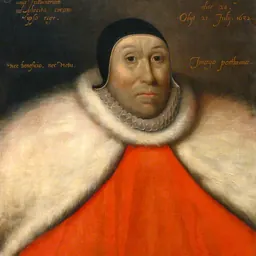
Lived 1553 – 1620 (aged 66–67). John Croke was an English judge and politician.
Sir John Croke (1553 – 20 January 1620) was an English judge and politician who served as Speaker of the English House of Commons between October and December 1601. He also served as Recorder of London, and won the City of London constituency in his election to the 1601 parliament, being the last Speaker before the death of Elizabeth I, in 1603.
Life Croke was born in 1553. His father, also named John, was a knight and a member of Parliament representing the borough of Southampton in 1571, followed by another stint for the county of Buckinghamshire. His mother was named Elizabeth and was a daughter of Alexander Unton, also a knight.
Croke spent the early part of his career as a lawyer. He entered the Inner Temple in 1570, and received a call to the bar shortly after, becoming a "distinguished member".
Croke sat in the Windsor constituency in 1585, and was first elected for the City of London in 1597. He became Treasurer in 1598, and was subsequently appointed Recorder. Croke, in an era when intimidation of counsel was frequent, was noted for his 'discretion' in court. In 1602, Croke was involved in a divisive witchcraft case of the era, in which he performed a series of a tests on the 14-year-old accuser, Mary Glover, and the defendant, Elizabeth Jackson; he came to the conclusion that Glover was bewitched after witnessing her reaction to a disguised Jackson, and her unresponsiveness to heat, which left visible burns. The evidence obtained was used in trial, though Sir Edmund Anderson was principal judge; Jackson was convicted to one year's imprisonment, but was released early.
He was elected Speaker unanimously in 1601. Manning, in his work on the Commons' speakers, repeats the recommendation given by William Knolles, Comptroller of the Household, for Croke to hold the office:
One early incident in Croke's tenure saw him come to the defence of a Member's right to be heard, after Serjeant Heale met with much disapprobation and mocking for defending Elizabeth's access to grants in the strongest terms – "Yea, she hath as much right to all our lands and goods as to any revenue of the crown." The House was almost wholly in favour the proposals, although they were referred to a committee. However, the day after this had been announced, Croke, in his capacity as Speaker, arose from his chair and informed the House of a meeting he had been called to with Elizabeth, in which she told of her desire to "defend her people from all oppressions" after having seen evidence of abuses. The committee of the House was adopted, and a motion was passed asking for an address by the Speaker expressing their gratitude, which Croke duly delivered. as Croke summed up his position by saying he "was foreclosed of his voice by taking that position which it had pleased them to impose on him" and that he was to be "indifferent to both parties."
After also serving as a Welsh judge, he was made one of the justices of the Court of King's Bench in 1607. His paternal lineage included most of the royal families in Europe. Croke's mother, Elizabeth, was the daughter of Sir Alexander Unton. His brother, Henry, was barrister-at-law and had several children by his wife Bennet (née Honywood). Croke married Catherine, daughter of Sir Michael Blount. Of their sons:
Sir Henry was MP for Christ Church; Charles entered Holy Orders; and Unton sat for Wallingford in 1626 and 1640, was a barrister and sergeant-at-law by profession, and a sympathiser with the Roundheads.
His widow married Sir John Dormer in October 1622. Croke's issue was left to his eldest son, also Sir John, who was MP for Shaftesbury. His son, again called (Sir) John, inherited Chilton, of which he was baronet, and "through his impudent, litigious, and vindicative disposition, completely dissipated his inheritance" (Burke). After selling Chilton, he died in prison, and the issue passed to his only son, Sir Dodsworth Croke. Dodsworth Croke lived in poverty, and died issueless, in old age, in 1728.
Don’t just read it —
keep it.
Full-length biographies made to live with: read them, listen on the way to work, watch them tonight.
- E-book
- Audio
- Video
Instant download · yours to keep · every purchase keeps this site free
Important facts
People in John Croke's life
Named in this biography and alive at the same time


Related people
Same field, nearest in time

Contemporaries
People whose lives overlapped John Croke's



Frequently asked questions
Who was John Croke?
English lawyer, judge and Speaker of the House of Commons; (1553-1620)
When was John Croke born?
John Croke was born in 1553.
When did John Croke die?
John Croke died on 23 January 1620 in Holborn.
What was John Croke's occupation?
John Croke was a judge and politician.
What nationality was John Croke?
John Croke was English.
Sources & further reading
Cite this page
APA: Biography.guide. (2026). John Croke. https://biography.guide/john-croke-judge/
MLA: "John Croke." Biography.guide, https://biography.guide/john-croke-judge/.
Chicago: "John Croke." Biography.guide. https://biography.guide/john-croke-judge/.
Data last updated: 2026-09-20 · Spot an error? Report a correction.
Page generated 2026-09-27 05:27 UTC