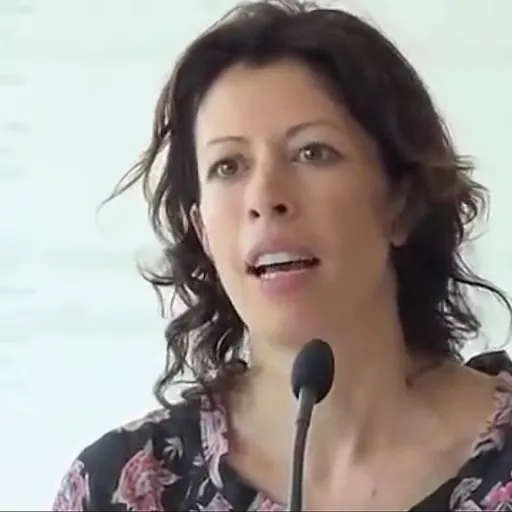
About Cecily Brown
Born 1969. Cecily Brown is a British painter, lithographer and film director.
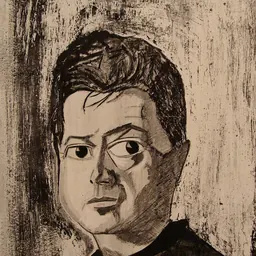
Cecily Brown (born 1969) is a British painter. Her style displays the influence of a variety of contemporary painters, from Willem de Kooning, Francis Bacon and Joan Mitchell, to Old Masters like Rubens, Poussin and Goya. Brown lives and works in New York.
Personal life Brown was born to novelist Shena Mackay and art critic David Sylvester and raised in England. Prior to her 1994 move to New York City, Brown resided in New York as an exchange student from the Slade School of Art in 1992. From the age of three Brown wanted to be an artist; she was supported in this ambition by her family, notably by her grandmother and two of her uncles who were also artists. Brown is married to architecture critic Nicolai Ouroussoff; they have one daughter.
Since 2014, Brown has been serving on the board of directors of the Foundation for Contemporary Arts (FCA).
Education Brown went to Surbiton High School in Surrey, before studying at the Epsom School of Art, Surrey, England (1985–87) (now part of the University for the Creative Arts), then taking drawing and printmaking classes at Morley College, London (1987–89), and finally receiving first class honours on a BA degree in Fine Arts course at the Slade School of Art, London (1989–93). During her studies she studied for a semester abroad in New York City. Awards include being the first-prize recipient in the National Competition for British Art Students. In 1995, the art world took notice of her work when she displayed Four Letter Heaven at the Telluride Film Festival; it was shown in the United States as well as Europe. The films consist of sexual and pornographic themes, which she explores in the majority of her work. Brown's participation in photoshoots like this were scrutinized, with the criticism being that she was “exploiting her looks” for popularity, which took away from her art.
Brown now lives and works in New York City, and has had dozens of exhibitions in both the United States and in England since moving in 1994. In 2023, the Metropolitan Museum of Art held Cecily Brown: Death and the Maid, which was “the first full-breadth museum survey in New York” of Brown's career. Brown maintained a studio in the Meatpacking District of Manhattan, Brown has minimal anxiety about the art media she uses; she said in an interview with Lari Pittman that "As someone who works with traditional materials, I've always had little anxiety that the medium isn't contemporary enough, that the work could have been made at almost any time."
Painting
Brown uses drawing as a prerequisite to guide her work. Through the use of repetition, Brown captures images that both attract and confound her. Though her drawings are not as exhibited as her paintings, both art mediums contain similar aspects in showcasing her erotic view of art through subject matter. Brown states, “I want to make forms that are either just dissolving or in the process of just becoming something and to play with the relationship between the eye and the brain.”
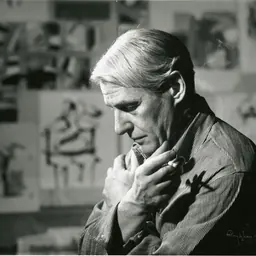
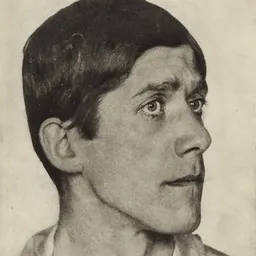
Brown's paintings combine figuration and utter abstraction while exploring the power relationship between male and female. Expanding the tradition of abstract expressionism, she has become known for a painting style suggestive of abstract and abstract expressionist painters such as Willem de Kooning and Oskar Kokoschka. Whilst painting she likes to let the paintings develop and change drastically, because she believes the surprise makes her work more interesting. Brown says, "All the paintings I'm working on have more or less the same impetus; the same thoughts are driving them. I like there to be an argument within a painting." Sexuality and attraction are important themes in her work, which she explores through semi-figurative and abstract means.
The sexuality and eroticism of Brown's depictions of expressive figures and nudes are echoed in rich colours, luscious paint handling, and animated brushwork; her work combines representational and abstract elements. In her interview with Lari Pittman she discussed how she defines 'sexy' and 'sexual' in her work. Brown said, "I suppose you could say that the sexual is in every painting, whether there is an overt subject or not. The tension within the painting, whatever the subject, is the desired outcome. The sexy would be the girl's lipstick smile or the shoe--the physical object from the three-dimensional world placed within the painting."
Cecily Brown works using a non-linear approach. Brown experiments with this approach by working with multiple canvases at one time. Working in large groups allows Brown to explore new compositional ideas while continually being spontaneous. Brown describes her process as "organic". She often spends multiple days on works, and will work on up to 20 works at a time, allowing layers of paint to dry between applications.
In 1997, Brown created Untitled, a permanent, site-specific installation for the group exhibition Vertical Paintings at the P.S. 1 Contemporary Arts Center (now MoMA PS1).
In the media In the February 2000 edition of Vanity Fair, Brown, along with fellow artists Inka Essenhigh, John Currin and others, appeared in photographs taken by Todd Eberle. A photograph that appeared in The New Yorker showed Brown from the back as she stood, cigarette in hand, studying one of her paintings.
Brown presided in 2004, along with other artists such as Laura Owens and Elizabeth Peyton, over a Democratic Party fund-raising event, Art Works for Hard Money, in Los Angeles.
Charity work
In 2020 Brown donated her work Wanton Boy to amfAR, The Foundation for AIDS Research, to help fund their temporary COVID-19 research initiative. The painting sold for $250,000 in a virtual auction conducted in July by Christie's, which also included donated works from artists such as Eddie Martinez and Dana Schutz.
Critical reception Brown has received a lot of critical attention for powerful, athletically sized canvases and bold brushwork. The assertiveness of her paintings has often been compared to Abstract Expressionist works which, during their time, were linked to a fierce masculinity. As a female artist working in this vein, Brown's works have been seen as confronting both this tradition and gendered assumptions about art.
However, some recent critics have taken a different stance. In a 2011 review for The Guardian, art critic Adrian Searle rejected the dynamic and assertive surfaces of Brown's art and wrote: "What's really missing in her art is character, and for all the hectic painting, a sense of necessity." Likewise, in 2013, Leah Ollman wrote a review of a Gagosian Gallery show for The LA Times, in which she observed: "Instead of powerful and passionate, her voice comes across as detached. The volume is turned up, but the verve is on low." Roberta Smith, in The New York Times, called a Gagosian exhibition it reviewed in 2000 "lackluster" and suggested that Brown's "career is ahead of her artistic development." Smith subsequently wrote a largely positive review of Brown's work in an article titled "I Was Wrong About Cecily Brown".
Art market Cecily set an early auction record when her oil painting Sick Leaves sold for 2.2 million dollars at a Christie's auction in March 2017. Shortly after, Suddenly Last Summer (1999), originally estimated at $1.8 to $2.5 million, fetched $6.8 million at a 2018 Sotheby's auction in New York. In November 2025, High Society (1997) sold at Sotheby's in New York, under the gavel of Phyllis Kao, for $9.8 million.
Exhibitions Brown has staged many solo shows and exhibitions in the United States, United Kingdom, and internationally. Her notable solo shows include Spectacle (1997), Deitch Projects, New York; Directions - Cecily Brown (2002), Hirshhorn Museum and Sculpture Garden, Washington, D.C.; Cecily Brown (2004), Museo Nacional Centro de Arte Reina Sofía, Madrid; Cecily Brown Paintings (2005), Modern Art Oxford; Cecily Brown: Rehearsal (2016), Drawing Center, New York; If Paradise Were Half as Nice (2018–2019), originating at the Instituto Tomie Ohtake, São Paulo; Cecily Brown (2020), Blenheim Palace, Woodstock, Oxfordshire; Cecily Brown: Death and the Maid (2023), Metropolitan Museum of Art; and Cecily Brown: Picture Making (2026), Serpentine Galleries, London.
She has also participated in many group exhibitions, including the Whitney Biennial (2004). Her work was included in the 2024 exhibition Making Their Mark: Works from the Shah Garg Collection at the Berkeley Art Museum and Pacific Film Archive (BAMPFA).
Notable works in public collections
Four Letter Heaven (Animation Cells) (1995), Museum of Modern Art, New York Untitled suite (1995), Museum für Moderne Kunst, Frankfurt, Germany Untitled (1997), MoMA PS1, Museum of Modern Art, New York Father of the Bride (1999), Buffalo AKG Art Museum, Buffalo, New York Service de Luxe (1999), Rubell Museum, Miami/Washington, D.C. Tender is the Night (1999), The Broad, Los Angeles Trouble in Paradise (1999), Tate, London Puttin' on the Ritz (1999–2000), Solomon R. Guggenheim Museum, New York Hoodlum (2000–2001), Hirshhorn Museum and Sculpture Garden, Smithsonian Institution, Washington, D.C. Black Painting I (2002), The Broad, Los Angeles Black Painting 2 (2002), Whitney Museum, New York Black Painting 4 (2003), Rubell Museum, Miami/Washington, D.C. Girl on a Swing #2 (2004), The Broad, Los Angeles Red Suzannah (2004), San Francisco Museum of Modern Art Half-Bind (2005), Des Moines Art Center, Iowa Skulldiver III (Flightmask) (2006), Museum of Fine Arts, Boston Oh, Marie! (2007), Des Moines Art Center, Iowa; and Museum of Fine Arts, Boston Fair of Face, Full of Woe (2008), Metropolitan Museum of Art, New York All of Your Troubles Come from Yourself (2006–2009), Whitney Museum, New York Untitled (2010), Museum of Modern Art, New York A Storm at Sea (2017), Georgia Museum of Art, Athens Where, When, How Often, and with Whom (2017), Louisiana Museum of Modern Art, Humlebæk, Denmark Triumph of the Vanities II (2018), Brooklyn Museum, New York The Hound with the Horses' Hooves (2019), Yale Center for British Art, New Haven, Connecticut
Don’t just read it —
keep it.
Full-length biographies made to live with: read them, listen on the way to work, watch them tonight.
- E-book
- Audio
- Video
Instant download · yours to keep · every purchase keeps this site free
Important facts
Family & relationships
People in Cecily Brown's life
Named in this biography and alive at the same time




Related people
Same field, nearest in time


Contemporaries
People whose lives overlapped Cecily Brown's


Frequently asked questions
Who is Cecily Brown?
British artist (born 1969)
When was Cecily Brown born?
Cecily Brown was born in 1969 in London.
What is Cecily Brown's occupation?
Cecily Brown is a painter, lithographer and film director.
What nationality is Cecily Brown?
Cecily Brown is British.
Sources & further reading
Cite this page
APA: Biography.guide. (2026). Cecily Brown. https://biography.guide/cecily-brown/
MLA: "Cecily Brown." Biography.guide, https://biography.guide/cecily-brown/.
Chicago: "Cecily Brown." Biography.guide. https://biography.guide/cecily-brown/.
Data last updated: 2026-09-23 · Spot an error? Report a correction.
Portrait: Wikimedia Commons · author & licence
Page generated 2026-09-27 05:05 UTC