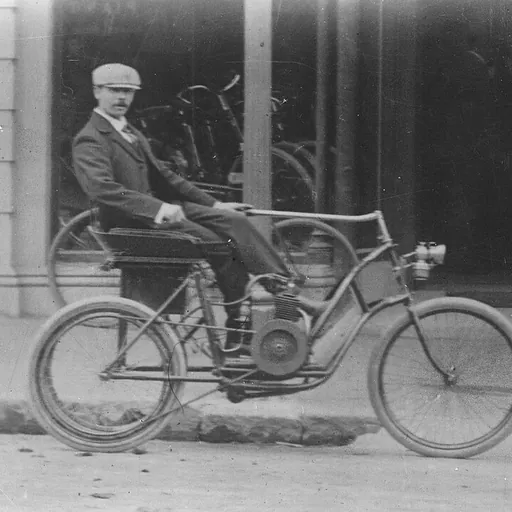
About Cecil Wood
Lived 1874 – 1965 (aged 90–91). Cecil Wood was a New Zealand engineer.
Early life Wood was born in Timaru on 28 March 1874, the son of Charles Walkden Wood. Educated in Lyttelton, he first worked as a mechanical engineer at Lyttelton, and then became involved in the cycle trade in Christchurch. He married Edith Susan Harris, a daughter of Thomas Harris of Timaru, in September 1899, and they had one son.
Tourist Cycle Works, C. W. Wood and Co. Cecil Wood and James Gibson opened their Timaru cycle business, Gibson, Wood and Co., on 8 April 1894; the first cycle shop in town. Charles Macintosh and John James Grandi, coachbuilder, soon joined the partnership. Wood carried on the firm as Tourist Cycle Works, C. W. Wood and Co., when Gibson left the partnership to establish Reliance Cycle Works in May 1896.
The firm carried on the sale of imported and Tourist manufactured cycles, as well as servicing cycles, claiming to have made the first tandem and first chainless cycles in the colony.
The first engine was fuelled by gunpowder; the dry chemical compound made by William Gunn, a local chemist. The ignition system was a hot tube—1/8" gas tube standing upright connected to the engine and heated by a little Bunsen burner. The compression stroke fired the charge up the tube and ignited the vapour. If the flywheel wasn't turning when starting, combustion would blow the hot tubes out. The burner was also difficult to keep steady in the wind. Whilst the engine provided propulsion, the necessary clearance of residue from the cylinders after about six firing strokes made it troublesome, and accordingly this engine type was abandoned.
Wood turned to liquid fuel and ventured to Dunedin by train to buy a bottle of volatile gasoline for a second engine, which in turn required him to devise a surface carburettor.
The invention of electrical ignition resolved the ignition problem but short of the latest knowledge, Wood had difficulty in making batteries, accumulators and coil for his first motor-cycle engine. Consequently, he placed his resources at the disposal of two apprentices—Sydney Smith and Charlie Brehaut—who entered into the spirit of the venture to make the equipment with him. Fred Smith also offered valuable help in that direction. When mastered, Wood successfully attached the motor to a cycle and placed it on the road on 20 May 1900. Completed with four wheels, Dennison then drove it on a five-day proving run between Christchurch and Oamaru in June 1900. Wood's advertisement in the 1924 Diamond Jubilee issue of the Timaru Herald dated his motor tricycle as having been built and run in Timaru in 1898–99. In 1938 Dennison said that, when he passed through Timaru, on or about 19 June 1900, "C. W. Wood located him and took him to see his first car, which he was then building, and which could not have been on the road running under its own power for some considerable time after that date." Since then, the question as to who was first has centred on these two vehicles; though Wood's 1890s motor vehicle development work, ultimately formed up as the motor tricycle, asserted 1895 skeleton, 1896 run with two people, 1897 run-on-road and 1898–1899 rebuild dates. In Auckland, Arthur Marychurch, who'd experimented with a flying machine at Waotu, Waikato, in 1893, had imported another "first", a Star motor car from Wolverhampton, England, in 1900. However, William McLean, politician, had imported two Benz automobiles from Paris in 1898, leading to the creation of the McLean Motor-car Act, 1898. Robert Julian Scott of Christchurch, a cousin of Robert Falcon Scott, RN, had preceded them with his motor wagonette design, a 3 hp steam-powered buggy for 10 passengers, built by Messrs Cutton and Co. of Dunedin, in 1880–81
Wood appears to have started constructing the tiller-steered two-seater motor tricycle following completion of his motorcycle engine and its successful attachment to a cycle in 1900. The frame was made from 1¼ inch cycle tube; the engine parts were cast by Storier, iron founder, of Timaru. The first motor car made in the country to carry two people, this particular form was said to have been first run on the road on 4 June 1901.
By 10 December 1902, apart from finishing touches and seat upholstery, he had completed and road tested the 3½ hp motor tricycle, and given experimental rides about the streets to several people. Howard and Ruby Tripp of Orari Gorge Station acquired the tiller-steered two-seater motor tricycle in 1903. Their first jaunt in the machine, from Timaru to Orari Gorge at 10 mph, covering 34 miles (54.3 km) with some mishaps along the way, took three days.
In later years, Wood told George Bolt and Harold Cederman that he had instructed Richard Pearse on making engines during this period, in 1901 and 1902. He recalled showing Pearse how to make spark plugs with a central electrode wrapped in mica and helping with surface carburetor design. Pearse also adopted the sulky tiller-steered tricycle form for his flying machine undercarriage.
Motor cycles During public display of the gas engine in July 1901, Wood made it known that he intended to build another engine for attachment to a bicycle and promised that "at no very distant date a 'motor cycle' will be seen on our streets."
Wood completed manufacture of Tourist's first motor bicycle product by December 1901; its 1¼ hp Otto engine made by his firm from rough parts, he believed, was the first of such manufacture in the colony. The 20 lb motor was mounted in the main frame, in the angle between the saddle tube and bottom tube, the fuel tank hung from the top tube just in front of the saddle tube and the accumulator and spark coil just behind that tube. Designed to drive the cycle from 3 to 30 mph, its fuel capacity was sufficient for a 100-mile run at a cost of a farthing per 12 miles. A slight twist to the left handle-grip would start and stop the motor. It had a free wheel, back-pedal brake and, if required, the reversing gear could be made to act as a brake. It went on public display in Tourist Cycle Works' shop window on 11 December 1901 to much interest, though days sooner had the imported ignition coil not been defective.
Every, with his Stella motor bicycle, and Wood, with his Tourist motor bicycle, made-several appearances on track, separately and together, at the annual South Canterbury Caledonian Society sports gathering on 1 January 1902. Every's cycle ran easy without trouble. Wood's cycle didn't go well, seemed sluggish and inclined to jib, owing, he thought, to a mistake in using mixed oil. Wood ran the motor bicycle again on the following sports day, more satisfactorily than the previous experience. "He ran three quarter-mile laps against the watch. The first lap was done in 47 or 48, two in 97; the third (slowing up at the end) in 67 seconds."
The new 1902 model, the third of six motor bicycle orders, built with BSA cycle fittings and a 1½ hp Minerva cycle engine mounted within, was first ridden on the road by its owner, W J Huggins of Timaru, on Thursday, 17 April 1902, up to 25 mph. It was fitted with: strengthened front forks; one gallon fuel tank sufficient for a careful 150 miles at average speed of 15 mph; rechargeable 4 V accumulator sufficient for 500 miles; handbrake and powerful back-pedal brake for stopping within 5 yards.
Motor cars
Including the motor tricycle, Wood manufactured four motor cars; two of which were running about Timaru streets in 1903. The 4 hp engine was set to run at 15 mph on the level. The body was built by coachbuilder John James Grandi and hand-painted to quality finish in a chocolate colour with black lining, the seat and back cushioned with horsehair in brown American leather; wide wooden mudguards made and bent by John Jackson and Co. A neat rear mounted cylinder and branded "Tourist", contained three vessels: a large one for cooling water and others for petrol and lubricating oil. The accumulator, coil and storage space were enclosed below the seat. Extra storage was located at the front, under the bonnet. In May 1903, William Ferrier exhibited, in his Stafford Street photographic studio window, a hand water-coloured photograph of "Mr C. W. Wood's cottage, with Mr Wood at the gate in his motor car."
Tourist's end Tourist Cycle Works, C. W. Wood and Co., came to an end through bankruptcy from 7 September 1903. Macintosh had left the partnership in 1898 or 1899 and Grandi on 14 July 1903. Wood's cycle works' stock, plant and fittings, consisting of bicycles, frames, parts and fittings of all kinds, tools, Tangye oil engine, dynamo and electric lighting plant wires and switch board, pulleys, shafting, belting, lathes and sundries specially suitable for the trade, were put up for auction on 2 October.
Speedwell Cycle Works, W. A. Scott
Motor trade and service In 1905, Dr Herbert Barclay of Waimate, who'd purchased a Stirling motor car in August 1903, with Wood and others, formed the South Canterbury Automobile Club, the first automobile club in Timaru. South Canterbury Garage Proprietors' Association and the first Motor Olympia in South Canterbury, 1926; Motor Trade Association, 1929–30; Motor and Allied Trades' Organisation; South Canterbury Employers' Association; North End Golf Club and Timaru Bowling Club.
Later life By 1964, Wood was residing at Elloughton Grange, known as "The Grange", in Timaru. He died in 1965, aged 91.
Robert Semple, when Minister of Transport, 1935–42, had said: The credit of being the pioneer of the motor industry in New Zealand must go to Mr Cecil Walkden Wood, of Timaru, whose vehicle was built and run on the roads in 1897.
Don’t just read it —
keep it.
Full-length biographies made to live with: read them, listen on the way to work, watch them tonight.
- E-book
- Audio
- Video
Instant download · yours to keep · every purchase keeps this site free
Important facts
People in Cecil Wood's life
Named in this biography and alive at the same time




Related people
Same field, nearest in time


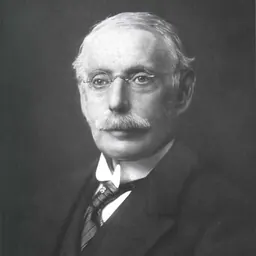
Contemporaries
People whose lives overlapped Cecil Wood's


Frequently asked questions
Who was Cecil Wood?
New Zealand engineer
When was Cecil Wood born?
Cecil Wood was born on 28 March 1874 in Timaru.
When did Cecil Wood die?
Cecil Wood died in 1965.
What was Cecil Wood's occupation?
Cecil Wood was an engineer.
What nationality was Cecil Wood?
Cecil Wood was New Zealand.
Sources & further reading
· DBpedia: Cecil Wood (engineer)
Cite this page
APA: Biography.guide. (2026). Cecil Wood. https://biography.guide/cecil-wood-engineer/
MLA: "Cecil Wood." Biography.guide, https://biography.guide/cecil-wood-engineer/.
Chicago: "Cecil Wood." Biography.guide. https://biography.guide/cecil-wood-engineer/.
Data last updated: 2026-09-20 · Spot an error? Report a correction.
Portrait: Wikimedia Commons · author & licence
Page generated 2026-09-27 04:57 UTC