
About Cecil Lowther
Lived 1869 – 1940 (aged 70–71). Cecil Lowther was a British politician.
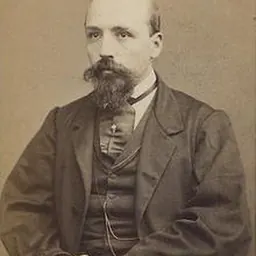
Major-General Sir Henry Cecil Lowther, (1 January 1869 – 1 November 1940) was a British general and Conservative politician, big-game hunter and adventurer.
Career Born in Ampthill, Bedfordshire, he was the fourth son of William Lowther.
Educated at Clifton College, he was commissioned into the Scots Guards as a second lieutenant on 29 December 1888, promoted to lieutenant on 13 April 1892, and to captain on 24 June 1899. He had been made adjutant of his battalion in February 1896.
When the Second Boer War broke out in October 1899, the 1st Battalion of the Scots Guards departed Ireland for South Africa to join up with the 1st Guards Brigade, with Lowther appointed as the battalion's adjutant. They reached that country in November, and immediately saw action in the battles of Belmont and Modder River, both British victories, though at a heavy cost in British life. In December, the battalion was present at the Battle of Magersfontein, and the following year took part in the march to take the Boer capitals of Bloemfontein and Pretoria. After taking the latter city, the 1st Guards Brigade took part in the Battle of Diamond Hill (June 1900), and in the last large scale battle of the war at Bergendal in August 1900. The war then became a guerrilla war, and Lowther was on 20 July 1901 appointed to a staff position as Staff Captain for Intelligence. For his service in the war, Lowther received the Queen's South Africa Medal, was appointed a Companion of the Distinguished Service Order (DSO), and was noted for future staff employment.
After the war had ended, Lowther was back as a regular officer in the 1st battalion of his regiment in September 1902, but three months later was seconded for a Staff appointment as Brigade Major, Foot Guards brigade in the 1st Army Corps on 3 December 1902.
In October 1911 he was promoted to the temporary rank of lieutenant colonel while assigned to the personal staff of the governor general of Canada, becoming his military secretary. In October 1913, on the eve of the First World War, and having reverted to major upon relinquishing his previous assignment, he was promoted to the substantive rank of lieutenant colonel and became commanding officer (CO) of the 1st Battalion, Scots Guards, succeeding Colonel Frederick James Heyworth.
He remained in command until being wounded while leading the battalion in action on the Western Front in November 1914. He succeeded Brigadier General Charles FitzClarence in command of the 1st Division's 1st Guards Brigade, for which he was granted the temporary rank of brigadier general. Promoted to brevet colonel in February 1915, he then continued to command the brigade which was broken up in August, and in September he succeeded Major General Sir William Lambton as military secretary at the general headquarters (GHQ) of the British Expeditionary Force (BEF) in France. On 24 February 1916 he received the Légion d'honneur, class of Commandeur, and in the Birthday Honours of 1918 he was appointed Knight Commander of the Order of St Michael and St George.
Lowther was elected as Member of Parliament (MP) for Appleby at a by-election in 1915, but the constituency was abolished in 1918. In 1921 Lowther returned to Parliament as MP for Penrith and Cockermouth succeeding his brother James, who had held the seat since 1886 and been the Speaker since 1905, became Viscount Ullswater, but lost the seat in the 1922 general election to the Liberal Levi Collison. He did not attempt to return to politics.
He was elected a Fellow of the Royal Geographical Society on 11 November 1901. In 1912, he published From Pillar to Post, an account of his travels. In 1925, he co-authored The Scots Guards in the Great War, 1914–1918.
He died in Basingstoke, Hampshire aged 71.
Family He had married late, on 28 June 1920, to Dorothy Maude Isabel Harvey, a widow of Gordon Bois. There were no children.
Don’t just read it —
keep it.
Full-length biographies made to live with: read them, listen on the way to work, watch them tonight.
- E-book
- Audio
- Video
Instant download · yours to keep · every purchase keeps this site free
Important facts
People in Cecil Lowther's life
Named in this biography and alive at the same time



Related people
Same field, nearest in time





Contemporaries
People whose lives overlapped Cecil Lowther's



Frequently asked questions
Who was Cecil Lowther?
British Army officer and politician (1869-1940)
When was Cecil Lowther born?
Cecil Lowther was born in 1869 in Ampthill.
When did Cecil Lowther die?
Cecil Lowther died on 1 November 1940.
What was Cecil Lowther's occupation?
Cecil Lowther was a politician.
What nationality was Cecil Lowther?
Cecil Lowther was British.
Sources & further reading
Cite this page
APA: Biography.guide. (2026). Cecil Lowther. https://biography.guide/cecil-lowther/
MLA: "Cecil Lowther." Biography.guide, https://biography.guide/cecil-lowther/.
Chicago: "Cecil Lowther." Biography.guide. https://biography.guide/cecil-lowther/.
Data last updated: 2026-09-20 · Spot an error? Report a correction.
Page generated 2026-09-27 05:08 UTC