
About Cecil J. Doty
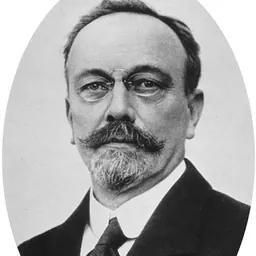
Lived 1907 – 1990 (aged 82–83). Cecil J. Doty was an American architect.
Cecil John Doty (1907–1990) was an American architect, notable for planning a consistent architectural framework for the U.S. National Park Service's ambitious Mission 66 program in the 1950s and 1960s. Doty spent his childhood in May, Oklahoma, then attended Oklahoma A&M (now Oklahoma State University), and received a degree in architectural engineering in 1928. During the Great Depression that immediately followed Doty's graduation, Doty found intermittent work, but was unable to establish a business in Oklahoma City. In order to make a living, Doty signed up with the Civilian Conservation Corps, first as a file clerk, then as an architect in the state parks program.
Doty was hired by Park Service design director Herbert Maier to complete plans for a museum building at Glacier National Park, and absorbed Maier's style by studying the design guidelines issued by Maier, which contained prototype designs executed by Maier and Park Service staff for national and state parks. By January 1935, Doty was promoted to associate engineer and given responsibility, together with landscape architect Harvey Cornell, for the state parks of Kansas and Oklahoma. The next year he became regional architect, and in 1937 moved to Santa Fe, New Mexico to work with Maier at the new regional office, where he took up work on national park structures. Doty designed his new workplace, the Santa Fe Regional Office, while still in Oklahoma, completing the design after moving to Santa Fe. Visitor Center, Zion National Park, with Cannon and Mullen, 1957–58 Visitor Center, Bryce Canyon National Park, with Cannon and Mullen, 1957–58 Visitor Center, Wupatki National Monument, with Lescher and Mahoney Visitor Center, Organ Pipe Cactus National Monument, with Lescher and Mahoney Visitor Center, Canyon de Chelly National Monument Madison Junction Visitor Center, Yellowstone National Park (demolished) Visitor Center, Mount Rushmore National Memorial (demolished) Visitor Center, Montezuma Castle National Monument, 1958 Furnace Creek Visitor Center, Death Valley National Park, 1959 Hoh Visitor Center, Olympic National Park Visitor Center, Sunset Crater National Monument Visitor Center, Curecanti National Recreation Area Visitor Center, Tonto National Monument Visitor Center, Navajo National Monument Visitor Center, Walnut Canyon National Monument Flamingo Marina, Everglades National Park, 1958 Visitor Center, Glen Canyon National Recreation Area, 1963–1964 Visitor Center, Natural Bridges National Monument, 1964 Hurricane Ridge Visitor Center, Olympic National Park, 1964 Logan Pass Visitor Center, Going-to-the-Sun Rd., 18 mi. W. of US 89, Saint Mary, Montana, listed on the National Register of Historic Places Visitor Center, Capulin Volcano National Monument, 1963
Don’t just read it —
keep it.
Full-length biographies made to live with: read them, listen on the way to work, watch them tonight.
- E-book
- Audio
- Video
Instant download · yours to keep · every purchase keeps this site free
Important facts
People in Cecil J. Doty's life
Named in this biography and alive at the same time


Related people
Same field, nearest in time
Contemporaries
People whose lives overlapped Cecil J. Doty's



Frequently asked questions
Who was Cecil J. Doty?
American architect
When was Cecil J. Doty born?
Cecil J. Doty was born in 1907.
When did Cecil J. Doty die?
Cecil J. Doty died in 1990.
What was Cecil J. Doty's occupation?
Cecil J. Doty was an architect.
What nationality was Cecil J. Doty?
Cecil J. Doty was American.
Sources & further reading
Cite this page
APA: Biography.guide. (2026). Cecil J. Doty. https://biography.guide/cecil-j-doty/
MLA: "Cecil J. Doty." Biography.guide, https://biography.guide/cecil-j-doty/.
Chicago: "Cecil J. Doty." Biography.guide. https://biography.guide/cecil-j-doty/.
Data last updated: 2026-09-20 · Spot an error? Report a correction.
Page generated 2026-09-27 05:05 UTC