
About Cecil Forsyth
Lived 1870 – 1941 (aged 70–71). Cecil Forsyth was a British composer and musicologist.
Cecil Forsyth (30 November 1870, in Greenwich – 7 December 1941, New York City) was an English composer and musicologist.
Career He studied at the University of Edinburgh and at the Royal College of Music (with Charles Villiers Stanford and Hubert Parry), and played viola in various London orchestras (including the Queen's Hall Orchestra) while establishing himself as a composer. In 1914 he moved to the US and took up a position at the music publishers H.W. Gray, who also became his publisher. He continued to compose and secure performances in the US, though mostly with choral societies and glee clubs. and repeated in 1904 and 1906. According to Lewis Foreman, it is "possibly the first full blown concerto for viola by a British composer". (York Bowen's Viola Concerto followed in 1907). There is a modern recording by Lawrence Power and the BBC Scottish Symphony Orchestra. Chanson Celtique (1906) for viola and piano, also achieved some popularity and was later orchestrated.
The orchestral suite Four Studies from Victor Hugo also had its debut at the Proms in 1905. There were two comic operas, Westward Ho! and Cinderella, both produced in London at the Savoy Theatre, and a setting of Keats' Ode to a Nightingale, published in 1894.The unaccompanied choral variations on Old King Cole from 1912 gained some popularity because of its humour. There were also two sacred Masses and various songs, such as In Old Japan (setting W. E. Henley), The Return (setting Arthur Symons) and The Watcher, op. 74 (setting James Stephens).
Once in the US, Forsyth composed The Last Supper: a Lenten Meditation in 1916 for chorus and orchestra, and two choral ballads for soloists with orchestra, Tinker, Tailor (1919) and The Luck of Eden Hall (1922). Other works composed in America were The Dark Road for viola and strings (1922) and the six movement Alice in Wonderland orchestral suite (1927).
Author His most successful book was Orchestration, originally published in 1914 and revised in 1935. Dover published a reprint of this revision in 1983 with a new foreword by composer William Bolcom, who lauds especially Forsyth's insight into instrumental culture and his wit. Conductor Adrian Boult recalled how Forsyth advised Ralph Vaughan Williams about the orchestration of the latter's A London Symphony. Forsyth's other books include Music and Nationalism: A Study of English Opera (1911), Choral Orchestration (1920), A History of Music (1916, with Stanford), Modern Violin Playing (1920, with Samuel Dean Grimson), A Digest of Music History (1923) and a collection of essays, Clashpans (1933).
Don’t just read it —
keep it.
Full-length biographies made to live with: read them, listen on the way to work, watch them tonight.
- E-book
- Audio
- Video
Instant download · yours to keep · every purchase keeps this site free
Important facts
People in Cecil Forsyth's life
Named in this biography and alive at the same time
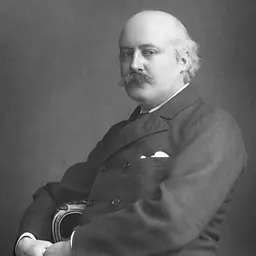
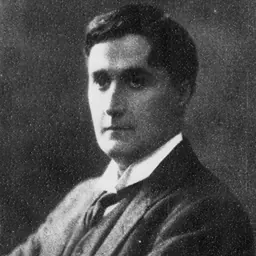
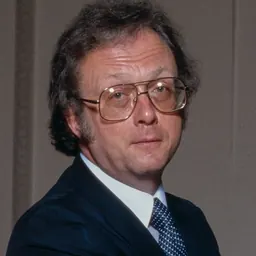
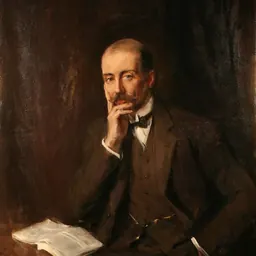



Related people
Same field, nearest in time




Contemporaries
People whose lives overlapped Cecil Forsyth's


Frequently asked questions
Who was Cecil Forsyth?
British musician
When was Cecil Forsyth born?
Cecil Forsyth was born in 1870 in Greenwich.
When did Cecil Forsyth die?
Cecil Forsyth died in 1941 in New York City.
What was Cecil Forsyth's occupation?
Cecil Forsyth was a composer and musicologist.
What nationality was Cecil Forsyth?
Cecil Forsyth was British.
Sources & further reading
Cite this page
APA: Biography.guide. (2026). Cecil Forsyth. https://biography.guide/cecil-forsyth/
MLA: "Cecil Forsyth." Biography.guide, https://biography.guide/cecil-forsyth/.
Chicago: "Cecil Forsyth." Biography.guide. https://biography.guide/cecil-forsyth/.
Data last updated: 2026-09-20 · Spot an error? Report a correction.
Page generated 2026-09-27 04:57 UTC