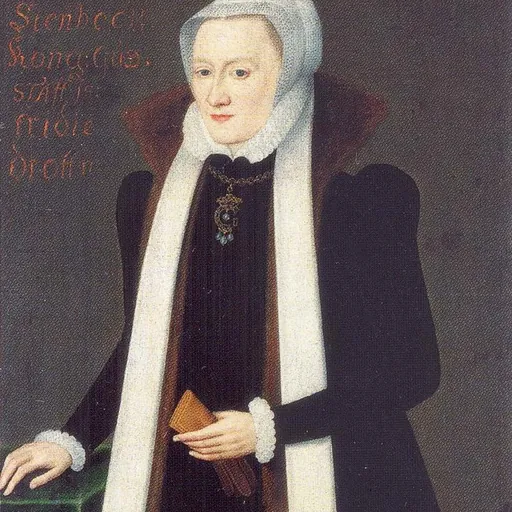
About Catherine Stenbock
Lived 1535 – 1621 (aged 86). Catherine Stenbock was a Swedish businessperson.
Catherine Stenbock (Swedish: Katarina Gustavsdotter Stenbock; 22 July 1535 – 13 December 1621) was Queen of Sweden from 1552 to 1560 as the third and last wife of King Gustav I.
Early life Catherine Stenbock was born on 22 July 1535 in Torpa Castle, Sweden. She was the daughter of Riksråd Gustaf Olofsson Stenbock and Brita Eriksdotter Leijonhufvud, who was the sister of King Gustav's previous consort Margaret Leijonhufvud. She was thus the maternal niece of Queen Margaret and first cousin of the royal children of that marriage, including future kings John III of Sweden and Charles IX of Sweden. Her siblings included Ebba Stenbock.
There is little information about her prior to her marriage. It is possible that she served as maid of honor to her aunt, the Queen, but either way, she was most certainly known to the King personally: due to the marriage of her aunt, her family belonged to the relations to the King named as Kungafränderna (`The King's Relations´), who played an important role at court, and participated in the family events of the monarch, as well as he was present at the weddings and other events of her family. Her parents were both favored by the monarch. Their marriage was hosted by the King in parallel to his own first marriage in 1531, her father founded his career as a riksråd upon his loyalty to the King, and her mother was in the King's confidence: it was said that "In her [Queen Margaret's] sister Bridget... he always had much trust". In 1555, she and the royal children accompanied the King to the province of Finland, where they stayed until 1556. According to another version, Catherine did so on her own initiative.
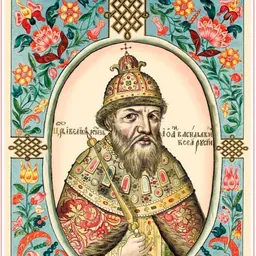
During the rebellion of the Dukes, the King's brothers, which erupted after the controversial marriage of the King and ended in the dethronement of King Eric XIV that same year, Catherine and her stepdaughters, the Princesses Sophia and Elizabeth, were with the King in the capital. According to the official statement given by Prince John after the deposition in 1569, they were placed under guard, prevented from leaving and placed under the threat of being presented to Tsar Ivan the Terrible of Russia as hostages. Eric XIV had made an alliance with Russia against Poland, and the Tsar had presented the demand that he should give him his Polish sister-in-law, the spouse of Prince John, Princess Catherine Jagellon, as hostage to use against Poland, and a Russian embassy was at the time waiting in Stockholm to bring Catherine Jagellon to Russia. Eric XIV felt forced to decline this demand because of international pressure, but had offered to replace his Polish sister-in-law with his stepmother and his two sisters. According to John, the relationship between the King and the Queen Dowager was bad at this point, as he had accused her of having financed the Danes during the ongoing Northern Seven Years' War and threatened not only to give her, his sisters and their ladies-in-waiting over to the Russians but also to burn them alive.
It is unclear how much of this is true and what is propaganda from the later John III to excuse the deposition of his brother, but what ever the case, Queen Dowager Catherine and Princesses Sophia and Elizabeth left the court and escaped to join the rebellious Dukes after having been given a threat of some kind by the King, likely when they were told of their planned Russian captivity. One version said that they were permitted to take a boat trip and continued until the other shore, and another one that they took a walk in the town and continued to the city gate: in any case, when they had left town, they were joined by the spouse of Princess Sophia, Magnus II of Saxe-Lauenburg, who had been sent by the King to pursue his brothers, but who instead took the Queen Dowager and the Princesses to join the rebels. When Eric XIV was forced to extradite his adviser Jöran Persson, it is possible that Catherine had a say in his fate: many decades later, she was threatened by the son of Persson, who blamed her for his father's death. Around this time, the French ambassador Charles de Dancay described the queen dowager Catherine as "a beautiful woman in her mid 30s".
During the following imprisonment of Eric XIV and Karin, their children were placed in the custody of Catherine Stenbock and their French governess Johanna de Herboville from 1568 until 1570. Eric XIV had a good relation to Catherine: even after having been attacked by her brother Olof in prison, he gave her the credit for not having been put to death after his dethronement.
Reign of John III After the succession of John III to the throne, her lands were questioned by her youngest stepson Duke Charles, as they were situated in his Duchy. All her fiefs in Södermanland were exchanged for Åland, which was a very favorable exchange, as Åland gave a much larger income than her previous lands. She had a good relationship with the King and often lent him money. Her estates made it possible for her to act as one of the foremost financiers of John III, particularly in his war with Russia, loans he was unable to pay her back. Her sole remaining estate in Södermanland were her main residence Strömsholm, which caused a conflict with Duke Charles. The Duke insisted that Strömsholm belonged to him because it was situated in his Duchy. He demanded that she evacuate the fief to him, sent armed troops to the area to prevent her from collecting taxes from the farmers of the area and threatened to attack the estate to remove her physically. The conflict escalated to this point prior to his marriage in 1579, because he wished to present Strömsholm as the residence of his bride. Catherine's rights were protected by John III, who reminded Charles that although the King had not mentioned the estate in his will, he had asked the Princes to ensure the right of his widow to it verbally. The conflict, however, continued until 1582, when John III formally had the royal council declare a verdict in favor of Catherine in the matter and threaten Charles with the loss of his succession rights to the throne unless he respected the decision.
In 1570, Catherine had a wish to marry Duke Francis II of Saxe-Lauenburg, the brother-in-law of her stepdaughter Princess Sophia. These plans was however prevented by the spouse of Sophia, Magnus II of Saxe-Lauenburg. During the time of conflict between her and Duke Charles of the rights to Strömsholm (circa 1580), she received a proposal from a German Count Palatine, but declined the offer.
During the reign of John III, she no longer had such a prominent place at court, as the King was married. Because of her royal rank, she occupied a more and more dominant role in her own birth family, and often hosted family meetings and arranged family occasions such as weddings and funerals, and continued to act as a channel between her relatives and the royal house. In 1574, a scandal took place when her brother Erik Stenbock made his legendary elopement with their cousin, Malin Sture, daughter of her famous aunt Martha Leijonhufvud. The couple were in love, but had been forbidden to marry by Martha because they were cousins. Martha had the King imprison Erik, but Catherine and Duke Charles both acted as mediators, and managed to have Erik released and have their love marriage acknowledged within a year. In 1582, she participated in the meeting between Karin Månsdotter and Queen Catherine Jagellon at Svartsjö Castle.
Queen Catherine Stenbock, as well as Queen Gunilla Bielke, both acted as mediators during the conflict between the King and the Royal Council in 1589–90. During the conflict, John III suspected the Councillors of conspiring to depose him in favor of the son of Eric XIV. Catherine was informed that rumors circulated in which she was to have hosted a meeting for the Councillors at Strömsholm where they conspired to depose the King. She contacted the King and defended her against the accusations, and was never openly accused.
Reign of Sigismund III Vasa In 1592, John III died and was succeeded by his son Sigismund III Vasa, the elected King of Poland, which was opposed by Duke Charles. Catherine participated in the burial of John III in 1594, and had her fiefs confirmed by Sigismund, with the right to appoint the officials in Åland.
In 1595, civil war erupted between Sigismund and Duke Charles. Her brothers refused to join Duke Charles, who declared them, her brother-in-law Klaus Fleming, Governor of Finland, and her nephew as his enemies. Klaus Fleming had a new official appointed to her fief of Åland and used its supplies for Sigismund against Charles. This was likely done with the approval of Catherine, who had sent warnings about Charles to Fleming, but this could not be proven, even though Charles had one of Fleming's men arrested and interrogated. In November 1597, Catherine's fief Åland was confiscated by Charles on the ground of it having been used against him. The same year, after the warfare of Duke Charles toward the loyalists of Sigismund in Finland, Fleming was killed, and Catherine's sister Ebba Stenbock and her daughters were taken captive by the Duke and imprisoned in Stockholm: the son of Ebba was killed during the Åbo Bloodbath in 1599. Several of the relatives of Queen Dowager Catherine remained loyal to Sigismund and fled to Poland. She visited Queen Christina to plead to the King through her in 1599.
Duke Charles could prove nothing against Catherine herself, and her fief of Åland was eventually replaced by Drottningholm. Her residence of Strömsholm became a refuge for the abandoned wives and daughters of her male relatives, who fled to Sigismund in Poland and had their estates in Sweden confiscated, and she petitioned for the confiscated property to be returned to her female relations, sometimes eventually with success. Her sister Ebba and her daughters lived with her after they were released from prison in 1600. Among the female relations she received as maid of honor were Ebba Brahe in 1614, who was the removed from the employ of the mother of Gustavus Adolphus of Sweden to prevent a love match with the King, and whose wedding she hosted in 1618.
Later life, death and legacy Queen Dowager Catherine Stenbock spent her last years tending to her estates, engaging in iron works and other enterprises, and spending time with her relatives, especially her sisters. During her last years, she became periodically crippled, and was for this reason not able to attend the wedding of Gustavus Adolphus of Sweden in 1620.
She has been given a charitable reputation because she gave a safe haven to many female relations to the exiled loyalists of Sigismund, and because she often acted as a channel of the local peasantry and the royal house.
She died on 13 December 1621, aged 86, at Strömsholm. Upon her death, it was said that: "The poor have lost a friend, the orphans their mother". She was buried in Uppsala Cathedral, but without a monument of her own.
Don’t just read it —
keep it.
Full-length biographies made to live with: read them, listen on the way to work, watch them tonight.
- E-book
- Audio
- Video
Instant download · yours to keep · every purchase keeps this site free
Important facts
Family & relationships
People in Catherine Stenbock's life
Named in this biography and alive at the same time

Related people
Same field, nearest in time
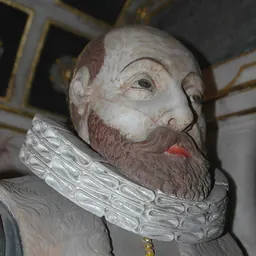


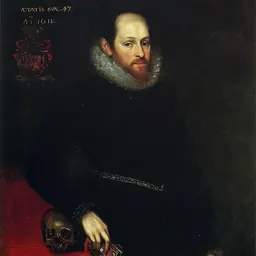

Contemporaries
People whose lives overlapped Catherine Stenbock's




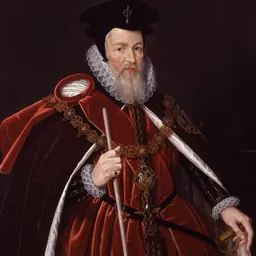
Frequently asked questions
Who was Catherine Stenbock?
Queen Consort of Sweden (1535-1621)
When was Catherine Stenbock born?
Catherine Stenbock was born on 22 July 1535 in Länghems församling.
When did Catherine Stenbock die?
Catherine Stenbock died on 13 December 1621.
What was Catherine Stenbock's occupation?
Catherine Stenbock was a businessperson.
What nationality was Catherine Stenbock?
Catherine Stenbock was Swedish.
Sources & further reading
· Wikipedia: Catherine Stenbock
Cite this page
APA: Biography.guide. (2026). Catherine Stenbock. https://biography.guide/catherine-stenbock/
MLA: "Catherine Stenbock." Biography.guide, https://biography.guide/catherine-stenbock/.
Chicago: "Catherine Stenbock." Biography.guide. https://biography.guide/catherine-stenbock/.
Data last updated: 2026-09-21 · Spot an error? Report a correction.
Portrait: Wikimedia Commons · author & licence
Page generated 2026-09-27 04:59 UTC