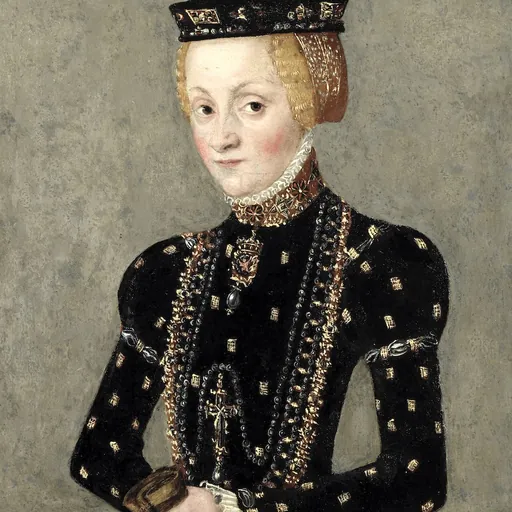
Catherine Jagellon
Queen of Sweden
About Catherine Jagellon
Lived 1526 – 1583 (aged 56). Catherine Jagellon was a Polish queen regnant.
Catherine Jagiellon (; , Lithuanian: Kotryna Jogailaitė; 1 November 1526 – 16 September 1583) was a princess of the Polish–Lithuanian Commonwealth and Queen of Sweden from 1569 as the wife of King John III. Catherine had significant influence over state affairs during the reign of her spouse. She negotiated with the pope to introduce Counter-Reformation in Sweden. She was the mother of Sigismund III Vasa.
Early life Catherine Jagiellon was born in Kraków as the youngest daughter of King Sigismund I the Old of the Polish–Lithuanian Commonwealth and his wife, Bona Sforza of Milan.
Catherine was given a thorough Renaissance education by Italian tutors: she was taught to read, write and speak Latin, German and Italian, instructed in conversation, riding, dancing, singing, and playing several musical instruments.
After the death of her father in 1548, she and her unmarried sisters Anna and Sophia moved to Masovia with their mother. In 1556, when her sister Sophia married and left for Germany and her mother departed for Italy, Catherine and her sister Anna were moved to the Palace of Vilnius by their brother Sigismund II Augustus of Poland, to ensure a royal presence in Lithuania. Their stay in Vilnius was described as happy, living in a palace and a court strongly influenced by the Italian Renaissance: Catherine and Anna were allowed to compose their own separate households and socialized with the aristocracy. Catherine was at Vadstena during the rebellion.
Another reason which agitated the nobility against Erik XIV and made them encourage the rebellion of Duke John and his brother Duke Charles was the marriage of Erik to the commoner Karin Månsdotter, which the nobility regarded as an insult. Catherine played some part in the rebellion: she was a friend of one of Erik's enemies, Ebba Lilliehöök, who had an influential position within the nobility, and she was also directly approached by Pontus De la Gardie, who appealed to her to persuade the indecisive John to join the rebellion against the King in protest of his scandalous marriage.
Another significant matter of interest were the rights of her son Sigismund to the Polish throne. She brought up both her children in the Catholic faith, which made Sigismund acceptable as a Polish monarch. After the death of her childless brother Sigismund II Augustus in 1572, she considered her son to have rights to the Polish throne through her. However, after 1569, Poland had become an elective monarchy. This matter, however, also made her significant internationally.
In 1582, she received the former queen, Karin Månsdotter, and saw to it that her confiscated jewellery was returned to her.
Sforza inheritance Catherine and John III were both eager to be given possession of her part of the Sforza inheritance from her mother in Italy. Queen Catherine had her own personal ambassadors in Rome to protect her interests, Petrus Rosinus and Ture Bielke. The papal curia was willing to help them in this issue, but as her inheritance was situated in the Kingdom of Naples, then belonging to Spain, the pope did not succeed. During the reign of King Stephen Báthory in Poland, the relation between Sweden and Poland affected Catherine's power position in Sweden and placed her in a difficult situation. In 1578-79 and 1579–80, she received the papal ambassador Antonio Possevino. He had been given the task of providing Catherine with her Sforza inheritance, mediating between Poland and Sweden and converting John III. He failed on all accounts. He did, however, confirm the marriage between the royal couple, which had been dubious in Rome, as it had lacked the dispensation which was necessary for Rome to consider a marriage between a Catholic and a Protestant as valid. In 1582, Catherine received the Polish ambassador Alamanni and explained that she was not in a position to convince John to make peace with Poland. At her next audience with the ambassador, she received him in the presence of her children Sigismund and Anna and stated that Poland seldom had seen to her interests.
Catherine was, by testament, one of the heirs of her nephew John Sigismund Zápolya, ruler of Transilvania.
Legacy The infusion of Polish - Lithuanian Commonwealth blood into the Swedish royal lineage that began with Catherine would cause considerable strife after her death in the context of the ongoing European wars of religion. Her son Sigismund inherited the thrones of both the Polish–Lithuanian Commonwealth (in 1587) and Sweden (in 1592) but ruled the latter only seven years before being deposed in 1599. Sigismund and his descendants, as Catholic kings, would continue to lay claim to de facto Protestant Sweden over the following century. The succession dispute contributed to the outbreak of several destructive wars until a massive Swedish invasion in the 1650s (known as the Deluge) nearly broke up the Polish–Lithuanian Commonwealth. Polish claims to the Swedish throne were finally relinquished in the 1660 Treaty of Oliva.
The image of Catherine Jagiellon enjoyed a resurgence in the 19th and 20th centuries Finnish culture and art. John and Catherine were the only Swedish monarchs to reside in the Finnish part of the Swedish realm for any length of time, and their alleged fondness for the land inspired Finnish nationalists. The religious issues that made Catherine unpopular with her contemporaries were by then long obsolete, and it has instead become traditional to depict her as a compassionate and loyal queen.
The first version of the later famous royal Drottningholm Palaca (The Queen's Islet) was founded for and named after her.
Don’t just read it —
keep it.
Full-length biographies made to live with: read them, listen on the way to work, watch them tonight.
- E-book
- Audio
- Video
Instant download · yours to keep · every purchase keeps this site free
Important facts
Family & relationships
People in Catherine Jagellon's life
Named in this biography and alive at the same time
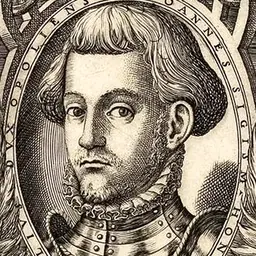
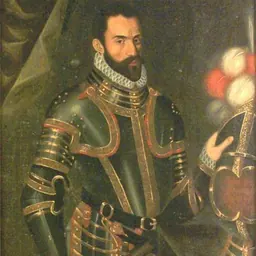
Related people
Same field, nearest in time

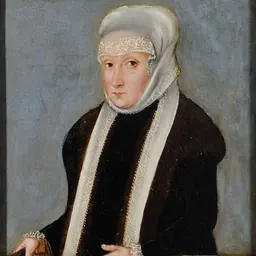
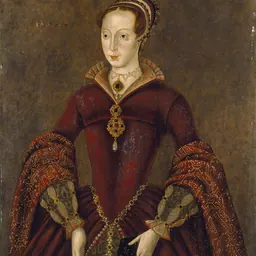

Contemporaries
People whose lives overlapped Catherine Jagellon's





Frequently asked questions
Who was Catherine Jagellon?
Queen of Sweden (1526-1583)
When was Catherine Jagellon born?
Catherine Jagellon was born on 1 November 1526 in Kraków.
When did Catherine Jagellon die?
Catherine Jagellon died on 16 September 1583 in Stockholm Palace, Stockholm.
What was Catherine Jagellon's occupation?
Catherine Jagellon was a queen regnant.
What nationality was Catherine Jagellon?
Catherine Jagellon was Polish.
Sources & further reading
· Wikipedia: Catherine Jagellon
· DBpedia: Catherine Jagiellon
Cite this page
APA: Biography.guide. (2026). Catherine Jagellon. https://biography.guide/catherine-jagellon/
MLA: "Catherine Jagellon." Biography.guide, https://biography.guide/catherine-jagellon/.
Chicago: "Catherine Jagellon." Biography.guide. https://biography.guide/catherine-jagellon/.
Data last updated: 2026-09-20 · Spot an error? Report a correction.
Portrait: Wikimedia Commons · author & licence
Page generated 2026-09-27 04:58 UTC