
About Cartola
Lived 1908 – 1980 (aged 72). Cartola was a Brazilian singer, composer, sambista, recording artist, writer and musician.
Angenor de Oliveira, known as Cartola (Portuguese for top hat), (; October 11, 1908 – November 30, 1980) was a Brazilian singer, composer and poet considered to be a major figure in the development of samba. Cartola got his name from the hat which he used to protect his hair while laying cement in his younger years as a brick layer. He helped to start the Estação primeira da Mangueira samba school in 1928.
Cartola composed, alone or with partners, more than 500 songs.
Biography Angenor de Oliveira was born in 1908 in the Catete neighborhood, in the city of Rio de Janeiro. He was the oldest of eight children of the couple Sebastião Joaquim de Oliveira and Aída Gomes de Oliveira. Although he was given the name Agenor, he was registered as Angenor - a fact that he would only discover many years later, when he was preparing the papers for his marriage to Dona Zica in the 1960s. In order not to have to arrange for a name change at the notary, from then on he officially signed his name as Angenor de Oliveira.
His maternal family was from Campos dos Goytacazes, and his ancestors were slaves of the first Baron of Carapebus. His maternal grandfather, Luís Cipriano Gomes, a famous cook, worked in Macaé, until he was recruited and sent to Rio de Janeiro to serve the President Nilo Peçanha at the Catete Palace.
As a child he watched his own father play the guitar and cavaquinho.
By the late 1940s, things had become worse. At 38, Cartola had a long illness, and shortly after he recovered, his wife died from heart problems. One of his greatest hits, sung by many artists, "Sim (Yes)", was written during his grief.
Impact The 2007 documentary film "Música Para os Olhos", directed by Lírio Ferreira and Hilton Lacerda, is a profile of the life of Cartola.
A biography of Cartola, Divino Cartola – Uma Vida em Verde e Rosa, by Denilson Monteiro, was published in January 2013.
Cartola and Zica appeared briefly in the 1959 film Black Orpheus as a couple at the city hall when the main characters register to get married.
In 2022 the Estação Primeira da Mangueira paid tribute to Cartola along with two other carnaval icons in the Samba-enredo “Angenor, josé and Laurindo”.
In 2023, the Fluminense football club released a special jersey to honor Cartola; who was a lifetime fan of the team. Marking the third time that the team has released a jersey in his honor. The green and pink styling was chosen to represent Cartola's connection with the Estação Primeira de Mangueira school of samba. The jersey also featured lyrics from the song "Corra e olha o céu", written by Cartola and Dalmo Castello. The lyrics were printed on the jersey in Cartola's own handwriting.
In October of 2023 Google released a Google doodle honoring Cartola, it was featured on Google in Mexico, Brazil, Chile, Uruguay, Argentina, Peru and Ireland. It gave a biography of his life and impact.
Work
Cartola composed melodies, harmonies, and lyrics. His lyrics are notable for their very correct use of Portuguese, especially considering his lack of formal higher education. His poetry binds in an effective manner elegance and emotion, while keeping a relatively low level of complexity, which made his work accessible to larger layers of the population.
With regard to tempo, Cartola's music had a strong tendency towards calmer, slower sambas in contrast to the faster, brisker sambas de terreiro seen in samba schools and to other composers' music. Some say his sambas had a tendency towards samba-canção. The cavaquinhos in his records had a certain choro mood, which was less percussive than usual, with the exception of his last records where Alceu Maia was the cavaquinist.
As a musician, Cartola made use of many modulations, some of which were not common in samba at that time. Some of his modulating tunes are "Quem me vê Sorrindo" and "Sim" , "Aconteceu" and "Amor Proibido" , "Inverno do Meu Tempo" and "A Cor da Esperança" . Furthermore, he made use of non-trivial figures such as tritone substitutions and extensive tritone resolutions to the , as can be observed, e.g., in "Alvorada", "Inverno do Meu Tempo" and "Disfarça e Chora".
Discography
Albums 1974 – Cartola 1976 – Cartola II 1977 – Verde Que Te Quero Rosa 1978 – Cartola 70 Anos 1982 – Cartola - Ao Vivo 1982 – Cartola - Documento Inédito
Contributor 1942 – "Native Brazilian Music" – Leopold Stokowski 1967 – "A Enluarada Elizeth" – Elizeth Cardoso ("Seleção de Sambas da Mangueira") 1968 – "Fala Mangueira!" – Odete Amaral, Cartola, Clementina de Jesus, Nelson Cavaquinho, Carlos Cachaça 1970 – "História da música popular brasileira" – with Nelson Cavaquinho 1974 – "História das escolas de samba: Mangueira" -Various 1975 – "MPB – 100 ao vivo" -Various 1980 – "E Vamos À Luta" – Alcione ("Eu Sei") 1993 – "No Tom da Mangueira" – Tom Jobim e Velha Guarda da Mangueira (including his recording of "Não quero mais amar a ninguém")
Tributes 1984 – "Cartola, Entre Amigos" – Various 1987 – "Cartola – 80 Anos" – by Leny Andrade 1988 – "Cartola – Bate outra vez..." – Various 1995 – "Claudia Telles Interpreta Nelson Cavaquinho e Cartola" – by Claudia Telles 1998 – "Sambas de Cartola" – Grupo Arranco 1998 – "Só Cartola" – by Élton Medeiros and Nelson Sargento 1998 – "Cartola – 90 Anos" – by Élton Medeiros and Márcia 2002 – "Cartola" – by Ney Matogrosso 2003 – "Beth Carvalho canta Cartola" – by Beth Carvalho 2008 – "Viva Cartola! 100 Anos" – Various
Don’t just read it —
keep it.
Full-length biographies made to live with: read them, listen on the way to work, watch them tonight.
- E-book
- Audio
- Video
Instant download · yours to keep · every purchase keeps this site free
Important facts
People in Cartola's life
Named in this biography and alive at the same time
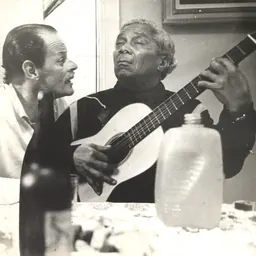
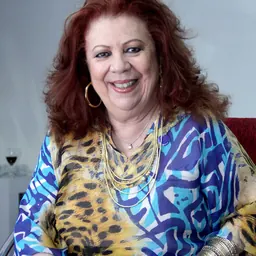
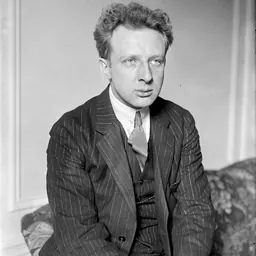
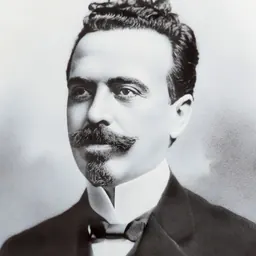

Related people
Same field, nearest in time


Contemporaries
People whose lives overlapped Cartola's




Frequently asked questions
Who was Cartola?
Brazilian singer, composer and poet (1908–1980)
When was Cartola born?
Cartola was born on 11 October 1908 in Rio de Janeiro.
When did Cartola die?
Cartola died on 30 November 1980 in Rio de Janeiro.
What was Cartola's occupation?
Cartola was a singer, composer, sambista, recording artist, writer and musician.
What nationality was Cartola?
Cartola was Brazilian.
Sources & further reading
Cite this page
APA: Biography.guide. (2026). Cartola. https://biography.guide/cartola/
MLA: "Cartola." Biography.guide, https://biography.guide/cartola/.
Chicago: "Cartola." Biography.guide. https://biography.guide/cartola/.
Data last updated: 2026-09-20 · Spot an error? Report a correction.
Page generated 2026-09-27 05:20 UTC