
About Carrie Jacobs-Bond
Lived 1862 – 1946 (aged 84). Carrie Jacobs-Bond was an American composer, singer-songwriter, writer and publisher.
Carrie Minetta Jacobs-Bond (August 11, 1862 – December 28, 1946) was an American singer, pianist, and songwriter who composed some 175 pieces of popular music from the 1890s through the early 1940s.
She is perhaps best remembered for writing the parlor song "I Love You Truly", becoming the first woman to sell one million copies of a song. The song first appeared in her 1901 collection Seven Songs as Unpretentious as the Wild Rose, along with "Just Awearyin' for You", which was also widely recorded.
Jacobs-Bond's song with the highest number of sales immediately after release was "A Perfect Day" in 1910. A 2009 August 29 NPR documentary on Jacobs-Bond emphasized "I Love You Truly" together with "Just Awearyin' for You" and "A Perfect Day" as her three great hits.
Jacobs-Bond was inducted into the Songwriters Hall of Fame in 1970.
Personal life and death
Carrie Minetta Jacobs was born in Janesville, Wisconsin, to Dr. Hannibal Jacobs and his wife, Mary Emogene (or Emma) Davis Jacobs and was an only child. She was a distant cousin of John Howard Payne, the lyricist who wrote "Home Sweet Home." Jacobs was born in the house of her maternal grandparents at the corner of Pleasant Street (now W. Court Street) and Oakhill Avenue. Her father died while she was a child, and the family faced financial difficulties without him. Front cover of "Just Awearyin' for You" (1901), with Jacobs-Bond's artwork, watercolors of the wild rose Most of Jacobs-Bond's family enjoyed playing music, and her father played the flute. Jacobs-Bond could pick out piano tunes at age 4, she could play some pieces just by hearing them at age 6, and then at age 8 she was able to play Liszt's Second Hungarian Rhapsody just by hearing it. She studied the piano from age 9 to age 17, with the dream to become a songwriter. As a child, she attended classes in the Janesville public school system.
During Jacobs' short-lived first marriage to Edward Smith J. Smith of Janesville, at age 18, her only child, Frederick Jacobs Smith, was born on July 23, 1882. This marriage ended in divorce in 1887.
Her second marriage in 1888 was to her childhood sweetheart, physician Frank Lewis Bond of Johnstown, Wisconsin. They lived in Iron River, Michigan, where she was a homemaker and supplemented the family income with painted ceramics, piano lessons, and her musical compositions. thumb
After achieving some success with her composing, Jacobs-Bond moved with her son to Chicago to be closer to music publishers. Her lyrics and music exemplified sentimentality, which was intensely popular at that time. Her publishing company changed location eight times, finally settling in Hollywood, California, which is where she and her son moved to in the early 1920s to help ease the pains of her rheumatism, where she continued performing and publishing.
She named her home there "The End of the Road" (also the title of her 1940 book). She was an early supporter of the Theatre Arts Alliance, which created the Hollywood Bowl near her home. Jacobs-Bond died in her Hollywood home of a cerebral hemorrhage on December 28, 1946, at the age of 85. She is buried in the "Court of Honor" at Forest Lawn Memorial Park Cemetery in Glendale, California.
Poetry and art Jacobs-Bond also published books of children's poetry and an autobiography. Her autobiography The Roads of Melody was published in 1927. She drew the artwork for her sheet music covers. The wild rose, her trademark artwork, appears on many of her publications.
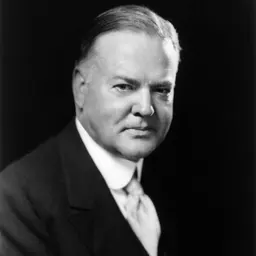
Legacy and honors Former U.S. President Herbert Hoover wrote in her epitaph: "Beloved composer of 'I Love You Truly' . . . and a hundred other heart songs that express the loves and longings, sadness and gladness of all people everywhere . . . who met widowhood, conquered hardship, and achieved fame by composing and singing her simple romantic melodies. She was America's gallant lady of song." The success of Seven Songs allowed Jacobs-Bond to expand her publishing company, known as the Bond Shop, which she had originally opened with her son in her apartment in Janesville.
During World War I Jacobs-Bond gave concerts in Europe for U.S. Army troops. "A Perfect Day" was especially popular among them.
She was invited again to Washington to perform at a White House State Dinner given by President Harding for the Members of the Supreme Court on February 2, 1922.
Carrie Jacobs-Bond was the most successful woman composer of her day, by some reports earning more than $1 million in royalties from her music before the end of 1910. In 1941, the General Federation of Women's Clubs cited Jacobs-Bond for her contributions to the progress of women during the 20th century.
One of her final compositions titled Because of the Light was published in December 1944, when she was 82. Composer Rolande Maxwell Young later revised and updated some of Jacobs-Bond's songs for Boston Music Co.
Jacobs-Bond's life and lyrics serve as testimony to her resilience in overcoming hardships such as poverty, her father's early death, her divorce, her second husband's death, and her son's suicide in 1932 while listening to "A Perfect Day" on the phonograph.
Published works Sheet music
Almost Impossible The Angelus At Morning, Noon and Night A Bad Dream Because I Am Your Friend Because of the Light Betty's Music Box. The Bird Song Birds The Blue Flag, 1917 But I Have You California Chimney Swallows Come, Mr. Dream-maker, 1897 Compensation Consolation A Cottage in God's Garden The Crimson-Breasted Bird Cupid's Home The Dark Lament The Dear Auf Wiedersehn De Las' Long Res', 1901 Des Hold My Hands Tonight, 1901 Do You Remember, 1915 The Elopement The End of a Perfect Day Evening, My Love and You First Ask Yourself The Flying Flag The Forget Me Not The Free Concert The Gate of Tears God Remembers When the World Forgets, 1913 Going to Church with Mother The Golden Key The Good Folk Good Night Got to Practice, 1917 The Hand of You Happy Lil Sal Have You Seen My Kitty? His Buttons Are Marked 'U.S.', 1902 His Lullaby Hollyhocks Homeland A Hundred Years from Now, 1914 Hush-a-by I Love You Truly, 1901 & 1906 I was Dreaming... Maybe If I Could Hear Your Voice Again I'm the Captain of the Broom Stick Cavalry, 1890 In a Foreign Land In Dear Hawaii, 1908 In My Garden In the Meadow, 1925 Is My Molly Dead?, 1895 Is Yo'? Yo' Is, 1905 I've Done My Work, 1920 Jesus Is Calling June and December Just Awearyin' for You, 1901 Just by Laughing Just Lonesome Keep Awake Know and Find Lazy River Life's Garden The Lily and the Rose Linger Not A Little Bit O'Honey, 1917 The Little House Little Lost Youth of Me. A Little Pink Rose, 1912 A Little Shoe Lively Hour Long Time Ago Longing Look Up Love and Sorrow
Lovely Hour Love's Sacred Trust The Lure May I Print a Kiss? Memories of Versailles Waltz A Memory Men and Women Morning and Evening Mother Mine Mother's Cradle Song, 1895 Mother's Three Ages of Man Movin' in de Bes' Soci'ty. My Dear My Garden of Memory My Son! My Soul The Naughty Little Girl Nothin' but Love! Nothing but a Wild Rose Now and Then O Haunting Memory. O Time Take Me Back, 1916 Old Friends of Mine Out in the Fields Over Hills and Fields of Daisies The Pansy and the Forget-Me-Not Parting, 1901 A Perfect Day, 1910 Play Make Believe Please Remember to Forget Robin Adair Roses Are in Bloom The Sandman, 1912 Shadows, 1901 A Sleepy Song Smile a Little Someone I Love is Coming A Song of the Hills The Soul of You Still Unexprest', 1901 Stop and Sing A Study in Symbols Sunshine (Po Li'l Lamb) Ten Thousand Times Ten Thousand There Is a Way Through the Mists Through the Years, 1918 Time Make All but Love the Past Tis Summer in Thine Eyes To-Day. To My Valentine, 1926 To the Savior Called To the Victor (March) To Understand Trouble Two Lovers Tzigani Dances Until Death Until God's Day A Vision Walking in Her Garden Waltz of the Wild Flowers, 1916 The Way of the World We Are All Americans, 1918 Were I When Church is Out When do I Want You Most? When God Puts Out the Light When I am Dead, My Dearest When I Bid the World Goodnight When My Ships Come to Me When You're Sad Where Youth's Eternal Who is True? Why Write to Me Often, Dear, 1896 Your Song
Song books
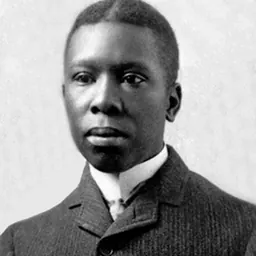
Eleven Songs, 1897 Mother's Cradle Song Write to Me Often, Dear Come, Mr. Dream-Maker The Pansy and the Forget Me Not Who is True June and December Someone I Love Is Coming Through the Mists Until Death Four Songs, 1899 A Little Shoe Have You Seen My Kitty? The Bird Song When My Ships Come Home Seven Songs as Unpretentious as the Wild Rose, 1901 Shadows w.m. Jacobs-Bond, pp. 3–5 Parting w. William Ordway Prestridge m. Jacobs-Bond, pp. 6–7 Just Awearying for You w. Frank Lebby Stanton m. Jacobs-Bond, pp. 8–9 De Las' Long Res' w. Paul Laurence Dunbar m. Jacobs-Bond, p. 10 I Love You Truly w.m. Jacobs-Bond, p. 11 Still Unexprest w.m. Jacobs-Bond, pp. 12–13 Des Hold My Hands Tonight w.m. Jacobs-Bond, pp. 14–15 Two Songs, 1902 May I Print a Kiss Two Lovers Twelve Songs, 1902 A Bad Dream I Was Dreaming... Maybe Linger Not Love's Sacred Trust Mother's Three Ages of Man Over Hills and Fields of Daisies The Dear Auf Wiedersehn Time Make All But Love the Past When I Am Dead, My Dearest When I Bid the World Goodnight Three Songs, 1904 Nothing But a Wild Rose The Angelus Walking in Her Garden
Ten Songs, 1905 In a Foreign Land Just By Laughing Men and Women My Dearest Dear When Do I Want You Most? Where to Build Your Castles Two Songs, 1907 Happy Lil Sal Trouble Half Minute Songs or Miniature Songs, 1910 Making the Best of It First Ask Yourself To Understand Doan' Yo' Lis'n How to Find Success The Pleasure of Giving Answer the First Rap A Good Exercise A Present From Yourself Now and Then When They Say the Unkind Things Keep Awake The Smile Songs, 1910 Know and Find Look Up Mother Mine Please A Memory Smile a Little Stop and Sing The Good Folk The Way of the World There Is a Way Why Almost Impossible Little Kitchen Songs and Stories, 1911 Thirty Songs: Songs Everybody Sings, about 1927
Autobiography Jacobs-Bond, Carrie. The Roads of Melody: My Story. New York: D. Appleton and Company, 1927. 224 pp.
Poetry
Short stories
Don’t just read it —
keep it.
Full-length biographies made to live with: read them, listen on the way to work, watch them tonight.
- E-book
- Audio
- Video
Instant download · yours to keep · every purchase keeps this site free
Important facts
People in Carrie Jacobs-Bond's life
Named in this biography and alive at the same time




Related people
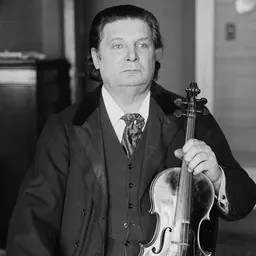
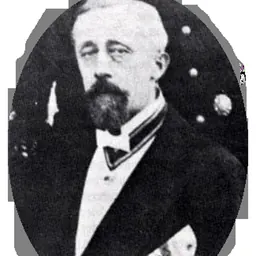
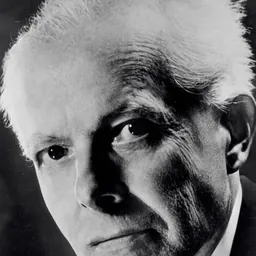
Same field, nearest in time


Contemporaries
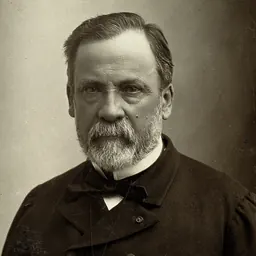
People whose lives overlapped Carrie Jacobs-Bond's





Frequently asked questions
Who was Carrie Jacobs-Bond?
American composer (1862–1946)
When was Carrie Jacobs-Bond born?
Carrie Jacobs-Bond was born on 11 August 1862 in Janesville.
When did Carrie Jacobs-Bond die?
Carrie Jacobs-Bond died on 28 December 1946 in Hollywood.
What was Carrie Jacobs-Bond's occupation?
Carrie Jacobs-Bond was a composer, singer-songwriter, writer and publisher.
What nationality was Carrie Jacobs-Bond?
Carrie Jacobs-Bond was American.
Sources & further reading
· Wikipedia: Carrie Jacobs-Bond
Cite this page
APA: Biography.guide. (2026). Carrie Jacobs-Bond. https://biography.guide/carrie-jacobs-bond/
MLA: "Carrie Jacobs-Bond." Biography.guide, https://biography.guide/carrie-jacobs-bond/.
Chicago: "Carrie Jacobs-Bond." Biography.guide. https://biography.guide/carrie-jacobs-bond/.
Data last updated: 2026-09-20 · Spot an error? Report a correction.
Page generated 2026-09-27 05:31 UTC