
About Carlos Soria
Lived 1949 – 2012 (aged 62). Carlos Soria was an Argentine lawyer and politician.
Carlos Ernesto Soria (March 1, 1949 – January 1, 2012) was an Argentine lawyer and Justicialist Party politician who served as governor of Río Negro Province from December 10, 2011, until his murder at the hands of his wife Susana Freydoz.
Early life and career Soria was born in Bahía Blanca in 1949, and was raised in a nearby rural town, General Daniel Cerri. His father, Ernesto Soria, was an outspoken Peronist, and was arrested shortly after the 1955 coup against President Juan Perón. Following his release several months later, the Sorias relocated to Bariloche. The elder Soria was again arrested amid a crackdown on Peronist protests during a state visit to Bariloche by U.S. President Dwight Eisenhower in March 1959, and was imprisoned in Bahía Blanca. He was released in April 1962 and the family settled in General Roca, Río Negro, where they opened a neighborhood store.
Carlos Soria enrolled at the University of Buenos Aires, earning a law degree in 1973. Elections that March returned Peronists to power, and Soria was elected to the local Justicialist Party (JP) chapter. He was later elected to the Provincial Council of the JP, and upon the return of democracy in 1983, won a seat in the Argentine Chamber of Deputies. and served in the Council of Magistracy of the Nation.
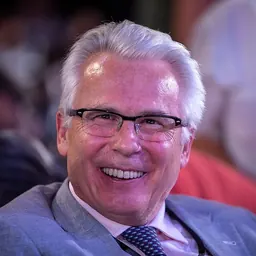
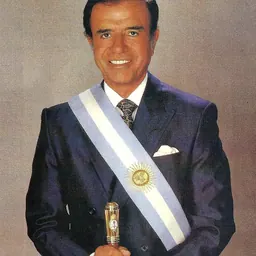
Soria shared President Carlos Menem's opposition to trials opened in 1996 in Spanish courts against Dirty War perpetrators by Judge Baltasar Garzón, and personally led a delegation to protest these trials; when Judge Garzón turned the tables on the delegation by calling them to testify, they returned, however, creating an embarrassing diplomatic incident. He later presented a bill to restrict rights and toughen sentences for those accused of violent crime, as well as another which would have granted congressional immunity to all members in perpetuity; both bills were defeated. Soria promptly released hitherto sequestered police files relating to the case which confirmed that the robbery, as well as the deaths of all robbers and hostages alike, had been orchestrated by Provincial Police officers.
Remaining on the electoral list for National Deputies, Soria took his seat in Congress in December representing the Province of Buenos Aires. He became among the leading congressional opponents of President Fernando de la Rúa's austerity package, scuttling a 2000 decree which would have cut public sector salaries (this ultimately took place the following year). President de la Rúa's resignation in December 2001, and the subsequent Congressional designation of Duhalde as provisional president resulted in Soria's appointment as Secretary of State Intelligence (SIDE) in January 2002.
Fallout from this incident was compounded by allegations made by Senator Cristina Fernández de Kirchner that SIDE personnel were spying on her husband, Santa Cruz Governor Néstor Kirchner, who had recently declared his intention to run for President the following year. though in elections held later in 2003, Soria narrowly won the election for mayor of the city of General Roca (the largest in the province). both men were cleared of all charges.
Death Soria died on January 1, 2012, during the new year celebrations with his family at his farm near General Roca. He was shot in the face with a .38 caliber weapon at around 5 am, and was moved immediately to a nearby hospital, where he died minutes later. The police did not determine initially whether the death was caused by an accident or foul play; his wife was held for further questioning. He received a private funeral. That November, Susana Freydoz was convicted of murder and sentenced to 18 years in prison.
Vice-governor Alberto Weretilneck succeeded Soria as governor. Weretilneck considered calling new elections, despite provisions in the Constitution of Río Negro Province that would allow him to complete the remainder of Soria's term. He however chose not to call new elections and was reelected in 2015.
Don’t just read it —
keep it.
Full-length biographies made to live with: read them, listen on the way to work, watch them tonight.
- E-book
- Audio
- Video
Instant download · yours to keep · every purchase keeps this site free
Important facts
Family & relationships
People in Carlos Soria's life
Named in this biography and alive at the same time





Related people
Same field, nearest in time
Contemporaries
People whose lives overlapped Carlos Soria's


Frequently asked questions
Who was Carlos Soria?
Argentine politician
When was Carlos Soria born?
Carlos Soria was born on 1 March 1949 in General Daniel Cerri.
When did Carlos Soria die?
Carlos Soria died on 1 January 2012 in General Roca.
What was Carlos Soria's occupation?
Carlos Soria was a lawyer and politician.
What nationality was Carlos Soria?
Carlos Soria was Argentine.
Sources & further reading
Cite this page
APA: Biography.guide. (2026). Carlos Soria. https://biography.guide/carlos-soria/
MLA: "Carlos Soria." Biography.guide, https://biography.guide/carlos-soria/.
Chicago: "Carlos Soria." Biography.guide. https://biography.guide/carlos-soria/.
Data last updated: 2026-09-20 · Spot an error? Report a correction.
Page generated 2026-09-27 05:23 UTC