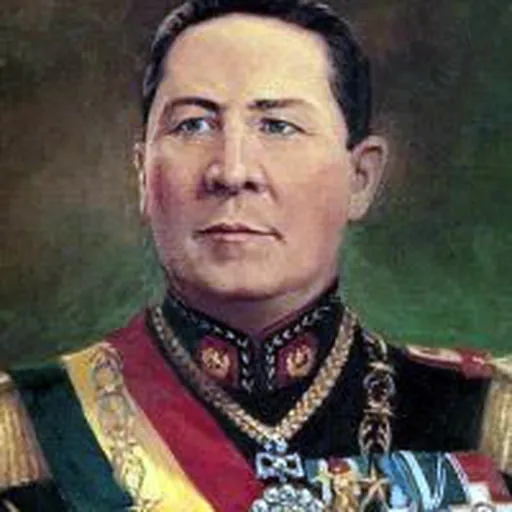
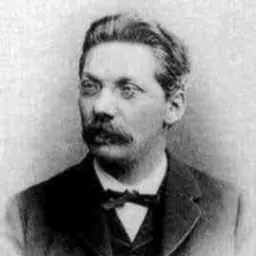
About Carlos Quintanilla
Lived 1888 – 1964 (aged 76). Carlos Quintanilla was a Bolivian diplomat and politician.
Dismissal The fall of Boquerón led Salamanca to make changes in the high command of the armed forces. Osorio was replaced as Chief of the General Staff by José Leonardo Lanza while Quintanilla was replaced by Bernardino Bilbao Rioja. Initially, neither Osorio nor Quintanilla objected to this. At 1:10 p.m on 8 October, Quintanilla telegraphed Salamanca stating that "I am ready to leave [in the] early hours on the 11th". However, just a few hours later at 3:25 p.m. a second telegraphed letter gave an entirely different response. According to the six-point document, "The president in an unconsulted way for the current moment, has replaced General Osorio with General Lanza and adopting measures that contradict the plan of operations. Consequently, the Army ignores the authority of the President of the Republic and continues to recognize and will support General Osorio in his capacity as Chief of Staff in the Campaign".
The letter was signed by Quintanilla and Colonel David Toro, a fact which Foreign Minister David Alvéstegui Laredo took to mean that the original message had been the real thoughts of Quintanilla while the second had been the "result of a deliberation in which Toro imposed his ideas and undoubtedly it was he who wrote it". Whatever the case, a lack of support from other officers and the intervention of former president Ismael Montes forced Toro and Quintanilla to retract their attempted insubordination. In another message to Salamanca, Quintanilla wrote: "I must expressly state that official attitude does not inspire any subaltern or less subversive purpose".
1939 coup d'état In the early hours of 23 August 1939, a severely depressed Busch committed suicide, shooting himself in the right temple. At 6 a.m., General Quintanilla arrived at the Miraflores hospital where Busch was undergoing an agonizing operation. Seeing that the ailing president was unlikely to recover, the general then traveled with full speed back to the center of La Paz where he staged a military occupation of the Palacio Quemado, the government palace. The military justified their actions under the pretense that the death of Busch constituted an acephaly (absence of the head) of the Executive Power. However, such an argument would have also required the death of Vice President Enrique Baldivieso who was very much still alive. As such, the military also argued that Baldivieso had renounced his constitutional right to succession by engaging in the self-coup which dissolved the assembly and made Busch dictator months prior.
Months later on 4 December, by simple decree Quintanilla amended article 90 of the 1938 Constitution, outright abolishing the vice presidency claiming that the office was "not justified either by public needs or by the political tradition of the country".
Interim president (1939–1940) Busch finally died at 2:45 p.m. Soon after in a radio address to the nation, Quintanilla announced that "the life of the greatest Bolivian citizen, visionary and energetic statesman, the greatest and most enlightened defender of the rights of the State and the interests of the people, has just been tragically extinguished". In the same address, the general declared himself provisional president.
In the immediate aftermath of Busch's suicide, Quintanilla was faced with the task of stabilizing the country while also dispelling accusations that he was enacting a coup and that the president had been assassinated. In order to reinforce the version of Busch's suicide, the government of Quintanilla issued a statement on 24 August which "leaves on record with full evidence that the death of the president is due to an absolutely voluntary act by determination made under the weight of his deep patriotic anguish".
Despite swearing that his government would "continue the directives and orientations of the social and economic policy of Colonel Busch's,"
1940 general election
Although Quintanilla sought to exercise a longer government, he could not resist the general pressure from both the conservative oligarchy and the young officers. Due to Quintanilla's prolonged indecision to call elections, General Enrique Peñaranda declared to the press that the country urgently needed "direct general elections to be called".
Military College revolt General Bernardino Bilbao Rioja, who succeeded Quintanilla as commander-in-chief of the army, was promoted as a potential presidential candidate. Bilbao represented the line of Toro and Busch, was an admired hero of the Chaco War, and had the consensus among ex-combatants that Quintanilla lacked. Further, he had succeeded Busch as the Supreme Leader of the Legion of Veterans, legitimizing him among the junior officers.
In order to ensure the power of the senior officers, Quintanilla enacted measures to put down leftist opposition. On 25 October, Bilbao was summoned to the government palace to meet with the president. As soon as he arrived, he was surrounded by several men who mercilessly beat him until he was unconscious. Gagged and handcuffed, he was taken to a train station and deported on the spot to Arica. Following this, Quintanilla declared that "In the protection of social tranquillity, threatened in recent days and in my duty as a leader, I have accepted with feeling, but without hesitation the departure of General Bilbao Rioja". Later, Chief of the General Staff Antenor Ichazo took responsibility for the attack, arguing that Bilbao was preparing a coup.
The attack on Bilbao outraged the young officers of the military who threatened to rise up in open revolt against the government. Soon, eleven men of the Military College of the Army under the leadership of its director Lieutenant Colonel Sinforiano Bilbao (Bernardino Bilbao's brother), published a manifesto ignoring Quintanilla as provisional president, arming themselves in protest and threatening to bomb the Palacio Quemado.
At the same time, the Superior War School in Cochabamba made its own formal protest demonstration. A delegation of Cochabamba officers met with Quintanilla in La Paz in which both parties came to a mutual agreement. Quintanilla agreed to reinstate Bernardino Bilbao to his post as commander-in-chief of the armed forces within ten days, promised to maintain Sinforiano Bilbao as director of the Military College, and pledged not to sanction any retaliatory measures against any of the military elements that participated in the uprising. In return, Sinforiano agreed to lay down arms.
The camperada General elections were held on 10 March 1940. Given the suppression of opposition leaders, Peñaranda won in an absolute majority with 58,060 votes against only 10,000 of his opponent, the Marxist José Antonio Arze. A minor setback in the transition occurred on 26 March when the perpetrators of the attack on Bilbao supposed that they could launch a coup of their own. In the early hours of 26 March, Antenor Ichazo and the police corps took up arms, taking over the entrances to the Plaza Murillo. However, when Quintanilla woke up at 5 AM he was surprised by troop movements in the plaza and ordered them to withdraw. Seeing the failure of the operation, Ichazo's nerves failed him and he turned coat and sided with the president. thumb
Later years and death Following the inauguration of Peñaranda, Quintanilla left the Palacio Quemado and moved to Rome, where he served as the Bolivian ambassador to the Holy See until 1941.
Quintanilla died in his native Cochabamba on 8 June 1964, at the age of 76.
Don’t just read it —
keep it.
Full-length biographies made to live with: read them, listen on the way to work, watch them tonight.
- E-book
- Audio
- Video
Instant download · yours to keep · every purchase keeps this site free
Important facts
People in Carlos Quintanilla's life
Named in this biography and alive at the same time


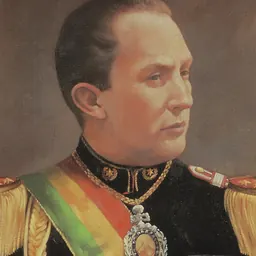
Related people
Same field, nearest in time

Contemporaries
People whose lives overlapped Carlos Quintanilla's



Frequently asked questions
Who was Carlos Quintanilla?
Bolivian diplomat (1888-1964)
When was Carlos Quintanilla born?
Carlos Quintanilla was born on 22 January 1888 in Cochabamba.
When did Carlos Quintanilla die?
Carlos Quintanilla died on 8 June 1964 in Cochabamba.
What was Carlos Quintanilla's occupation?
Carlos Quintanilla was a diplomat and politician.
What nationality was Carlos Quintanilla?
Carlos Quintanilla was Bolivian.
Sources & further reading
· Wikipedia: Carlos Quintanilla
Cite this page
APA: Biography.guide. (2026). Carlos Quintanilla. https://biography.guide/carlos-quintanilla/
MLA: "Carlos Quintanilla." Biography.guide, https://biography.guide/carlos-quintanilla/.
Chicago: "Carlos Quintanilla." Biography.guide. https://biography.guide/carlos-quintanilla/.
Data last updated: 2026-09-22 · Spot an error? Report a correction.
Portrait: Wikimedia Commons · author & licence
Page generated 2026-09-27 05:04 UTC