
About Carlos Obregón Santacilia
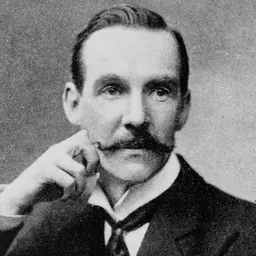
Lived 1896 – 1961 (aged 64). Carlos Obregón Santacilia was a Mexican architect and painter.
Carlos Obregón Santacilia (1896–1961) was a Mexican art déco architect. He trained at the Academy of San Carlos during the Mexican Revolution. He claimed a distinguished Mexican heritage, as great grandson of Benito Juárez and grand nephew of Alvaro Obregón.
Obregón saw the new architecture following the violent and destructive Mexican Revolution as the government's impulse to be constructive. Among other works, Obregón Santacilia redesigned the building housing the Secretariat of Foreign Relations, at the request of Alberto J. Pani. The building went from a Louis XIV style structure to a neo-Colonial work, opened in 1924. Minister of Public Education in the Obregón government, José Vasconcelos asked Obregón Santacilia to design a large primary school in Mexico City, to be built in "new nationalist perspective." He also designed the new building for the Secretariat of Health and Welfare (1926), later decorated with murals by Diego Rivera. He reworked the abandoned legislative palace of the Díaz era and transformed it to the Monumento a la Revolución, located in Mexico City.
Career During his early career of the 1920's, Carlos Obregon Santacilia had taken part in designing the main auditorium at UNAM. He along with other architects like Mauricio Gomez Mayorga and Jose Villagran Garcia, who worked on the design of the museum of UNAM, as well as plenty of students were unknowingly revolutionaries of modernism in Mexico due to the innovative ideas implemented in their designs. Obregon Santacilia was involved in the architectural community so much that he was made the president of the Sociedad de Arquitectos Mexicanos’. Santacilia had introduced the contest in El Universal newspaper 1932 edition for who could come up with a progressive approach to housing that supported the working class. This promoted designs that would give better quality and spatial conditions for the proletariats to which a Juan Legaretta won first prize and his modernistic pueblo-styled buildings came to fruition in 1934.
In 1922, one of Obregon Santacilia's first commissions was significant to the independence of South America and was a monument designed for the Mexico Pavilion in Rio De Janeiro, Brazil; however, one of the first introductions of art deco in Mexico would be in 1923 when he remodeled the Ministry of Foreign Affairs. A structure more significant to his career would be the commission from Profirio Diaz for the monument of the revolution located in the Plaza de la Republica 1937 and the most unique aspect of this project would be that Santacilia repurposed the metal structure left behind by the once Legislative Palace. Santacilia was key to the refreshing design of the Ministry of Health building 1925-1929 because he acknowledged how colonial influences infiltrated Mexico's architecture and in order to bring a sense of nationality across the country, as the government requested, his choice of style suggests that of a pre-Columbian Mexico.
Legacy Despite having professors that pushed the European style like most art academies, Obregon Santacilia used an unorthodox and more indigenous approach to his work that gave Mexico a new identity. His designs were not particularly French like his past professors had trained him to produce but instead he decided to use the tapered and organic styles of pre-colonized Mexico and apply that to modernist architecture. He completely rejected the concept of keeping the European identity and instead reevaluated Mexican cultural identity in architecture
Carlos Obregon Santacilia has made many contributions through changing the standards in the architectural community in Mexico and his publications and theories. He has an entire book dedicated to the influences in his career in Mexico City titled Carlos Obregon Santacilia: A Foreunner of Mexican Modernity by Victor Jimenez. Sanatcilia eventually succumbed to his cancer and died in Mexico City in 1961 where his career was most evident.
Publications El Maquinismo, la Vida y la Arquitectura/Machines, Life, and Architecture. Cleveland: J.H. Jansen 1939. Cincuenta (50) Años de Arquitectura Mexicana (1900-1950). Mexico City: Editorial Patria 1952. El Monumento a la Revolución, Simbolismo e Historia. Mexico: Secretaria de Educación Pública, Departamento de Divulgación 1960.
Don’t just read it —
keep it.
Full-length biographies made to live with: read them, listen on the way to work, watch them tonight.
- E-book
- Audio
- Video
Instant download · yours to keep · every purchase keeps this site free
Important facts
People in Carlos Obregón Santacilia's life
Named in this biography and alive at the same time


Related people
Same field, nearest in time


Contemporaries
People whose lives overlapped Carlos Obregón Santacilia's



Frequently asked questions
Who was Carlos Obregón Santacilia?
Mexican architect (1896-1961)
When was Carlos Obregón Santacilia born?
Carlos Obregón Santacilia was born on 5 November 1896 in Mexico City.
When did Carlos Obregón Santacilia die?
Carlos Obregón Santacilia died on 24 September 1961 in Mexico City.
What was Carlos Obregón Santacilia's occupation?
Carlos Obregón Santacilia was an architect and painter.
What nationality was Carlos Obregón Santacilia?
Carlos Obregón Santacilia was Mexican.
Sources & further reading
· Wikipedia: Carlos Obregón Santacilia
· DBpedia: Carlos Obregón Santacilia
Cite this page
APA: Biography.guide. (2026). Carlos Obregón Santacilia. https://biography.guide/carlos-obregon-santacilia/
MLA: "Carlos Obregón Santacilia." Biography.guide, https://biography.guide/carlos-obregon-santacilia/.
Chicago: "Carlos Obregón Santacilia." Biography.guide. https://biography.guide/carlos-obregon-santacilia/.
Data last updated: 2026-09-25 · Spot an error? Report a correction.
Page generated 2026-09-27 05:11 UTC