
About Carlos Lopez
Lived 1908 – 1953 (aged 44). Carlos Lopez was a Cuban and American painter.
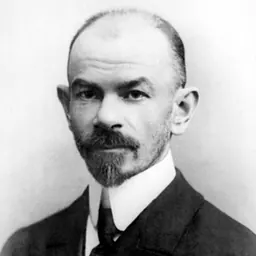
Carlos Lopez (May 24, 1908 – January 6, 1953) was a Havana-born early 20th century American artist, recognized for his New Deal-era murals in Michigan, Illinois, and Washington, D.C.
Highly regarded in his own time, although considered “forgotten” by the 1990s,
Background Carlos Lopez was born in Havana, Cuba, on May 24, 1908, and spent his childhood in Spain. After being raised mostly in Spain and immigrating to the United States in 1919 with his mother and siblings, He studied for three years at the Detroit Art Academy, then attend the Detroit Art Academy where he met his wife, Rhoda LeBlanc Lopez, who was a sculptor, medical illustrator, and painter who would assist him with his mural projects, as well as at the Art Institute of Chicago, and with Leon Makielski. He became a well-known painter in Michigan, and during President Franklin D. Roosevelt's New Deal program, the Works Progress Administration, he received five commissions to create murals in Michigan, Illinois, and Washington D.C.
Lopez was the director of the Detroit Art Academy from 1933 to 1937 and from 1937 to 1942 he taught at the Meinzinger Art School in Detroit.
He taught art at the University of Michigan from 1945 until his death in 1953. Lopez was the only Latinx professor at the School of Art and Design until 2017. Carlos Lopez was remembered as popular professor, known for his loyalty and devotion to his students which they admired for his support and his wisdom. He was remembered for often telling his students, "I can teach you to draw, but I cannot teach you to be an artist."
Lopez and other artists were requested to capture the “American style” of realistically portraying the ordinary citizens from different parts of communities. They were encouraged to produce works that were appropriate to the communities and be in accessible open locations for the citizens while keeping in mind to avoid controversial subjects. Lopez focused on the future of communities and businesses in his work while it displayed the narrative form of historical events in an uplifting tone.
Bounty (1940) - WPA Mural, Post Office in Paw Paw, Michigan In 1940, Carlos Lopez created the Bounty mural for the post office in Paw Paw, MI. Using a distinct illustrative style reflective of American popular culture, the upper panel of the mural shows the rich agricultural bounty of the prosperous Michigan farming communities of Van Buren County. His work been displayed to the Recorder of Deeds building that was housed in the DC Court of Appeals before became part of Cultural Tourism DC attraction as part of African American Heritage Trail.
Pioneer Society's Picnic (1942) - WPA Mural, Post Office in Birmingham, Michigan Lopez has faced heavy criticism that is considered controversial for the disagreement of the appearance in one of his murals, “Pioneer Society’s Picnic”. In 1942, Lopez received a $1,400 government-sponsored commission to paint a tempera mural in the Birmingham, Michigan post office. They wanted a mural to be displayed on the east wall above a bulletin board to open the new post office. Lopez selected the image from 1850 of the residents in Birmingham and Oakland County gathered for an annual picnic for his typical pioneer scene. Lopez added details if early historical photographs and portraits of a few Birmingham residents that he used as models during the creation of the mural. The features in the mural were taken from other sources as part of inspiration like Leonardo da Vinci's The Virgin and Child with St. Anne and the Infant St. John of 1498. During the production of his painting, the community started to feel hostile towards Lopez for not only being the outsider, but they also accused him of being unfamiliar with their culture due to subjects’ racial features in his mural. His mural was almost destroyed but was protected by Joseph Sparks and Zoltan Sepeshy, director of Cranbrook Academy of Art and Lopez's old friend. Sight Unseen, Abend Gallery, Golden Triangle. Denver, Colorado, USA.
Collections
His work is in the collections of the Detroit Institute of Art, the University of Michigan Museum of Art (UMMA), and the Henry Ford Museum. Valparaiso University holds US Navy Art Collection. Westborn Market, Plymouth, Michigan. Hoisting Anti-Aircraft Gun(1942) is in the collection of the Smithsonian American Art Museum Wayne State University holds four of his paintings. Detroit Mercy Law School Birmingham, Michigan Post Office
Honors and rewards Detroit Art Shows
Friends of Modern Art Prize in 1936 He was survived by his wife Rhoda, a 12-year-old son, John, and his 16-year-old daughter. His family donated many of his works of art, and moved to San Diego, where his wife became an art professor at UC San Diego Extension school and founded an art community center.
Carlos Lopez painted one of the seven 1943 murals at the D.C. Recorder of Deeds Building that depict African-American contributions to the nation's history
Don’t just read it —
keep it.
Full-length biographies made to live with: read them, listen on the way to work, watch them tonight.
- E-book
- Audio
- Video
Instant download · yours to keep · every purchase keeps this site free
Important facts
People in Carlos Lopez's life
Named in this biography and alive at the same time





Related people
Same field, nearest in time


Contemporaries
People whose lives overlapped Carlos Lopez's


Frequently asked questions
Who was Carlos Lopez?
Cuban-American painter and muralist (1908–1953)
When was Carlos Lopez born?
Carlos Lopez was born on 24 May 1908 in Havana.
When did Carlos Lopez die?
Carlos Lopez died on 6 January 1953 in Ann Arbor.
What was Carlos Lopez's occupation?
Carlos Lopez was a painter.
What nationality was Carlos Lopez?
Carlos Lopez was Cuban and American.
Sources & further reading
· DBpedia: Carlos Lopez (artist)
Cite this page
APA: Biography.guide. (2026). Carlos Lopez. https://biography.guide/carlos-lopez/
MLA: "Carlos Lopez." Biography.guide, https://biography.guide/carlos-lopez/.
Chicago: "Carlos Lopez." Biography.guide. https://biography.guide/carlos-lopez/.
Data last updated: 2026-09-20 · Spot an error? Report a correction.
Page generated 2026-09-27 05:19 UTC