
About Carlos Castañeda
Lived 1896 – 1958 (aged 61). Carlos Castañeda was an American historian and librarian.
Carlos Eduardo Castañeda (November 11, 1896 – April 3, 1958) was a historian, specializing in the history of Texas, and a leader in the push for civil rights for Mexican-Americans.
Born in Mexico, Castañeda immigrated to the United States with his family in 1908. He gained an undergraduate and master's degree in history from the University of Texas at Austin, and then spent several years teaching Spanish at the College of William and Mary. While there, he helped establish the college's Catholic ministry and what became Saint Bede Catholic Church. Castañeda returned to Texas in 1927, serving as the first curator of the Latin American collection at the University of Texas. While he worked as a librarian, Castañeda pursued his doctorate in history, which he finally earned in 1932.
Castañeda's work as a historian focused on the Spanish borderlands, especially Texas. He combed various archives in Mexico to find and copy previously unknown documentation on life in Texas and the southwestern United States. For his work in documenting Catholic history in Texas, Castañeda was named a Knight of the Holy Sepulchre and a Knight Commander in the Order of Isabella the Catholic of Spain.
During World War II, Castañeda took a leave of absence from his teaching position at the University of Texas to work as an investigator for the Fair Employment Practices Committee. He advocated for equal rights for Mexican-Americans, and was promoted to regional director of the FEPC southwest region in 1946.
The Perry–Castañeda Library at the University of Texas is named for him.
Early years Carlos Eduardo Castañeda was born November 11, 1896, in Camargo, Mexico, The family moved to Brownsville, Texas in 1908, He earned a scholarship to the University of Texas at Austin, where he initially studied civil engineering. After working for prominent historian Eugene Campbell Barker, Castañeda discovered a love of history and changed his major. He received his BA in history in 1921.
For the next two years, Castañeda pursued his master's degree in history while also working as a high school Spanish teacher. Although Castañeda enjoyed teaching, he missed his home state and wanted to return to a focus on Texas history. He began looking for opportunities to return. Driscoll quickly authorized Castañeda to gather information. He was soon appointed curator of the newly established Latin American Collection at his alma mater, beginning the job in 1927. He negotiated a workday of only seven hours a day, giving him time to work on his own projects and pursue a doctorate degree.
In 1929, Castañeda discovered a wealth of documents relating to the history of Texas during Spanish and Mexican rule in the archives of the Mexican states of Coahuila and Nuevo León. Earlier historians, including Barker and Bolton, had either overlooked the records or failed to copy the information for use by historians in Texas. Castañeda intended to photocopy the information from the archives in Saltillo, the capitol of the defunct Mexican state of Coahuila y Tejas, noting that it "is of the move vital nature for the history of Texas".
Castañeda received a scholarship from the Farmer Foundation for his final year of graduate classes, 1929–1930, easing some of his financial worries. While he worked to complete his coursework, Castañeda translated the pamphlet Latin America and the United States into Spanish for the Knight of Columbus to distribute. After passing his examinations, Castañeda reapplied for the scholarship so that he could work on his dissertation. He remained busy throughout 1930, editing a volume of documents from Mexican archives, La guerra de reforma: segun el archivo del General D. Manuel Doblado, 1857–1860.
In April 1930, Castañeda joined the Sociedad de Geografia y Estadistica in Mexico City. While there, he discovered that the National Library of Mexico now housed the archives from the Franciscan order in New Spain. A quick perusal revealed over 500,000 pages of new documents, many discussing Texas. Morfi's work had been considered lost until Castañeda discovered a copy in the Franciscan archives. The same year, Castañeda's second child, Consuela, was born. By 1942, he had finished five volumes of Our Catholic Heritage, covering the years of 1519 through 1810. The final two volumes, covering the time from 1810 through 1950, were published in 1948 and 1958. During his tenure, Castañeda took on the oil refineries in the Houston metropolitan area. Mexican-American workers had complained that they were paid less than their white counterparts, had no access to promotions, and were forced to use the facilities marked for colored people. In a scathing response to Shell Oil, Castañeda pointed out that Mexicans were legally classified as white, and that the state laws, "regrettable as the fact is", insisted on separate accommodations for white and black. By making Mexicans use the colored areas, the company was in violation of the law. Shell and the union both admitted that the policies violated the law, but maintained they would be at a competitive disadvantage if they chose to comply; every time the company attempted to promote Mexican-American workers, white workers went on strike.
Castañeda returned to the University of Texas in 1946. His personal papers are held at the University of Texas. The Perry–Castañeda Library at the University of Texas is named for him.
For his work on Catholic history, Castañeda was named a Knight of the Holy Sepulchre by the Catholic Church and a Knight Commander in the Order of Isabella the Catholic of Spain. He was granted an honorary LLD degree by the Catholic University of America, and was given the Serra Award of the Americas in 1951.
Analysis of writings Scholar Mario T. Garcia described Castañeda's historical works as "an optimistic and positivist view of history".
Unlike many historians of the era, Castañeda focused on the similarities between the Spanish-Mexican and Anglo-American traditions in North America. This was an attitude common among Mexican-American leaders of the time. In the context of Texas history, Castañeda was highly critical of the traditional approach of American historians, who ignored all events in Texas before the arrival of the Anglos. In addition, he sought to revise the approach taken to the Texas Revolution. American historians focused on Anglo accomplishments in the war and stressed the Anglo victory over Mexicans, an attitude that Castañeda said "was largely responsible for the superiority complex that underlies the attitude towards the Mexican in Texas today". Castañeda urged historians to focus on the impact that Tejanos, Mexican-born citizens of Texas, had on the revolution. In speeches, he compared the Texan army of the revolution, composed of Anglos, Mexicans, and others, to the Allied Forces of World War II, each group composed of multiple ethnicities fighting for freedom. He discussed the unofficial classification of Mexicans as "non-white" but not "colored", which was generally used for purposes of racial discrimination. His essays stressed that Mexicans had been in Texas and the rest of the Southwestern United States for much longer than the Anglos, and that because of that history they could be considered more American than those considered fully white. He attacked the economic discrimination, in which Mexicans were paid less than whites for the same work. As a solution, Castañeda advocated increased educational opportunities for Mexican-Americans and the continuation of the Fair Employment Practices Commission.
Don’t just read it —
keep it.
Full-length biographies made to live with: read them, listen on the way to work, watch them tonight.
- E-book
- Audio
- Video
Instant download · yours to keep · every purchase keeps this site free
Important facts
People in Carlos Castañeda's life
Named in this biography and alive at the same time
Related people
Same field, nearest in time

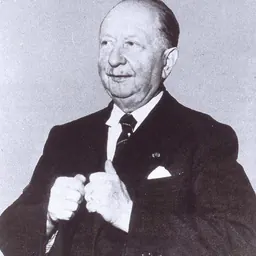
Contemporaries
People whose lives overlapped Carlos Castañeda's


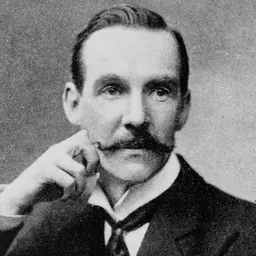


Frequently asked questions
Who was Carlos Castañeda?
American historian
When was Carlos Castañeda born?
Carlos Castañeda was born on 11 November 1896 in Ciudad Camargo.
When did Carlos Castañeda die?
Carlos Castañeda died on 3 April 1958.
What was Carlos Castañeda's occupation?
Carlos Castañeda was a historian and librarian.
What nationality was Carlos Castañeda?
Carlos Castañeda was American.
Sources & further reading
· DBpedia: Carlos Castañeda (historian)
Cite this page
APA: Biography.guide. (2026). Carlos Castañeda. https://biography.guide/carlos-castaneda/
MLA: "Carlos Castañeda." Biography.guide, https://biography.guide/carlos-castaneda/.
Chicago: "Carlos Castañeda." Biography.guide. https://biography.guide/carlos-castaneda/.
Data last updated: 2026-09-20 · Spot an error? Report a correction.
Page generated 2026-09-27 05:22 UTC