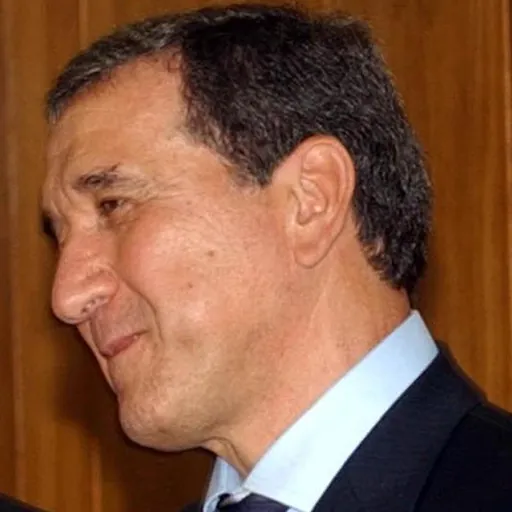
Carlos Alberto Parreira
Brazilian football manager
About Carlos Alberto Parreira
Born 1943. Carlos Alberto Parreira is a Brazilian association football player and association football coach.
Carlos Alberto Gomes Parreira (born 27 February 1943) is a Brazilian former football manager who holds the record for attending the most FIFA World Cup tournaments as manager with six appearances. He also managed five different national teams in six editions of the FIFA World Cup. He managed Brazil to victory at the 1994 World Cup, the 2004 Copa América, and the 2005 Confederations Cup. He is also the only manager to have led two different Asian teams to conquer the AFC Asian Cup.
He last managed the South Africa national football team.
Parreira is one of the most successful managers to have never played football himself.
Coaching career Parreira supports Fluminense, and he has won two league titles for the club: The First Division Brazilian Championship in 1984 and the Third Division in 1999. About the latter title, Parreira has said that this was personally the most important trophy of his career, even more so than Brazil's World Cup triumph, as the club he loved was facing near-bankruptcy and became very close to extinction at the time.
Parreira is one of two coaches that has led five national teams to the World Cup: Kuwait in 1982, United Arab Emirates in 1990, Brazil in 1994 and 2006, Saudi Arabia in 1998 and South Africa in 2010. The other coach, Bora Milutinović, reached this record when he led a fifth team in 2002. Parreira was also involved with the 1970 championship team for Brazil, which he claims was an inspiration for him to aspire to be a national football coach.
In 1997, Parreira coached the MetroStars of the American Major League Soccer. He also coached Fenerbahçe in Turkey and won a Turkish League Championship. Parreira was in charge of Corinthians in 2002, which gave him two of the most important national trophies of 2002: The Brazilian Cup and the Torneio Rio-São Paulo, besides being runner up at the Brazilian League.
When coaching Saudi Arabia at the 1998 World Cup in France, he was fired after two matches, one of three managers to be sacked during the tournament.
Parreira repeatedly turned down offers to coach Brazil again between 1998 and 2002 World Cups. In end of 2000, when the team was in turmoil after firing Vanderlei Luxemburgo, he refused the post, stating that he did not want to relive the stress and pressure of winning the World Cup again. There were public cries again to replace Luiz Felipe Scolari for Parreira in July 2001 when Brazil lost two matches to Mexico and Honduras in its title defense at the 2001 Copa América in Colombia, especially after last minute invitee (replacing Argentina who dropped out one day before the kickoff) Honduras defeated 2–0 and eliminated the favorite Brazil in quarter finals round on July 23, 2001. Parreira only stated that he would indirectly assist Scolari in the 2002 campaign. After the 2002 World Cup, Parreira took part in drafting a technical report of the tournament. He was named coach along with Mario Zagallo as assistant director in January 2003, with the goal of defending their World Cup title in Germany 2006, but on July 1, 2006, Brazil was defeated and eliminated 0–1 by France in the quarterfinals.
After Brazil's exit from the World Cup, Parreira was heavily criticized by the Brazilian public and media for playing an outdated brand of football and not using the players available to him properly. Parreira subsequently resigned on July 19, 2006. He coached Brazil to victory in the 1994 FIFA World Cup and was the coach of the South Africa national football team until resigning in April 2008. On October 22, 2009, it was announced he would return as head coach of South Africa. He announced a verbal agreement with the South African Football Association on October 23, 2009.
He resumed coaching South Africa in 2009 in time for the 2010 World Cup. In South Africa, his team drew with Mexico, 1–1, in the tournament opener, lost to Uruguay, 3–0, and beat France, 2–1, to finish third in Group A. After the France game, he tried to shake hands with French coach Raymond Domenech but the latter refused.
On 25 June 2010 he announced his retirement as football coach.
Style of management In contrast to other previous more offensive-minded managers of the Brazil national team, who were inspired by Brazil's tradition of "jogo bonito" and "futebol arte," but who had not won the World Cup since 1970, Parreira was instead known for his more pragmatic and physical attitude as a coach, with a focus on defensive stability. During the team's victorious 1994 World Cup campaign, he used a 4–4–2 formation, with a strong back-line, and two defensive midfielders – Mauro Silva and Dunga – who won back the ball and distributed it to other players, helping his team control possession. He also fielded Mazinho – normally a full-back – as a winger. While Parreira was praised by pundits for his success with the Brazil national team, his tactical intelligence, and his hard-working approach as a manager, the atypically less spectacular gameplay of the Brazil national side under his tenure was also criticised in the press. Due to Dunga's key role as captain and the starting holding midfielder in the team, this period came to be known derisively as the "Dunga Era" in the media.
Managerial statistics
Career statistics
Fitness coach São Cristóvão (1967) Vasco da Gama (1969) Brazil (1970) Fluminense (1970–1974)
Assistant coach Brazil (Olympic Team) (1972) Kuwait (1976–1977)
FIFA World Cup matches Parreira has coached national squads in 23 games in FIFA World Cup finals. Parreira's coaching record is 10–4–9 (Wins-Draws-Losses). His teams have scored 28 goals and conceded 32. Below is a list of all matches, along with their outcomes:
1982 FIFA World Cup
1990 FIFA World Cup
1994 FIFA World Cup
1998 FIFA World Cup
2006 FIFA World Cup
2010 FIFA World Cup
Honours Manager Club Fluminense Série A: 1984 Série C: 1999
Fenerbahçe Süper Lig: 1995–96
Corinthians Torneio Rio – São Paulo: 2002 Copa do Brasil: 2002
International Kuwait Arabian Gulf Cup: 1982 AFC Asian Cup: 1980
Brazil Amistad Cup: 1992 FIFA World Cup: 1994 Copa América: 2004 FIFA Confederations Cup: 2005 Lunar New Year Cup: 2005
Saudi Arabia AFC Asian Cup: 1988
South Africa COSAFA Cup: 2007
Individual World Soccer Magazine World Manager of the Year: 1994 IFFHS World's Best National Coach: 2005
Don’t just read it —
keep it.
Full-length biographies made to live with: read them, listen on the way to work, watch them tonight.
- E-book
- Audio
- Video
Instant download · yours to keep · every purchase keeps this site free
Important facts
People in Carlos Alberto Parreira's life
Named in this biography and alive at the same time

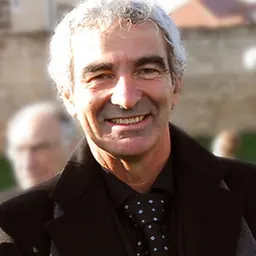
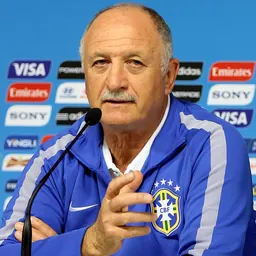




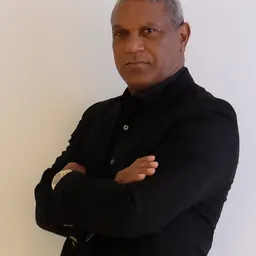
Related people
Same field, nearest in time




Contemporaries
People whose lives overlapped Carlos Alberto Parreira's

Frequently asked questions
Who is Carlos Alberto Parreira?
Brazilian football manager
When was Carlos Alberto Parreira born?
Carlos Alberto Parreira was born on 27 February 1943 in Rio de Janeiro.
What is Carlos Alberto Parreira's occupation?
Carlos Alberto Parreira is an association football player and association football coach.
What nationality is Carlos Alberto Parreira?
Carlos Alberto Parreira is Brazilian.
Sources & further reading
· Wikipedia: Carlos Alberto Parreira
· DBpedia: Carlos Alberto Parreira
Cite this page
APA: Biography.guide. (2026). Carlos Alberto Parreira. https://biography.guide/carlos-alberto-parreira/
MLA: "Carlos Alberto Parreira." Biography.guide, https://biography.guide/carlos-alberto-parreira/.
Chicago: "Carlos Alberto Parreira." Biography.guide. https://biography.guide/carlos-alberto-parreira/.
Data last updated: 2026-09-22 · Spot an error? Report a correction.
Portrait: Wikimedia Commons · author & licence
Page generated 2026-09-27 05:03 UTC