
About Mauro Silva
Born 1968. Mauro Silva is a Brazilian association football player.
Mauro da Silva Gomes (; born 12 January 1968), known as Mauro Silva, is a Brazilian former professional footballer who played as a defensive midfielder. Regarded as one of the foremost players in his position during the 1990s, he was known for his stamina, physical strength, tackling, positional awareness and leadership, as well as his ability to regain possession and provide balance for more attack-minded teammates.
Silva spent the majority of his career with Deportivo, joining the Spanish club in 1992 and becoming a central figure in the side commonly known as Super Dépor. During his 13 seasons in La Liga, he helped establish Deportivo among the leading clubs in Spanish football, making 458 competitive appearances and scoring one goal. He won six major honours with the club, including the 1999–2000 La Liga title, and retired there in 2005.
At international level, Silva earned 59 caps for the Brazil national team. He formed a strong defensive midfield partnership with Dunga during Brazil's victorious 1994 FIFA World Cup campaign, providing the tactical balance behind the team's more creative attacking players. He also appeared in two editions of the Copa América, winning the tournament in 1997.
Club career Silva was born in São Bernardo do Campo, São Paulo. After starting playing with Guarani he moved to Bragantino in 1990, where he spent the following two seasons. Subsequently, he was acquired by Spain's Deportivo La Coruña, for 250 million pesetas (approximately €1.6 million), arriving at the same time as countryman Bebeto.
Silva was an everpresent fixture with the Galicians, only suspensions and injuries preventing him from being cast into the starting XI – in the 1994–95 campaign he only appeared in six La Liga matches and, already 36, was limited to 20 in his final year – as he helped them to one league, two cups and three supercups, adding to this the team's five participations in the UEFA Champions League, reaching the semi-finals in 2003–04: after a 0–0 away draw against Porto he missed the second leg due to suspension, and Depor lost 1–0.
On 22 May 2005, after 13 years with Deportivo, Silva was replaced by longtime understudy Aldo Duscher during a 3–0 home loss against Mallorca, bidding farewell to the Estadio Riazor and football in the same match as another club legend, Fran.
International career With Brazil, Silva collected 59 caps over ten years, making his debut in 1991. He played in every match and minute (except for the second half of the group stage match against Sweden) in his nation's victorious campaign at the 1994 FIFA World Cup; in the same year, he was named by FIFA as the ninth best player in the world. According to the organisation, the lack of attacking play in the final of the tournament against Italy was in part down to strong holding midfield play by Dino Baggio for Italy, and Dunga and Mauro Silva for Brazil; following a 0–0 draw after extra-time, Brazil won the match in a penalty shoot-out.
Style of play A consistent, disciplined and hard-working defensive midfielder, Mauro Silva was known particularly for his ability to regain possession, intercept passes and distribute the ball accurately to his teammates, rather than for flair or creativity. His positional awareness, tactical intelligence, physical strength and effective use of his body enabled him to shield the ball, win contested challenges and break up opposing attacks. Although he was not a specialist playmaker, he generally kept possession moving through simple and efficient passing. He also provided balance for his more attack-minded teammates, most notably by forming a strong defensive midfield partnership with Dunga during Brazil's victorious 1994 FIFA World Cup campaign.
Silva received considerable recognition as one of the foremost defensive midfielders of his era. Brazilian newspaper Folha de S.Paulo described him as one of the most important defensive midfielders of his generation, while El País characterised him as a "global midfielder" capable of combining the best qualities of the Brazilian and European schools of football. Diario AS similarly called him a historic reference in the defensive midfield position. Santiago Segurola also placed him within a small group of exceptional ball-winners alongside Sergio Busquets, Claude Makélélé and Franco Baresi.
Career statistics Club
International
Honours Bragantino Campeonato Paulista: 1990
Deportivo La Liga: 1999–2000 Copa del Rey: 1994–95, 2001–02 Supercopa de España: 1995, 2000, 2002
Brazil FIFA World Cup: 1994 Copa América: 1997; runner-up 1991 CONCACAF Gold Cup: third place 1998
Individual Bola de Ouro: 1991 Bola de Prata: 1991, 1992 World Soccer World XI: 1992 La Liga Team of The Year: 1993
Don’t just read it —
keep it.
Full-length biographies made to live with: read them, listen on the way to work, watch them tonight.
- E-book
- Audio
- Video
Instant download · yours to keep · every purchase keeps this site free
Important facts
People in Mauro Silva's life
Named in this biography and alive at the same time

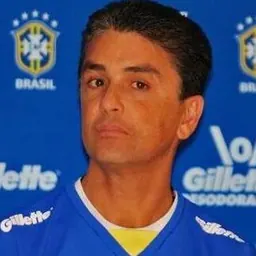
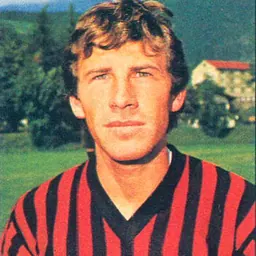
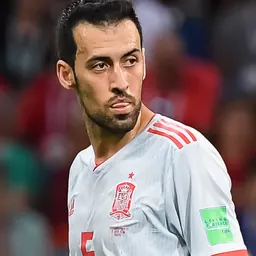


Related people
Same field, nearest in time
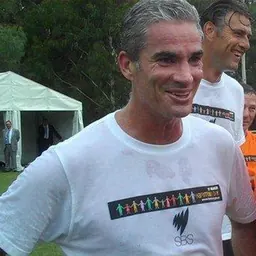


Contemporaries
People whose lives overlapped Mauro Silva's




Frequently asked questions
Who is Mauro Silva?
Brazilian association football player (born 1968)
When was Mauro Silva born?
Mauro Silva was born on 12 January 1968 in São Bernardo do Campo.
What is Mauro Silva's occupation?
Mauro Silva is an association football player.
What nationality is Mauro Silva?
Mauro Silva is Brazilian.
Sources & further reading
Cite this page
APA: Biography.guide. (2026). Mauro Silva. https://biography.guide/mauro-silva/
MLA: "Mauro Silva." Biography.guide, https://biography.guide/mauro-silva/.
Chicago: "Mauro Silva." Biography.guide. https://biography.guide/mauro-silva/.
Data last updated: 2026-09-20 · Spot an error? Report a correction.
Page generated 2026-09-27 05:29 UTC