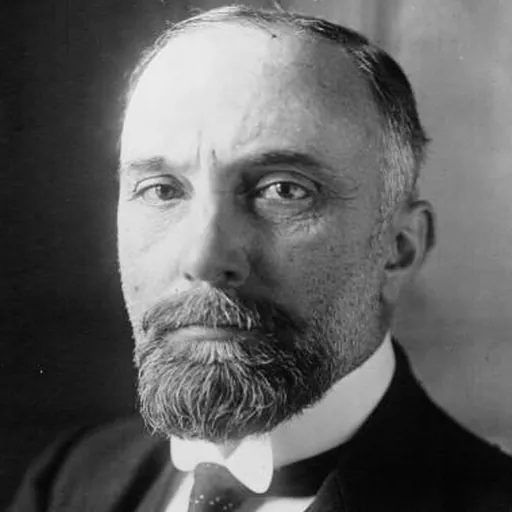
About Carlo Sforza
Lived 1872 – 1952 (aged 80). Carlo Sforza was an Italian diplomat and politician.
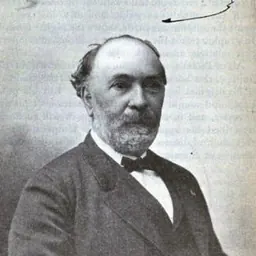
Count Carlo Sforza (24 January 1872 – 4 September 1952) was an Italian nobleman, diplomat and anti-fascist politician.
Life and career
Sforza was born in Lucca, the second son of Count Giovanni Sforza (1846-1922), an archivist and noted historian from Montignoso, Tuscany, and Elisabetta Pierantoni, born in a family of rich silk merchants. His father was a descendant of the Counts of Castel San Giovanni, an illegitimate branch of the House of Sforza who had ruled the Duchy of Milan in the fifteenth and sixteenth centuries. At the death of his older brother in 1936, Carlo inherited the hereditary title of Count granted to their father in 1910.
The Count was a member of the ancient Sforza dynasty, descendant from a branch of the Dukes of Milan, and related to the Pallavicini family as well as other Italian noble families, such as the Medici and Orsini. His wife, Countess Valentina Errembault de Dudzeele (1875 - 1969) was from an old Belgian noble family.
After graduating in law from the University of Pisa, Sforza entered the diplomatic service in 1896. He served as consular attaché in Cairo (1896) and Paris (1897), then as consular secretary in Constantinople (1901) and Beijing. He was then appointed chargé d'affaires in Bucharest in 1905, but a diplomatic incident caused him to resign in December of the same year. Nevertheless, he was sent as private secretary of Marquis Emilio Visconti-Venosta, the Italian delegate to the Algeciras Conference.
Visconti-Venosta's recommendation earned him the post of first secretary of legation in Madrid (1906-1907), before being sent as chargé d'affaires in Constantinople (1908-1909) where he witnessed the Young Turk Revolution. Counsellor of the Embassy at London in 1909, he then made his first experience of government as cabinet secretary of the Italian foreign minister for some months in the Fortis cabinet. From 1911 to 1915, he was sent to China. where he witnessed the 1911 Revolution which ended the Qing dynasty and renegotiated the statute of the Italian concession of Tientsin with the new Chinese authorities.
Sforza was in favour of an Italian intervention in the First World War on the side of the Allies. From 1915 to 1919, he was sent as ambassador in Corfu to the exiled Serbian government. After the First World War he became Italian foreign minister under Giovanni Giolitti. In 1921 Sforza upset nationalist right-wing forces by signing the Rapallo Treaty which recognised the important port of Fiume as a free city. As minister of Foreign Affairs, he was instrumental in breaking the proto-fascist feud led by poet Gabriele D'Annunzio in Fiume. He remained foreign minister until the fall of the Giolitti cabinet on 4 July 1921.
Sforza was appointed ambassador to France in February 1922 but resigned from office nine months later on 31 October after Benito Mussolini had gained power. In June 1924, when Mussolini was weakened by news of the murder of a Socialist deputy in parliament and opponents debated their course of action, Sforza quietly proposed a swift attack to depose him but was unable to find men capable of such a strong-arm plot. Sforza led the anti-fascist opposition in the Senate until being forced into exile in 1926. While living in exile in Belgium, the native country of his wife, Sforza published the books, European Dictatorships, Contemporary Italy, Synthesis of Europe, as well as many articles where he analysed the fascist ideology and attacked its many well-wishers as well as different "appeasers" in England, France and elsewhere. He published the 1928 book L'Enigme Chinoise based on his experiences in China.
Sforza was a critic of the Holy See's decision to consecrate the first six Chinese bishops in modern times.
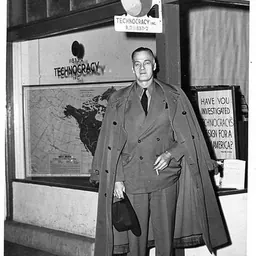
Sforza and his wife had a daughter, Fiammetta (Beijing 3 October 1914 – 2002), who married Howard Scott ("a divorced father-of-two non-Catholic and penniless Englishman"), and a son, Count Sforza-Galeazzo («Sforzino») Sforza (Corfu 6 September 1916 – Strasbourg 28 December 1977), a sculptor, for a time the lover of Argentine painter Leonor Fini, and later Deputy Secretary General of the Council of Europe (1968-1978). The latter first married Corinne Simon (1927-2011) and then Anne Spehner, but did not leave a son and at his death, the title of Count passed to a cousin.
Carlo Sforza was also the alleged biological father of Konstanty Jeleński.
Honours
Don’t just read it —
keep it.
Full-length biographies made to live with: read them, listen on the way to work, watch them tonight.
- E-book
- Audio
- Video
Instant download · yours to keep · every purchase keeps this site free
Important facts
People in Carlo Sforza's life
Named in this biography and alive at the same time



Related people
Same field, nearest in time

Contemporaries
People whose lives overlapped Carlo Sforza's



Frequently asked questions
Who was Carlo Sforza?
Italian politician (1872-1952)
When was Carlo Sforza born?
Carlo Sforza was born on 23 January 1872 in Montignoso.
When did Carlo Sforza die?
Carlo Sforza died on 4 September 1952 in Rome.
What was Carlo Sforza's occupation?
Carlo Sforza was a diplomat and politician.
What nationality was Carlo Sforza?
Carlo Sforza was Italian.
Sources & further reading
Cite this page
APA: Biography.guide. (2026). Carlo Sforza. https://biography.guide/carlo-sforza/
MLA: "Carlo Sforza." Biography.guide, https://biography.guide/carlo-sforza/.
Chicago: "Carlo Sforza." Biography.guide. https://biography.guide/carlo-sforza/.
Data last updated: 2026-09-22 · Spot an error? Report a correction.
Portrait: Wikimedia Commons · author & licence
Page generated 2026-09-27 05:04 UTC