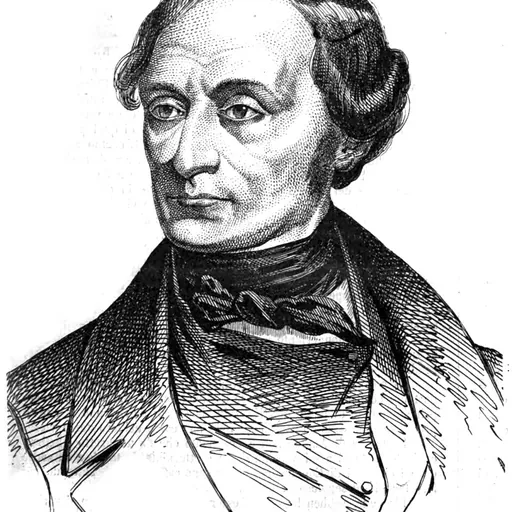
Carlo Ottavio, Count Castiglione
Italian philologist and numismatist
About Carlo Ottavio, Count Castiglione
Lived 1784 – 1849 (aged 64). Carlo Ottavio, Count Castiglione was a linguist, numismatist, archaeologist, philologist and orientalist.
Count Carlo Ottavio Castiglioni (1784–1849) was an Italian philologist and numismatist.
Life He was born of an ancient family at Milan, Italy, in 1784.
He was descended from Baldassare Castiglione, the author of Il Cortegiano.
Early in life he displayed a great aptitude for languages and numismatics and quickly acquired a mastery of almost all the Indo-European and Semitic languages.
He died at Genoa on the 10th of April 1849. His Life, by Biondelli, appeared at Milan in 1856.
Works
In 1819, he published a description of the Kufic coins in the Gabinetto of Brera at Milan, under the title, Monete cufiche del museo di Milano (Milan, 1819).
His principal work was done in connection with the Arabic and other Semitic languages, but he also performed good service in several other departments.
His principal work in Oriental literature is entitled Mémoire géographique et numismatique sur la partie orientale de la Barbarie appelée Afrikia par les Arabes, suivi de recherches sur les Berbères atlantiques (Milan, 1826). In this work, which established his reputation, he endeavours to ascertain the origin and the history of the towns in Barbary whose names are found on Arabic coins.
Outside of Italy he is perhaps best known by his edition, begun in 1819, of some fragments of the Gothic translation of the Bible by Ulfilas, which had been discovered in 1817 by Cardinal Mai among the palimpsests of the Ambrosian Library. At first Castiglioni brought out some specimens in conjunction with the cardinal, but later at various times he published by himself a number of fragments of the Epistles of St. Paul.
In 1829 he published by himself the Gothic version of the Second Epistle to the Corinthians; and this was followed by the Gothic version of the Epistle to the Romans, the First Epistle to the Corinthians, and the Epistle to the Ephesians in 1834, by Epistle to the Galatians, Philippians, and 1 Thessalonians in 1835, and by 2 Thessalonians in 1839. Besides these he wrote numerous unpublished works on linguistics.
Don’t just read it —
keep it.
Full-length biographies made to live with: read them, listen on the way to work, watch them tonight.
- E-book
- Audio
- Video
Instant download · yours to keep · every purchase keeps this site free
Important facts
Related people
Same field, nearest in time


Contemporaries
People whose lives overlapped Carlo Ottavio, Count Castiglione's




Frequently asked questions
Who was Carlo Ottavio, Count Castiglione?
Italian philologist and numismatist (1784-1849)
When was Carlo Ottavio, Count Castiglione born?
Carlo Ottavio, Count Castiglione was born on 23 October 1784 in Milan.
When did Carlo Ottavio, Count Castiglione die?
Carlo Ottavio, Count Castiglione died on 10 April 1849 in Genoa, Milan.
What was Carlo Ottavio, Count Castiglione's occupation?
Carlo Ottavio, Count Castiglione was a linguist, numismatist, archaeologist, philologist and orientalist.
Sources & further reading
· Wikipedia: Carlo Ottavio, Count Castiglione
· DBpedia: Carlo Ottavio, Count Castiglione
Cite this page
APA: Biography.guide. (2026). Carlo Ottavio, Count Castiglione. https://biography.guide/carlo-ottavio-count-castiglione/
MLA: "Carlo Ottavio, Count Castiglione." Biography.guide, https://biography.guide/carlo-ottavio-count-castiglione/.
Chicago: "Carlo Ottavio, Count Castiglione." Biography.guide. https://biography.guide/carlo-ottavio-count-castiglione/.
Data last updated: 2026-09-22 · Spot an error? Report a correction.
Portrait: Wikimedia Commons · author & licence
Page generated 2026-09-27 05:04 UTC