
About Carlo Fornara
Lived 1871 – 1968 (aged 96). Carlo Fornara was an Italian painter.
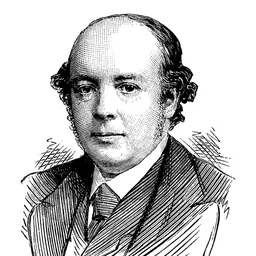
Carlo Fornara (21 October 1871 – 15 September 1968) was an Italian neo-impressionist and divisionist painter.
Biography Born in Prestinone (Craveggia) into a humble family of Valle Vigezzo farmers in 1871, his talent emerged after he began attending courses in painting, drawing and ornamentation at the local Rossetti Valentini Art School in Santa Maria Maggiore, where he became close friends with other future painters such as Giovanni Battista Ciolina, Gian Maria Rastellini and Lorenzo Peretti Junior, and absorbed the teachings of Enrico Cavalli, a great connoisseur of the French art of the time, who decisively influenced him to follow the path of painting.
In the spring of 1891, he exhibited two works, La bottega del calderaio (The Tinker’s Workshop) and Ricordanze (Remembrance), at the First Triennale of Brera, a vitally important occasion because there he made contact for the first time with the arising divisionist movement. However, during his stay in Lyon, from 1894 to 1895, in the company of his friend and fellow painter Giovanni Battista Ciolina, Fornara drew closer to the neo-impressionist movement, as he manifested in the work En plein air which was, however, refused in 1897 by the Third Biennale of Brera, despite being judged very positively by artists such as Giuseppe Pellizza da Volpedo and Giovanni Segantini, two of the leading exponents of divisionism.
In 1899, he took part in the in Venice.
He made the acquaintance of Alberto Grubicy de Dragon, owner of the Grubicy Gallery and brother of the promoter of divisionism in Europe, the art dealer Vittore Grubicy de Dragon, himself a painter, and impressed them both. They put him in touch with Segantini, who employed the young artist as his assistant at the 1900 Paris Exposition Universelle. Thanks to the patronage of the Grubicys, Fornara’s work was presented at all the national and international painting exhibitions of any importance in those years, but his adherence to the divisionist school gradually began to wane until it finally petered out altogether during the 1920s, when the artist began his own painting research in a completely personal style. In 1922, he definitively retired to his beloved Val Vigezzo, where he died in 1968.
Exhibitions "Una scuola di pittura in Val Vigezzo: 1881–1919": Turin/Novara, 1990 "Carlo Fornara. Un maestro del divisionismo": Trento, 1998 "Carlo Fornara. Il colore della valle": Acqui Terme, 2007 "Paesaggi dell'Ottocento. Verso la luce": Riva del Garda, 2010 "Le soglie della natura": Arco di Trento, 2010 "Alessandro Poscio, collezionista appassionato": Domodossola, 2014 "Carlo Fornara e il ritratto vigezzino": Domodossola, 2015 "Brera 1891. L’esposizione che rivoluzionò l’arte moderna": Milan, 2016
Literature Thieme-Becker: "Allgemeines Lexikon der Bildenden Künstler von der Antike bis zur Gegenwart", Seemann, Leipzig, 1907–1950 Raffaele Calzini: "Carlo Fornara", Pizzi, Milan, 1949 Auctores varii: "Carlo Fornara nel centenario della sua nascita", n. 3 "Oscellana" magazine, Domodossola, 1971 Marco Valsecchi/Franco Vercelotti: "Carlo Fornara pittore", All'insegna del pesce d'oro, Milan, 1971 Guido Cesura: "Enrico Cavalli e la pittura vigezzina", Colombi, Milan, 1974 Davide Ramoni: "Scuola di belle arti Rossetti Valentini in Santa Maria Maggiore. Vicende e contributi alla pittura vigezzina nel centenario della fondazione", tip. S. Gaudenzio, Novara, 1978 Dario Gnemmi: "Una scuola di pittura in Val Vigezzo: 1881–1919. Carlo Giuseppe ed Enrico Cavalli, Giovanni Battista Ciolina, Carlo Fornara", Il Quadrante, Turin, 1990 Guido Cesura: "Enrico Cavalli pittore", Grossi, Domodossola, 1993 Dario Gnemmi: "Retour à la ferme", Biglia Club, Domodossola, 1993 Annie-Paule Quinsac: "Carlo Fornara. Un maestro del Divisionismo", Skira, Milan, 1998 Francesco Ferrari: "La scuola di belle arti Rossetti Valentini in Santa Maria Maggiore", Grossi, Domodossola, 1999 Dario Gnemmi: "Monticelli e la scuola di Enrico Cavalli", Madame Webb, Domodossola, 2006 Dario Gnemmi: "Vigezzini di Francia. Pittura d'alpe e d'Oltralpe tra Otto e Novecento in Valle Vigezzo", Skira, Milan, 2007 Giovanna Nicoletti: "Paesaggi dell'Ottocento. Verso la luce", Temi, Trento, 2009 Davide Brullo: "Carlo Fornara attraverso le lettere ad Amedeo Catapano", Marietti 1820, Bologna, 2010 Giovanna Nicoletti/Dario Gnemmi: "Le soglie della natura", Grafica 5, Arco di Trento, 2010 Davide Brullo: "Appassionata incompetenza. I primi cinquant'anni della collezione Poscio", Madame Webb, Domodossola, 2011
Don’t just read it —
keep it.
Full-length biographies made to live with: read them, listen on the way to work, watch them tonight.
- E-book
- Audio
- Video
Instant download · yours to keep · every purchase keeps this site free
Important facts
People in Carlo Fornara's life
Named in this biography and alive at the same time





Related people
Same field, nearest in time

Contemporaries
People whose lives overlapped Carlo Fornara's

Frequently asked questions
Who was Carlo Fornara?
Italian painter (1871-1968)
When was Carlo Fornara born?
Carlo Fornara was born on 21 October 1871 in Craveggia.
When did Carlo Fornara die?
Carlo Fornara died on 15 September 1968 in Craveggia.
What was Carlo Fornara's occupation?
Carlo Fornara was a painter.
What nationality was Carlo Fornara?
Carlo Fornara was Italian.
Sources & further reading
Cite this page
APA: Biography.guide. (2026). Carlo Fornara. https://biography.guide/carlo-fornara/
MLA: "Carlo Fornara." Biography.guide, https://biography.guide/carlo-fornara/.
Chicago: "Carlo Fornara." Biography.guide. https://biography.guide/carlo-fornara/.
Data last updated: 2026-09-20 · Spot an error? Report a correction.
Page generated 2026-09-27 05:02 UTC