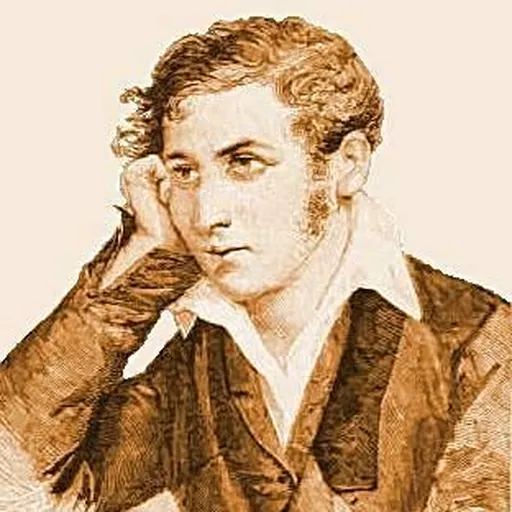
Carlo Cattaneo
Italian patriot, philosopher and politician
About Carlo Cattaneo
Lived 1801 – 1869 (aged 67). Carlo Cattaneo was an Italian philosopher, politician, academic, historian, political scientist and linguist.
Carlo Cattaneo (; 15 June 1801 – 6 February 1869) was an Italian philosopher, writer, and activist, famous for his role in the Five Days of Milan in March 1848, when he led the city council during the rebellion.
Early life and education
Cattaneo was born in Milan on 15 June 1801. He was the son of Melchiorre Cattaneo, a goldsmith, and Maria Antonia Sangiorgi. After attending school in Milan he studied law at the University of Pavia, graduating in 1824. Cattaneo expounded his ideas in a review initiated by him in Milan in 1839, called Il Politecnico. He resided at the Palazzo Gavazzi from 1840 until 1848. In 1835 married his longtime fiancé Anne Pyne Woodcock (Limerick 1793 - Lugano 1869), a noblewoman.
1848 revolution
Cattaneo was a moderate Italian patriot. He supported the revolutions of 1848 and moved to Lombardy where a revolutionary council took control of the city administration. Cattaneo became one of the leaders of the insurrection against the Austrian Empire, known as the Five Days of Milan (18-22 March 1848). Together with the young democrats Enrico Cernuschi, Giulio Terzaghi, and Giorgio Clerici he formed a council of war which, having its headquarters at Palazzo Taverna in via Bigli, directed the operations of the insurgents.
When on March 18 Field Marshal Radetzky, feeling that the position of the Austrian garrison was untenable, sounded the rebels as to their terms, some of the leaders were inclined to agree to an armistice which would give time for the Piedmontese troops to arrive (Piedmont had just declared war), but Cattaneo insisted on the complete evacuation of Lombardy. Again, on 21 March, Radetzky tried to obtain an armistice, and Durini and Borromeo were ready to grant it, for it would have enabled them to reorganize the defences and replenish the supplies of food and ammunition, which could only last another day. However, Cattaneo replied:
The enemy having furnished us with munitions thus far, will continue to do so. Twenty-four hours of victuals and twenty-four hours of hunger will be many more hours than we shall need. This evening, if the plans we have just arranged should succeed, the line of the bastions will be broken. At any rate, even though we should lack bread, it is better to die of hunger than on the gallows.
On the expulsion of the Austrians the question arose as to the future government of Milan and Italy. Cattaneo was an uncompromising republican and a federalist; so violent was his dislike of the Piedmontese monarchy that when he heard that King Charles Albert had been defeated by the Austrians, and that Radetzky was marching back to reoccupy Milan, he exclaimed:
Good news, the Piedmontese have been beaten. Now we shall be our own masters; we shall fight a people's war, we shall chase the Austrians out of Italy, and set up a Federal Republic.
Exile and later career
When the Austrians returned, in August 1848, Cattaneo fled Milan and took refuge in the canton of Ticino, Switzerland. In 1852 he became a professor of philosophy at the new lyceum of Lugano, where he taught until 1865, and played a decisive role in defining the institution's pedagogy.
Published works by Cattaneo
Interdizioni israelitiche, essay from the year 1836 La città considerata come principio ideale delle istorie italiane Dell'India antica e moderna Notizie naturali e civili su la Lombardia Vita di Dante di Cesare Balbo Dell'Insurrezione di Milano nel 1848 e della successiva guerra
Don’t just read it —
keep it.
Full-length biographies made to live with: read them, listen on the way to work, watch them tonight.
- E-book
- Audio
- Video
Instant download · yours to keep · every purchase keeps this site free
Important facts
People in Carlo Cattaneo's life
Named in this biography and alive at the same time

Related people
Same field, nearest in time



Contemporaries
People whose lives overlapped Carlo Cattaneo's






Frequently asked questions
Who was Carlo Cattaneo?
Italian patriot, philosopher and politician (1801-1869)
When was Carlo Cattaneo born?
Carlo Cattaneo was born on 15 June 1801 in Milan.
When did Carlo Cattaneo die?
Carlo Cattaneo died on 6 February 1869 in Lugano.
What was Carlo Cattaneo's occupation?
Carlo Cattaneo was a philosopher, politician, academic, historian, political scientist and linguist.
What nationality was Carlo Cattaneo?
Carlo Cattaneo was Italian.
Sources & further reading
Cite this page
APA: Biography.guide. (2026). Carlo Cattaneo. https://biography.guide/carlo-cattaneo-philosopher/
MLA: "Carlo Cattaneo." Biography.guide, https://biography.guide/carlo-cattaneo-philosopher/.
Chicago: "Carlo Cattaneo." Biography.guide. https://biography.guide/carlo-cattaneo-philosopher/.
Data last updated: 2026-09-21 · Spot an error? Report a correction.
Portrait: Wikimedia Commons · author & licence
Page generated 2026-09-27 04:58 UTC