
About Carl Wagner
Lived 1901 – 1977 (aged 76). Carl Wagner was a German chemist and university teacher, known for Solid state chemistry and Solid state ionics.
Carl Wilhelm Wagner (25 May 1901 in Leipzig, Germany – 10 December 1977 in Göttingen, Germany) was a German physical chemist. He is best known for his pioneering work on solid-state chemistry, where his work on oxidation rate theory, counter diffusion of ions and defect chemistry led to a better understanding of how reactions take place at the atomic level. His life and achievements were honoured in a Solid State Ionics symposium commemorating his 100th birthday in 2001, where he was described as the father of solid-state chemistry.
Early life Wagner was born in Leipzig, Germany; the son of Dr Julius Wagner who was the Head of Chemistry at the local institute and secretary of the German Bunsen Society of Physical Chemistry. Wagner graduated from the Ludwig-Maximilians-Universität München and gained his PhD at Leipzig University in 1924 supervised by Max Le Blanc with a dissertation on the reaction rate in solutions, "Beiträge zur Kenntnis der Reaktionsgeschwindigkeit in Lösungen".
Career Wagner was interested in the measurement of thermodynamic activities of the components in solid and liquid alloys. He also researched problems of solid-state chemistry, especially the role of defects of ionic crystals on thermodynamic properties, electrical conductivity and diffusion.
He became a research fellow at the Bodernstein Institute at the Friedrich Wilhelm University of Berlin.
In 1930, he was Privatdozent at the University of Jena and published a notable paper with Schottky, "Theorie der geordneten Mischphasen" (Theory of arranged mixed phases).
In 1931, he published a paper "Zur Theorie der Gleichrichterwirkung" ("Theory of Rectifier Action") [C. Wagner, Zur Theorie der Gleichrichterwirkung, Phys. Zeitschrift, Vol. 32 (1931), pp 641-645] describing in the context of copper oxide semiconductors the basic equations of thermally activated charge carriers and their diffusion in rectifier junctions which were later described by others such as Davydov [B. Davydov, The rectifying action of semi-conductors, The Technical Physics of the USSR, Vol. 5, No. 2 (1938), pp. 87-95] and Shockley [Shockley, William (1949). "The Theory of p-n Junctions in Semiconductors and p-n Junction Transistors". Bell System Technical Journal. 28 (3): 435–489. doi:10.1002/j.1538-7305.1949.tb03645].
His subsequent published papers led to the new concept of chemical disorder now known as defect chemistry.
In 1936, he published a crucial paper "On the mechanism of the formation of ionic crystals of higher order (double salts, spinels, silicates)", a concept of counter-diffusion of cations, which contributed to the understanding of all diffusion controlled, solid-state reactions.
Wagner and Schottky proposed the point defect-mediated mechanism of mass transport in solids, Wagner then extended the analysis to electronic defects. His work on the thermodynamics of fuels used in V2-rockets was continued by Malcolm Hebb and their techniques are now known as the Hebb-Wagner polarisation method. Wagner was a professor of metallurgy at MIT from 1949 until 1958. He then returned to Germany to take up the position of Director of the Max Planck Institute of Physical Chemistry at Göttingen, which was vacant due to the untimely death of Karl Friedrich Bonhoeffer. In 1961, he produced a paper on the theory of the ageing of precipitates by dissolution-reprecipitation Ostwald ripening, now known as the Lifshitz-Slyozov-Wagner theory, which helps predict the rate of coarsening in alloys. When NASA tested the theory in space shuttle experiments they discovered the theory did not work as they initially expected and realised the way engineers had been using it needed to be reconsidered.
Legacy Wagner officially retired in 1966, but was from 1967 to 1977 a Scientific Member of the Max Planck Institute in Göttingen, continuing to contribute to publications. Many modern inventions based on solid-state technology and semiconductor fabrication, used in devices such as solar energy conversion have been developed with the aid of Wagner's theories. Some examples of solid state electrochemical devices are typically, fuel cells, batteries, sensors and membranes.
Wagner died on 10 December 1977 in Göttingen.
Honours 1951 - Palladium Medal of the Electrochemical Society 1957 - Willis R. Whitney Award, NACE 1959 - Wilhelm Exner Medal of the 1961 - Bunsen Medal of the German Bunsen Society 1964 - of the 1972 - Honorary member of the German Bunsen Society 1972 - Heyn Medal of the German Society of Metallurgy 1973 - Cavallaro Medal, European Federation of Corrosion Honorary member of American Institute of Mining, Metallurgical and Petroleum Engineers 1973 - Honorary member of the Mathematics and Natural Sciences of the Austrian Academy of Sciences in Vienna 1973 - Gold Medal of the American Society for Metals 1975 - Honorary Membership of the Japan Institute of Metals 1975 - Corresponding member of the
Don’t just read it —
keep it.
Full-length biographies made to live with: read them, listen on the way to work, watch them tonight.
- E-book
- Audio
- Video
Instant download · yours to keep · every purchase keeps this site free
Important facts
People in Carl Wagner's life
Named in this biography and alive at the same time

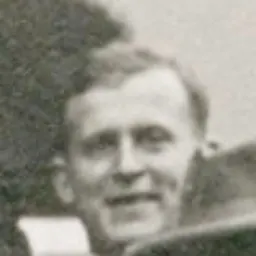





Related people
Same field, nearest in time

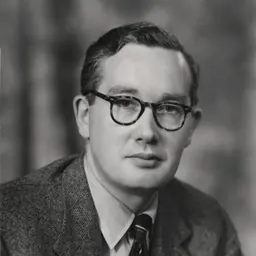

Contemporaries
People whose lives overlapped Carl Wagner's

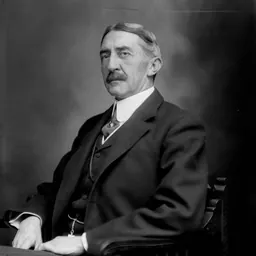

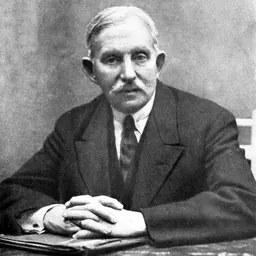
Frequently asked questions
Who was Carl Wagner?
German chemist (1901–1977)
When was Carl Wagner born?
Carl Wagner was born on 25 May 1901 in Leipzig.
When did Carl Wagner die?
Carl Wagner died on 10 December 1977 in Göttingen.
What was Carl Wagner's occupation?
Carl Wagner was a chemist and university teacher.
What was Carl Wagner known for?
Carl Wagner was known for Solid state chemistry and Solid state ionics.
What nationality was Carl Wagner?
Carl Wagner was German.
Sources & further reading
Cite this page
APA: Biography.guide. (2026). Carl Wagner. https://biography.guide/carl-wagner-chemist/
MLA: "Carl Wagner." Biography.guide, https://biography.guide/carl-wagner-chemist/.
Chicago: "Carl Wagner." Biography.guide. https://biography.guide/carl-wagner-chemist/.
Data last updated: 2026-09-20 · Spot an error? Report a correction.
Page generated 2026-09-27 05:16 UTC