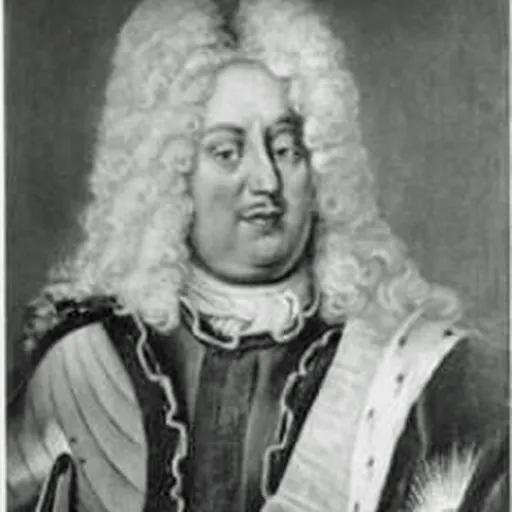
About Carl von Ahlefeldt
Lived 1670 – 1722 (aged 52). Carl von Ahlefeldt was a German and Danish statesperson and chamberlain.
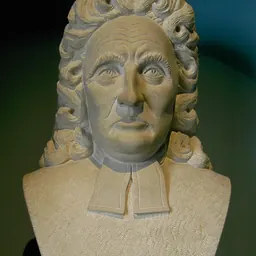
Carl von Ahlefeldt (25 April 1670 – 7 September 1722) was a German-Danish statesman. He was a stadtholder and by birth a member of the House of Ahlefeld. He was part of the inner circle around Frederick IV until 1712 and then became Governor-general of Slesvig-Holsten.
Early life and travels Ahlefeldt was born at Hardenburg as the youngest son of Grand Chancellor Count Friedrich von Ahlefeldt-Rixingen and his second wife, Countess Marie Elisabeth of Leiningen-Dagsburg-Hartenburg (1648-1724). His father provided him with a thorough education. In 1684–86, he went on a long journey as part of his education. He was escorted by Nikolai Henrik Masius as Hofmeister. After his return, he benefitted from a close relationship with the royal family at the royal court in Copenhagen. In 1692, he escorted Crown Prince Frederick on a journey to Germany, France and Italy. In 1695, he was appointed chamberlain (kammerherre). In 1696, he replaced Johan Georg Holstein as the Hofmeister of Prince Carl on a four-year journey to Germany, Switzerland, France, Italy and the Netherlands.
Career at the royal court After their return in 1699, he received a number of prominent appointments at the royal court. In 1699, he became overkammerherre and overhofmester for the knight's academy in Copenhagen (1699-1703). In 1700, he became overstaldmester. Together with Christian Gyldenløve, he belonged to the inner circle around the young king Frederick VIV, which overshadowed both Grand Chancellor Conrad Reventlow and gehejmeråd Chr. S. Plessen.
In 1704, Ahlefeldt was appointed to president of kommercekollegiet and from 1708 for politi- og kommercekollegiet. In 1710, he became a member of konseillet, replacing Christian Lente who had been opposed to Denmark's involvement in the Great Nordic Ear. As a member of konseillet, together with Otte Krabbe and Christian Sehested Ahelfeldt was responsible for the government in Copenhagen during the plague outbreak in 1711, while the king sought refuge at Koldinghus. After a few months, Ahlefeldt, Krabbe and Sehested, with permission the king, sought refuge at Jægersborg north of Copenhagen.
Governor-general of Norway In 1712, Ahlefeldt was removed from konseillet as a result of his conflicts with the Reventlow family which had strengthened their influence at the court due to the king's involvement with Anna Sophie Reventlow. Ahlefeldt was instead appointed to Governor-general of Slesvig-Holsten, an office he kept until his death.
Holdings
Ahlefeldt inherited the county of Rixingen and the barony of Mörsberg in Lothringen, but had parted with the latter in 1709. Neither of his two older brothers had children. He therefore also inherited the county of Langeland (including Tranekær) and the estates Søgård, Gråsten, Ballegård, Grøngrøft and Årup im Slesvig and Die Wildniss at Glückstadt.
In 1702, Carl von Ahlefeldt acquired an estate at Kongens Lyngby north of Copenhagen, where he commissioned the architect François Dieussart to build the first Sorgenfri. The building, a half-timbered, three-winged complex in Baroque style, was completed in 1705. The building was demolished and replaced by the current Sorgenfri Palace in the 1750s, reusing only the cellar and foundation of the old building. In 1703, he acquired an estate at Kalundborg from Frans Marselis and founded Østrup Manor (now Lerchenborg).
Family He married Countess Ulrike Antoinette of Danneskiold-Laurvig (1686-1755) on 2 March 1702 in Hamburg. She was the daughter of Count Ulrik Frederik Gyldenløve and his wife, Countess Antoinette Augusta of Aldenburg (1660–1701). They had the sons: Count Conrad Wilhelm of Ahlefeldt (1707-1791); married Wilhelmine Hedwig Antoinette von Gram (1711-1790) and had issue Count Frederik of Ahlefeldt (1702–73); married Bertha von Holstein (1705-1735) and had issue
Decorations Knight of the Dannebrog, 1698 Knight of the Elephant, 1703.
Don’t just read it —
keep it.
Full-length biographies made to live with: read them, listen on the way to work, watch them tonight.
- E-book
- Audio
- Video
Instant download · yours to keep · every purchase keeps this site free
Important facts
Family & relationships
People in Carl von Ahlefeldt's life
Named in this biography and alive at the same time


Related people
Same field, nearest in time



Contemporaries
People whose lives overlapped Carl von Ahlefeldt's


Frequently asked questions
Who was Carl von Ahlefeldt?
German statesman (1670-1722)
When was Carl von Ahlefeldt born?
Carl von Ahlefeldt was born on 25 April 1670 in Hardenburg.
When did Carl von Ahlefeldt die?
Carl von Ahlefeldt died on 7 September 1722 in Gråsten.
What was Carl von Ahlefeldt's occupation?
Carl von Ahlefeldt was a statesperson and chamberlain.
What nationality was Carl von Ahlefeldt?
Carl von Ahlefeldt was German and Danish.
Sources & further reading
· Wikipedia: Carl von Ahlefeldt
Cite this page
APA: Biography.guide. (2026). Carl von Ahlefeldt. https://biography.guide/carl-von-ahlefeldt/
MLA: "Carl von Ahlefeldt." Biography.guide, https://biography.guide/carl-von-ahlefeldt/.
Chicago: "Carl von Ahlefeldt." Biography.guide. https://biography.guide/carl-von-ahlefeldt/.
Data last updated: 2026-09-22 · Spot an error? Report a correction.
Portrait: Wikimedia Commons · author & licence
Page generated 2026-09-27 05:01 UTC