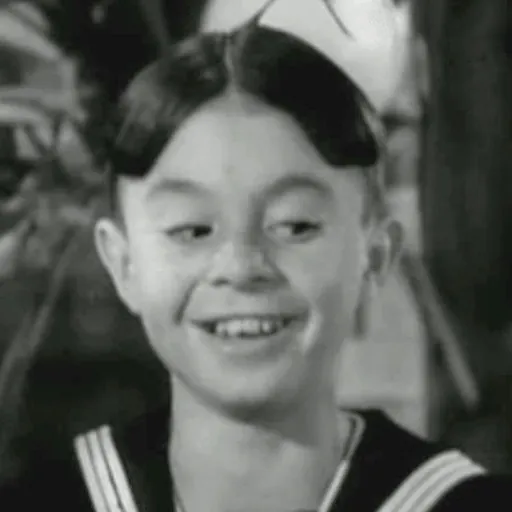
About Carl Switzer
Lived 1927 – 1959 (aged 31). Carl Switzer was an American actor, singer, animal breeder, television actor and film actor.
Carl Dean Switzer (August 7, 1927 – January 21, 1959) was an American child actor, comic singer, dog breeder, and guide. He was best known for his role as Alfalfa in the Our Gang series of short-subject comedies.
Switzer (rhyming with "Schweitzer", as pronounced in the Our Gang shorts Framing Youth and Alfalfa's Aunt) began his career as a child actor in 1934. He appeared in the Our Gang shorts as Alfalfa, one of the series' most popular and best-remembered characters. After outgrowing the series in 1940, Switzer struggled to find substantial roles, but was typecast as a juvenile actor. As an adult, he appeared mainly in bit parts and B-movies. He later became a dog breeder and hunting guide.
Switzer married heiress Diantha Collingwood in 1954 and they had one son. He was shot and killed by Moses "Bud" Stiltz in 1959 due to a disagreement regarding a business arrangement.
Early life Carl Switzer was born in Paris, Illinois, on August 7, 1927, the youngest of four children born to Gladys Carrie Shanks (1904–1997) and George Frederick "Fred" Switzer (1905–1960). Gladys and Fred's first child, a boy, died in 1922, an hour and a half after being born. Carl's sister Janice Switzer was born in 1923 and his brother Harold Switzer was born in 1925. Harold and he became famous in their hometown for their musical talent and performances. Both sang and could play a number of instruments.
Career
Our Gang
In 1934, the Switzers traveled to California to visit family. While sightseeing, they went to Hal Roach Studios. Following a public tour, eight-year-old Harold and six-year-old Carl entered the Hal Roach Studio's open-to-the-public cafeteria, the Our Gang Café, and began an impromptu performance. Producer Hal Roach was present and was impressed. He signed both brothers to appear in Our Gang. Harold was given two nicknames, "Slim" and "Deadpan", while Carl was dubbed "Alfalfa".
The brothers first appeared in the 1935 Our Gang short Beginner's Luck. By the end of the year, Alfalfa was one of the main characters, with a distinctive cowlick hairstyle, while Harold had been relegated to the background. Although Carl was an experienced singer and musician, his character Alfalfa was often called upon to sing popular songs for comic effect, most often those of Bing Crosby Switzer's best friend among the Our Gang actors was Tommy Bond, who played his on-screen nemesis "Butch". In Bond's words, Switzer and he became good friends because "neither of us could replace the others".
Adult years Switzer's tenure in Our Gang ended in 1940, when he was 12 . His first role after leaving the series was as a boy scout in I Love You Again (1940) starring William Powell and Myrna Loy. He then co-starred in the 1941 comedy Reg'lar Fellers. The next year, he had a supporting role in Mrs. Wiggs of the Cabbage Patch. Switzer continued to appear in films in various supporting roles, including in Johnny Doughboy (1942), The Human Comedy (1943), Going My Way (1944), and The Great Mike (1944).
Switzer had small parts in both the 1946 Christmas film It's a Wonderful Life, as Donna Reed's date at a high school dance, and again in the 1948 film On Our Merry Way, as the mayor's trumpet-playing son in a fixed musical talent contest. In 1952, he played a busboy in the film Pat and Mike starring Spencer Tracy and Katharine Hepburn. In the 1954 musical film White Christmas, only his photograph was used; he appeared in costume as "Freckle-Faced Haynes, the Dog-Faced Boy", an army buddy of Bing Crosby and Danny Kaye's).
In the 1950s, Switzer started acting on television. Between 1952 and 1955, he made six appearances on The Roy Rogers Show. He also guest-starred in an episode of the American science-fiction anthology series Science Fiction Theatre and The George Burns and Gracie Allen Show. In 1953 and 1954, Switzer co-starred in three William A. Wellman-directed films: Island in the Sky and The High and the Mighty, both starring John Wayne, and Track of the Cat, starring Robert Mitchum. Switzer himself was impressed by the Track of the Cat assignment, in which he played a white-haired Native American; it was the first time he had been called upon to play an adult character role. In 1955, he was featured (but not credited) in the Bowery Boys comedy Dig That Uranium, reuniting him with former Gas House Kids teammate Bennie Bartlett. Switzer had a bit part as a Hebrew whose son is born during the Exodus in Cecil B. DeMille's The Ten Commandments. (later Justin Lance Collingwood Eldridge) was born that year. However, the gunman was never caught. Later that December, Switzer was arrested in Sequoia National Forest for cutting down 15 pine trees he had intended to sell illegally as Christmas trees. He was sentenced to one year's probation. Switzer was also ordered to pay a $225 fine (more than $ today).
Death
Sometime in 1958, Switzer agreed to train a hunting dog, a Treeing Walker Coonhound, for Moses Samuel "Bud" Stiltz. Stiltz was Switzer's longtime friend and sometime business partner, whom Switzer had met while working with Roy Rogers on various productions at the Corriganville Movie Ranch. The dog, while in Switzer's possession, ran off to chase after a bear and disappeared. After learning that the dog had been lost while in Switzer's care, Stiltz demanded that Switzer had to either return his dog or pay him the equivalent of the dog's value.
Switzer was then working as a bartender. Unable to produce the money to settle the debt, Switzer took out ads in newspapers and put up fliers, offering a reward for the safe return of the animal. Eventually, the dog was located and brought to the bar where Switzer was working. Switzer rewarded the rescuer with $35.00 in cash and $15.00 in drinks . Switzer was annoyed by the cash outlay; a few days later, in an emotional conversation with his friend Jack Piott, a 37-year-old unit still photographer, the two decided that Stiltz should reimburse Switzer the finder's fee. Their argument was that the dog was Stiltz's and not Switzer's.
The two arrived at Stiltz's home in Mission Hills, at 10400 Columbus Avenue. Stiltz shared the home with his wife, Rita Corrigan, and his stepchildren. Switzer and Piott intended to demand money from Stiltz. Though differing accounts of the event exist, all agree that Stiltz was struck over the left side of his head with a glass clock. He later retreated to his room to retrieve a .38-caliber revolver, and Switzer tried to wrestle the gun from him. Their struggle caused the gun to discharge and almost shot Tom Corrigan, Stiltz's 14-year-old stepson. Stiltz regained the weapon and shot Switzer.
Stiltz's account of the event was one of self-defense, testifying that Switzer had banged on his front door, yelling "Let me in, or I'll kick in the door." The threat was followed by a struggle that began with one of the men, Switzer or Piott, striking Stiltz with the clock. This prompted Stiltz to retrieve his firearm. According to Stiltz, Switzer threatened him with a knife and yelled, "I'm going to kill you!" Stiltz fired and shot Switzer in the groin, damaging an artery that caused massive internal bleeding. Switzer was pronounced dead on arrival at 7:27 pm at the hospital at the age of 31.
Tom Corrigan's account differed significantly from his stepfather's. He told investigators that Stiltz shot Switzer as Piott and he were leaving. After the gun's accidental discharge that almost hit Corrigan, Switzer turned to Piott and said they needed to leave. The two were headed for the door when Stiltz then fired the fatal shot. Switzer never drew a knife, as Stiltz had claimed he had.
Later accounts The shooting was judged to be self-defense. The inquest regarding Switzer's death revealed that what was reported as a "hunting knife" was in fact a penknife. It had been found by crime-scene investigators under his body.
Over 42 years later, in January 2001, Tom Corrigan told reporters, "It was more like murder". He said he heard the knock on the front door, and Switzer said "Western Union for Bud Stiltz," and Corrigan's mother, Rita Corrigan, opened the door to find a drunk Switzer, complaining about a perceived month-old debt and demanding repayment. Corrigan said Switzer entered the house first, followed by Jack Piott. Switzer said he was going to beat up Stiltz, and Stiltz confronted Switzer with a .38-caliber revolver in his hand.
Corrigan said that Switzer grabbed the revolver and Stiltz and Switzer struggled over it. He said Piott broke a glass-domed clock over Stiltz's head, causing Stiltz's eye to swell shut. During the struggle, a shot was fired into the ceiling and Corrigan was struck in the leg by a fragment. Corrigan said his two younger sisters ran to a neighbor's house to call for help. "Well, we shot Tommy, enough of this," he said he recalled Switzer saying, just before Switzer and Piott started to leave the house.
Corrigan said he had just stepped out the front door when he heard, but did not witness, a second shot behind him. He said he then turned and saw Switzer sliding down the wall with a surprised look on his face after Stiltz had shot him. Corrigan said he saw a closed penknife at Switzer's side, which he presumed fell out of his pocket or his hand. He said he then saw his stepfather shove Piott against the kitchen counter and threaten to kill him, too. Corrigan said they heard emergency sirens as Piott begged for his life, and that he thought this was the only reason Stiltz did not kill Piott. Corrigan said his stepfather lied in his account of the event before the coroner's jury.
Corrigan said a Los Angeles Police Department detective interviewed him and asked if he would testify before the judge. Corrigan said he agreed to, but he was never called before the court.
Switzer's gravestone features the square and compasses of Freemasonry and an image of a hunting dog.
Selected filmography
+Film Year Title Role Notes 1930 Little Rascals: Best of Our Gang 1935 Beginner's Luck Tom Short film 1935 Teacher's Beau Alfalfa Short film 1935 Sprucin' Up Alfalfa Short film 1935 Our Gang Follies of 1936 Alfalfa Short film 1936 The Lucky Corner Alfalfa Short film 1936 Too Many Parents Kid Singer 1936 Arbor Day Alfalfa Short film 1936 Kelly the Second Boy with stomach ache Uncredited 1936 Spooky Hooky Alfalfa Short film 1936 Easy to Take Alfred Bottle 1937 Reunion in Rhythm Alfalfa Short film 1937 Rushin' Ballet Alfalfa Short film 1937 Pick a Star Minor role Uncredited 1937 Mail and Female Alfalfa / Cousin Amiela Short film 1937 Our Gang Follies of 1938 Alfalfa Short film 1937 Wild and Woolly Zero 1938 Scandal Street Bennie Nordskudder 1938 Canned Fishing Alfalfa Short film 1938 Came the Brawn Alfalfa Short film 1938 Hide and Shriek Alfalfa, alias X-10 Short film 1938 Football Romeo Alfalfa Short film 1939 The Ice Follies of 1939 Small Boy Uncredited 1939 Duel Personalities Alfalfa Short film 1939 Clown Princes The Great Alfalfa Short film 1939 Captain Spanky's Show Boat Alfalfa Short film 1939 Time Out for Lessons Alfalfa Short film 1940 Alfalfa's Double Alfalfa / Cornelius Short film 1940 Good Bad Boys Alfalfa Short film 1940 Goin' Fishin' Alfalfa Short film 1940 I Love You Again Leonard Harkspur Jr. 1940 Kiddie Kure Alfalfa Short film 1940 Barnyard Follies Alfalfa Credited as "Alfalfa" Switzer 1941 Reg'lar Fellers Bump Hudson 1942 My Favorite Blonde Frederick Uncredited 1942 Henry and Dizzy Billy Weeks 1942 There's One Born Every Minute Junior Twine Credited as Alfalfa Switser 1942 The War Against Mrs. Hadley Messenger 1942 Mrs. Wiggs of the Cabbage Patch Billy Wiggs 1942 Johnny Doughboy Alfalfa 1943 The Human Comedy Auggie Uncredited 1943 Shantytown Bindy 1943 Dixie Boy in street Uncredited 1944 Rosie the Riveter Buzz Prouty 1944 Going My Way Herman Langerhanke Uncredited 1944 The Great Mike Speck 1944 Together Again Elevator operator Uncredited 1945 Man Alive Ignatius Uncredited 1945 She Wouldn't Say Yes Delivery boy Uncredited 1946 Courage of Lassie First youth, a hunter 1946 Gas House Kids Sammy Levine 1946 It's a Wonderful Life Freddie Othello Uncredited 1947 Gas House Kids Go West Alfalfa 1947 Gas House Kids in Hollywood Alfalfa 1947 Driftwood Messenger Uncredited 1948 On Our Merry Way Leopold "Zoot" Wirtz Alternative title: A Miracle Can Happen 1948 State of the Union Bellboy 1948 Big Town Scandal Frankie Snead Alternative title: Underworld Scandal 1949 A Letter to Three Wives Leo, second messenger Uncredited 1949 Alias the Champ Newsboy 1950 House by the River Walter Herbert Uncredited 1950 Redwood Forest Trail Sidekick Alfie 1951 Belle Le Grand Messenger Boy Uncredited 1951 Cause for Alarm! Guy with Tex Uncredited 1951 Two Dollar Bettor Chuck Nordlinger 1951 Here Comes the Groom Messenger Uncredited 1952 Pat and Mike Busboy 1952 I Dream of Jeanie Freddie Credited as Carl Dean Switzer 1952 The WAC from Walla Walla Pvt. Cronkheit Uncredited 1953 Island in the Sky Sonny Hopper 1953 Flight Nurse Rifleman Uncredited 1954 The High and the Mighty Ensign Keim 1954 This Is My Love Customer 1954 Track of the Cat Joe Sam 1954 White Christmas Bennie Haynes (photograph only) 1955 Not as a Stranger Unexpected father Uncredited 1955 Francis in the Navy Timekeeper Uncredited 1956 Dig That Uranium Shifty Robertson Uncredited 1956 The Ten Commandments Slave Uncredited 1956 Between Heaven and Hell Savage Uncredited 1957 Motorcycle Gang Speed 1958 The Defiant Ones Angus (final film role)
+ Television Year Title Role Notes 1952–1955 The Roy Rogers Show Various roles 6 episodes 1954 The George Burns and Gracie Allen Show Victor the Delivery Boy Episode: "George Gets Call from Unknown Victor" 1955 Lux Video Theatre Mailer Episode: "Eight Iron Men" 1955 Science Fiction Theatre Pete Episode: "The Negative Man"
Don’t just read it —
keep it.
Full-length biographies made to live with: read them, listen on the way to work, watch them tonight.
- E-book
- Audio
- Video
Instant download · yours to keep · every purchase keeps this site free
Important facts
People in Carl Switzer's life
Named in this biography and alive at the same time




Related people
Same field, nearest in time





Contemporaries
People whose lives overlapped Carl Switzer's


Frequently asked questions
Who was Carl Switzer?
American actor (1927-1959)
When was Carl Switzer born?
Carl Switzer was born on 7 August 1927 in Paris.
When did Carl Switzer die?
Carl Switzer died on 21 January 1959 in Mission Hills.
What was Carl Switzer's occupation?
Carl Switzer was an actor, singer, animal breeder, television actor and film actor.
What nationality was Carl Switzer?
Carl Switzer was American.
Sources & further reading
· DBpedia: Carl "Alfalfa" Switzer
Cite this page
APA: Biography.guide. (2026). Carl Switzer. https://biography.guide/carl-switzer/
MLA: "Carl Switzer." Biography.guide, https://biography.guide/carl-switzer/.
Chicago: "Carl Switzer." Biography.guide. https://biography.guide/carl-switzer/.
Data last updated: 2026-09-22 · Spot an error? Report a correction.
Portrait: Wikimedia Commons · author & licence
Page generated 2026-09-27 05:01 UTC