
About Carl Rosa
Lived 1842 – 1889 (aged 47). Carl Rosa was a British impresario, concertmaster, conductor, violinist, opera director and theaterintendant.
Carl August Nicholas Rosa (22 March 184230 April 1889) was a German-born musical impresario best remembered for founding an English opera company known as the Carl Rosa Opera Company. He started his company in 1869 together with his wife, Euphrosyne Parepa-Rosa, and popularised opera in Britain and America, performing standard repertory in English, as well as operas by English composers.
Early life and career
Rosa was born Karl August Nikolaus Rose in Hamburg, Germany, the son of Ludwig Rose, a Hamburg businessman, and Sophie Becker. Beginning in 1859, he studied at the Conservatorium at Leipzig (where he met and became lifelong friends with Arthur Sullivan) Three years later he visited England, appearing as a soloist at the Crystal Palace. He had considerable success as a conductor both in England and the United States. He travelled to America in 1866 as a member of a concert troupe promoted by the Baltimore impresario Hezekiah Linthicum Bateman that also included the Scottish operatic soprano Euphrosyne Parepa. During this tour, on 26 February 1867 in New York City, he married Parepa, who became known as Madame Parepa-Rosa.
In 1869, in collaboration with the Chicago impresario C. D. Hess, the couple formed the Parepa Rosa English Opera Company in New York and toured in America for three seasons, with Parepa as the star and Rosa as the conductor. It brought grand opera to places in America that had never seen any, performing Italian operas in English, which made them more accessible to American audiences. In 1872, the Rosas returned to England and also visited Europe and Egypt. and then toured England and Ireland. Rosa's policy was to present operas in English, and that remained the company's practice. That year, Rosa invited the dramatist W. S. Gilbert to write a libretto for Rosa to present as part of a planned 1874 season at the Drury Lane Theatre. Gilbert expanded one of the comic Bab Ballads that he had written for Fun magazine into a one-act libretto titled Trial by Jury. Parepa died in January 1874; Rosa dropped the project and cancelled his planned 1874 season. |group= n Rosa later endowed a Parepa-Rosa scholarship at the Royal Academy of Music in London. He married a second time in 1881. In 1892, Rosa's Grand Opera Company gave a command performance of La fille du régiment at Balmoral Castle. Rosa also encouraged and supported new works by English composers. Frederic Hymen Cowen's Pauline (1876), Arthur Thomas's Esmeralda (1883), Alexander Mackenzie's Colomba (1883) and The Troubabour, and Charles Villiers Stanford's The Canterbury Pilgrims (1884) were commissioned by the company. Earlier English operas by Wallace, Balfe and Julius Benedict were also included in the company's repertoire. and was buried in Highgate Cemetery, London. Rosa's place in English music was indicated by the number of leading musicians who attended his funeral, including Sullivan, Stanford, Mackenzie and George Grove, together with Richard D'Oyly Carte, George Edwardes and Augustus Harris.
By the time he died, Rosa had demonstrated that English opera could be an artistic and financial success. In a memorial lecture, the critic Herman Klein said of him, "From an artistic point of view he achieved triumph after triumph; he lifted English opera out of the slough of despond in which it was found in 1875." Both during his life and after his death, his company had much to do with popularizing opera in England, encouraging native composers and training many singers who went on to international careers. His company survived his death and continued to perform opera in English until 1960. A new opera company, using the name, was revived in 1997 under the artistic direction of Peter Mulloy. This company performs Gilbert and Sullivan and other light operas, as well as grand opera.
Notes, references and sources
Don’t just read it —
keep it.
Full-length biographies made to live with: read them, listen on the way to work, watch them tonight.
- E-book
- Audio
- Video
Instant download · yours to keep · every purchase keeps this site free
Important facts
People in Carl Rosa's life
Named in this biography and alive at the same time

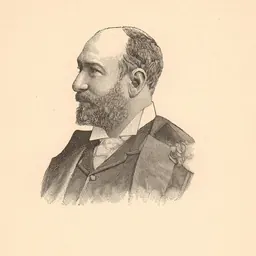
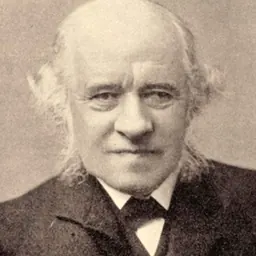
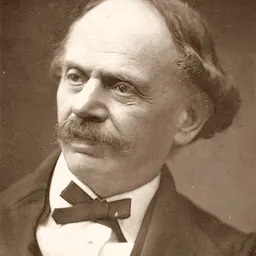
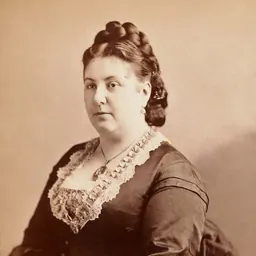

Related people
Same field, nearest in time

Contemporaries
People whose lives overlapped Carl Rosa's

Frequently asked questions
Who was Carl Rosa?
German-British opera manager
When was Carl Rosa born?
Carl Rosa was born on 22 March 1842 in Hamburg.
When did Carl Rosa die?
Carl Rosa died on 30 April 1889 in Paris.
What was Carl Rosa's occupation?
Carl Rosa was an impresario, concertmaster, conductor, violinist, opera director and theaterintendant.
What nationality was Carl Rosa?
Carl Rosa was British.
Sources & further reading
Cite this page
APA: Biography.guide. (2026). Carl Rosa. https://biography.guide/carl-rosa/
MLA: "Carl Rosa." Biography.guide, https://biography.guide/carl-rosa/.
Chicago: "Carl Rosa." Biography.guide. https://biography.guide/carl-rosa/.
Data last updated: 2026-09-25 · Spot an error? Report a correction.
Page generated 2026-09-27 05:10 UTC