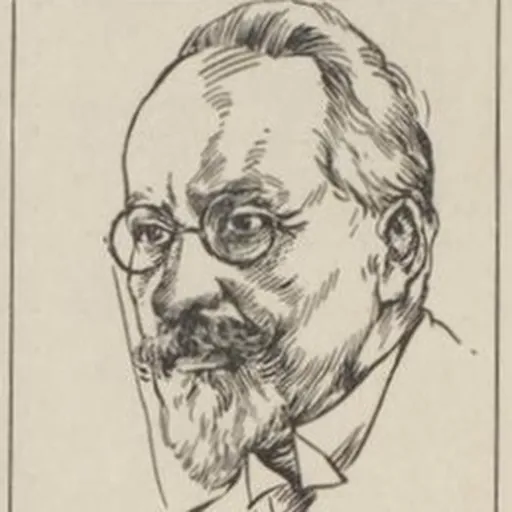
About Carl Muth
Lived 1867 – 1944 (aged 77). Carl Muth was a writer, literary historian and opinion journalist.
Karl Borromäus Johann Baptist Muth (also Carl) (31 January 1867, Worms – 15 November 1944, Bad Reichenhall) was a German writer and publisher, best known for founding and editing the religious and cultural magazine Hochland.
Biography Muth attended the gymnasium in Worms from 1877 to 1881. With the intention of becoming a missionary, he attended the school of the Steyler Missionaries from 1882 to 1884 and the missionary school in Algiers of the White Fathers from 1884 to 1885. He undertook military service in Mainz in 1890 and 1891, then studied for a year at the University of Berlin, taking classes in philosophy, history, and literature. He studied history and art in Paris (1892–1893) and Rome (1893), began writing for the Mainzer Journal, and befriended Georges Goyau. In 1894, he became editor at the newspaper Der Elsässer in Strasbourg, and he married Anna Thaler from Fulda in the same year. From 1895 to 1902 he worked as editor at the Catholic monthly family magazine Alte und Neue Welt.
Prompted by a public debate over the "inferiority of German Catholics," Muth began publishing on Catholic literature; furthermore, he began to call for an end to the confessionalism that remained from the Kulturkampf, with its attendant narrow-minded morality, apathy, and prudery. Under the influence of Martin Deutinger, he emphasized the interaction between religion and art and maintained that a decrease in religious awareness also entailed a decrease in art's creativity. Muth's main accomplishment was founding and then editing Hochland, a magazine with a "supraconfessional" group of contributors, writing on sciences, poetry, arts, and music. The magazine soon attained a leading status in Catholic spiritual life. During World War I, he defended German culture, and after the war Hochland attacked the primitivism and nihilism of Nazism; throughout the 1930s the magazine spoke out, partly covertly, against the perversion of (Christianity-derived) justice and the destruction of societal order.
After Hochland was definitively banned in 1941, Muth successfully managed to avoid being arrested in connection with the White Rose. He died alone in a hospital in Bad Reichenhall.
Patriotism and Christianity Muth, whom historian David Blackbourn calls a "self-conscious Catholic modernist," was a patriot, though he never claimed to be a nationalist, and, in a defense of Germany's involvement in World War I, said: "Our ambition is not rooted in a conceited belief that we are fit and destined to lord it over the globe. Our heart is not set on industrial subjugation or commercial supremacy. We simply have a keen inborn sense that mother nature has made us a many-sided and objective sort of folk. We think we have a duty to ripen in ourselves a humanity that shall unite in harmony the several forces and faculties. A limited, self-centred, bigoted nationalism is foreign to our deeper character....The idea of universalism, catholicity, and world-embracing solidarity is essentially Christian. There is a natural kinship, then, between Christianity and German universalism."
Hochland
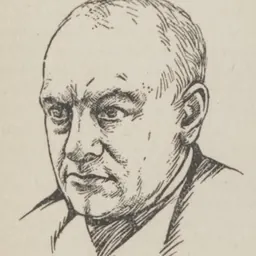
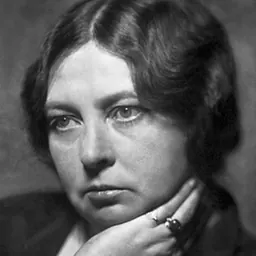
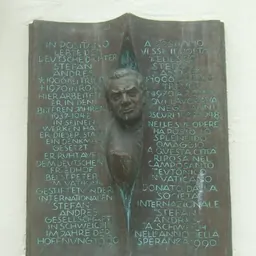
Muth founded Hochland in 1903 and edited it from 1903 to 1932 and again from 1935 to 1939. Hochland, a Catholic magazine devoted to religion and culture, loosened its strictly confessional attitude and became under his direction a forum for dialogue with other denominations and even with secular thinkers. The articles he published were to elucidate how art and aesthetics could influence politics and religions, and they never followed any party's line; Among his "friends", those authors who published regularly on Hochland, were such notables people as Theodor Haecker, Ruth Schaumann, Gertrud von Le Fort, Werner Bergengruen Sigrid Undset, Stefan Andres, Eugen Rosenstock-Huessy, Romano Guardini, Max Scheler, Carl Schmitt (until 1930), Peter Wust, and Theodor Schieffer.
Influences Muth, personally and through Hochland, influenced Gertrud von Le Fort, and Hans and Sophie Scholl, who rented a room in his house.
Don’t just read it —
keep it.
Full-length biographies made to live with: read them, listen on the way to work, watch them tonight.
- E-book
- Audio
- Video
Instant download · yours to keep · every purchase keeps this site free
Important facts
People in Carl Muth's life
Named in this biography and alive at the same time


Related people
Same field, nearest in time




Contemporaries
People whose lives overlapped Carl Muth's




Frequently asked questions
Who was Carl Muth?
German editor (1867–1944)
When was Carl Muth born?
Carl Muth was born on 31 January 1867 in Worms.
When did Carl Muth die?
Carl Muth died on 15 November 1944 in Bad Reichenhall.
What was Carl Muth's occupation?
Carl Muth was a writer, literary historian and opinion journalist.
What nationality was Carl Muth?
Carl Muth's recorded nationality: German Reich.
Sources & further reading
Cite this page
APA: Biography.guide. (2026). Carl Muth. https://biography.guide/carl-muth/
MLA: "Carl Muth." Biography.guide, https://biography.guide/carl-muth/.
Chicago: "Carl Muth." Biography.guide. https://biography.guide/carl-muth/.
Data last updated: 2026-09-20 · Spot an error? Report a correction.
Portrait: Wikimedia Commons · author & licence
Page generated 2026-09-27 04:58 UTC