
About Carl Leverkus
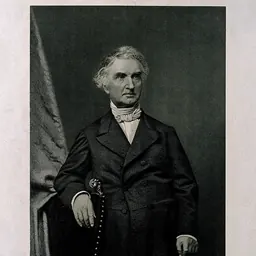
Lived 1804 – 1889 (aged 84). Carl Leverkus was a German chemist, entrepreneur and pharmacist, known for Leverkusen.
Carl Leverkus (5 November 1804 – 4 February 1889) was a German chemist and chemistry entrepreneur. The city of Leverkusen is named after him.
Education
Leverkus started training as a pharmacist in 1822, and then studied at the University of Marburg. Following a stint as an assistant pharmacist in Trier, he went to Paris, where he worked at a pharmacy and studied chemistry at the Sorbonne in the evenings. In 1829, he took the apothecary examinations in Berlin. He earned his doctorate in 1830 from the University of Giessen with a dissertation on the chemistry of silver, which was reviewed by Justus von Liebig.
Life and work
In 1834, Leverkus opened the first German factory for the production of artificial ultramarine blue in Wermelskirchen. Later he moved his factory to the Kahlberg in Wiesdorf. He called the emerging settlement "Leverkusen" after the family home in Lennep. The factory was a model plant with the latest technology and facilities, making it a big economic success.
Carl Leverkus and his wife were committed to social causes, so they took care of the needs of the factory's workforce, building homes for the workers, establishing a consumer association for them, founding the factory's own volunteer fire department, and starting a choir.
In 1884, Leverkus received the honorary title of Geheimer Kommerzienrat ("Privy Councillor of Commerce") and was made an honorary citizen of the city of Wermelskirchen.
In 1890, Leverkus' sons founded the company Vereinigte Ultramarinwerke ehemals Leverkus, Zeltner und Consorten ("United Ultramarine Works, formerly Leverkus, Zeltner, and associates"). The largest associate was the Nuremberg ultramarine factory Joh. Zeltner.
After Leverkus' death his sons sold a portion of the factory site in Wiesdorf to the alizarin manufacturer Elberfelder Farbenfabriken vorm in 1891. Friedr. Bayer & Co AG ("Elberfeld Colors, formerly Friedr. Bayer & Co AG"). Thus, Carl Leverkus' factory was the core of the present-day Bayer AG plant in Leverkusen.
Leverkus married Juliane Auguste Küpper in 1838 and had eleven children. He is buried in Wermelskirchen. In 1930, the city of Leverkusen was posthumously named after him. The German artist Martin Kippenberger was a great-great-grandson of Leverkus.
Footnotes
Don’t just read it —
keep it.
Full-length biographies made to live with: read them, listen on the way to work, watch them tonight.
- E-book
- Audio
- Video
Instant download · yours to keep · every purchase keeps this site free
Important facts
People in Carl Leverkus's life
Named in this biography and alive at the same time
Related people
Same field, nearest in time




Contemporaries
People whose lives overlapped Carl Leverkus's





Frequently asked questions
Who was Carl Leverkus?
German chemist (1804–1889)
When was Carl Leverkus born?
Carl Leverkus was born on 5 November 1804 in Wermelskirchen.
When did Carl Leverkus die?
Carl Leverkus died on 4 February 1889 in Wermelskirchen.
What was Carl Leverkus's occupation?
Carl Leverkus was a chemist, entrepreneur and pharmacist.
What was Carl Leverkus known for?
Carl Leverkus was known for Leverkusen.
What nationality was Carl Leverkus?
Carl Leverkus was German.
Sources & further reading
Cite this page
APA: Biography.guide. (2026). Carl Leverkus. https://biography.guide/carl-leverkus/
MLA: "Carl Leverkus." Biography.guide, https://biography.guide/carl-leverkus/.
Chicago: "Carl Leverkus." Biography.guide. https://biography.guide/carl-leverkus/.
Data last updated: 2026-09-20 · Spot an error? Report a correction.
Page generated 2026-09-27 05:23 UTC