
About Carl Ladendorff
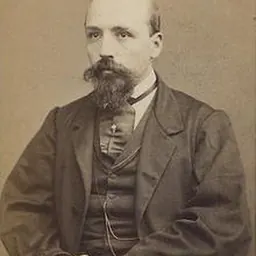
Lived 1869 – 1947 (aged 77–78). Carl Ladendorff was a German politician and merchant.
Carl Ladendorff (6 February 1869 – 1947) was a prominent politician, banker, and businessman of the Economic Party (WP) who led the party in Prussian Landtag during most of the Weimar Republic. He played a critical role in pushing the party towards the political right, promoting close relationships with the national-conservative German National People's Party (DNVP) and later the national-socialist Nazi (NSDAP) party. His disputes with party leader Hermann Drewitz would play a key role in the party's electoral collapse in the July 1932 federal election, bolstering the rising Nazi party.
Biography Ladendorff was born on the 6 February 1869, in the municipality of Borrentin, at that time apart of the Pomeranian Province of Prussia. He would serve in a mix of careers outside of his political career, notably serving on the supervisory boards of the Berliner Bank für Handel und Grundbesitz and the Mitteldeutschen Boden-Kredit-Anstatlt AG. they served as two of the four deputies of the WP. As of 1921, the WP's support base was narrow and small. However, Bredt, now serving as Reichstag leader in Prussia — despite his earlier reluctance to lead the WP in Prussia — was committed to expanding the party to include the entire old middlestrand (old middle class), overcoming interconfessional and even interfaith differences. In this, Ladendorff played a crucial role in securing support from landowners, a job in which Bredt stated Ladendorff did "first-class work." Outside of his political career, Ladendorff also served as president of the Prussian and Berlin branches of the Association of Urban Landords.
In 1924, Ladendorff became the leader of the WP in Prussia, Germany's most important state. Throughout his leadership of the Prussian WP, Ladendorff repeatedly attempted to push the party to the right, often unequivocally. Ladendorff severely criticized the Social Democratic Party of Germany (SPD) and the Catholic German Centre Party, who constituted the pro-republic Weimar Coalition that led the Prussian government. Ladendorff characterized the coalition as the "dictatorship of Social Democracy assisted by the Center party." This criticism was based on Ladendorff's personal anti-socialism and anti-Catholicism, though the party would later vote in favour of the Prussian Concordat with the Catholic Church. Until the Prussian concordat, the party would vote against every government legislation between 1921–1929. Ladendorff's polemic attacks frustrated attempts for the WP to enter into cabinet, both in Prussia and nationally. During cabinet negotiations to form the second Müller cabinet in 1928, the Prussian wing of the liberal German People's Party (DVP) demanded, as a precondition to entering into cabinet, the participation of the WP in the SPD-led cabinet; the Prussian WP's hardline stance resulted in the DVP dropping the precondition, with the WP failing to enter into cabinet.
Following the 1930 federal election, Ladendorff strived for the stabilization of the Weimar Republic, despite his earlier opposition to the republican system. Ladendorff's evolving view was matched by the WP, with Bredt serving as the federal Minister of Justice in the first Brüning cabinet. Ladendorff was alarmed at increasing social disintegration caused by the Great Depression, which had begun the year prior, and the DNVP's shift to new chairman Alfred Hugenburg's Katastrophenpolitik (lit. catastrophe politics) and ultranationalism.
Decline However, in late 1930, the WP began to decline. A series of disputes divided the party, eventually tearing the party asunder. In the party's 1929 Berlin congress, Ladendorff attempted to create an independent parliamentary leadership for the WP, separate from the party's leadership. Ladendorff strived to reduce the power of the WP's chairman, Hermann Drewitz, who he thought vain and believed the party concentrated excessive powers in. However, his attempt to reduce Drewitz's powers failed. Thereafter Ladendorff attempted to oust Drewitz as chair, a view which was reflected by deputy chair Otto Colosser. Colosser accused Drewitz of embezzlement, even launching a formal legal complaint against him. This dispute divided the party, eventually leading to Colosser's resignation from the WP and Drewitz's re-election as chairman. However, a third leadership challenge soon engulfed the WP, with former Saxon finance minister Hugo Weber — a supporter of Ladendorff and Colosser's attempts to remove Drewitz — leading the influential Saxon branch of the WP in seceding from the federal party. Weber and the Saxons were soon joined by Max Robert Gerstenhauer's Thuringian branch, who also announced their succession from the federal party. Following negotiations, Drewitz was able to reign in the Saxons, with Weber and his supporters rejoining the party; Drewitz had defeated every leadership challenge against him. Nevertheless, Drewitz would resign from the chairmanship in August of 1931, being replaced with Bredt.
Concurrently, the party faced a succession of crises. In 1929, the Prussian SPD accused Ladendorff of financial irregularities regarding the Dessauer Realkreditbank. Before entering into politics, Ladendorff had served as a Reichsbank manager. Ladendorff was able to quickly resolve the allegations, but only after media attention to the accusation. In late 1931 two deputies of the Prussian WP left the party and formed a new group — the radical middlestrand. In the same period, the Deutsche Mittelstandsbank collapsed due to the ongoing Great Depression, taking with it the party's finances. With the rise of the NSDAP, the WP in Prussia was left decrepit, and in the 1932 Prussian state election the party failed to secure a single seat. The party's presence in the Prussian Landtag was over.
Ladendorff died in 1947.
Don’t just read it —
keep it.
Full-length biographies made to live with: read them, listen on the way to work, watch them tonight.
- E-book
- Audio
- Video
Instant download · yours to keep · every purchase keeps this site free
Important facts
People in Carl Ladendorff's life
Named in this biography and alive at the same time


Related people
Same field, nearest in time



Contemporaries
People whose lives overlapped Carl Ladendorff's


Frequently asked questions
Who was Carl Ladendorff?
German politician (1869-1947)
When was Carl Ladendorff born?
Carl Ladendorff was born on 6 February 1869 in Borrentin.
When did Carl Ladendorff die?
Carl Ladendorff died in 1947 in Berlin.
What was Carl Ladendorff's occupation?
Carl Ladendorff was a politician and merchant.
What nationality was Carl Ladendorff?
Carl Ladendorff was German.
Sources & further reading
Cite this page
APA: Biography.guide. (2026). Carl Ladendorff. https://biography.guide/carl-ladendorff/
MLA: "Carl Ladendorff." Biography.guide, https://biography.guide/carl-ladendorff/.
Chicago: "Carl Ladendorff." Biography.guide. https://biography.guide/carl-ladendorff/.
Data last updated: 2026-09-20 · Spot an error? Report a correction.
Page generated 2026-09-27 05:12 UTC