
About Carl Josef Bayer
Lived 1847 – 1904 (aged 57). Carl Josef Bayer was an Austrian chemist.
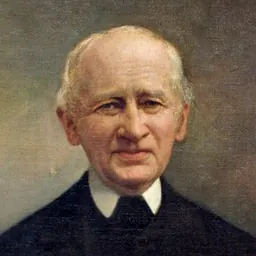
Carl Josef Bayer (also Karl Bayer, 4 March 1847 – 4 October 1904) was a chemist from Austria-Hungary who invented and named the Bayer process of extracting alumina from bauxite, essential to this day to the economical production of aluminium.
Bayer had been working in Saint Petersburg to develop a method to provide alumina to the textile industry that used it as a fixing agent in the dyeing of cotton. In 1887, he discovered that aluminium hydroxide precipitated from an alkaline solution which is crystalline and can be filtered and washed more easily than that precipitated from an acid medium by neutralization. In 1888, Bayer developed and patented his four-stage process of extracting alumina from bauxite ore.
In the mid-19th-century, aluminium was so precious that a bar of the metal was exhibited alongside the French Crown Jewels at the Exposition Universelle in Paris 1855. Along with the Hall–Héroult process, Bayer's solution caused the price of aluminium to drop about 80% in 1890 from what it had been in 1854.
Personal life and education Carl Bayer was born on 4 March 1847 in the Duchy of Upper and Lower Silesia in the Austrian Empire, which is now Poland. He attended Heidelberg University in Germany, where he studied chemistry under Robert Bunsen from 1869-1871, the namesake of the Bunsen burner. He received his doctorate degree in 1871 with a dissertation on the chemistry of indium, which had just been discovered in 1863. To obtain the alumina from the bauxite ore, a process was developed that used acid to dissolve aluminium but resulted in a product that contained large amounts of iron and titanium dissolved within which were difficult to remove. Bubbling through the solution with carbon dioxide precipitated aluminium hydroxide, which when dried, allowed for the recovery of alumina.
Bayer's contribution to aluminium ore processing Bayer worked in the textile industry in Saint Petersburg, where aluminium hydroxide was used to help affix dye to the cotton. While working he made two important discoveries regarding processing steps that helped separate the Bayer process from that of Le Chatelier. In 1887, Bayer found that by using a pure seed of aluminium hydroxide, a crystalline precipitate formed that was more economical than that obtained by Le Chatelier. that he discovered previously. Both steps are widely used today but have been improved upon as technology has evolved. After discovery, Bayer worked as a startup consultant for alumina manufacturing around Europe. Bayer returned to Austria in 1894 to start an alumina factory but was unable to secure enough capital to fully fund the project. In 1900, aluminium was valued at the equivalent of $100 (2012 values), but over the next 50 years decreased in price to approximately $20. This decrease is attributed to the increase in the ease of manufacturing associated with aluminium after Bayer, Hall, and Heroult’s discoveries.
Don’t just read it —
keep it.
Full-length biographies made to live with: read them, listen on the way to work, watch them tonight.
- E-book
- Audio
- Video
Instant download · yours to keep · every purchase keeps this site free
Important facts
People in Carl Josef Bayer's life
Named in this biography and alive at the same time

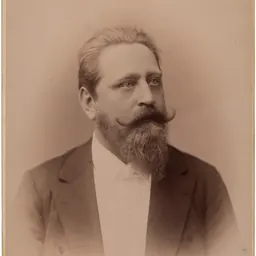
Related people
Same field, nearest in time


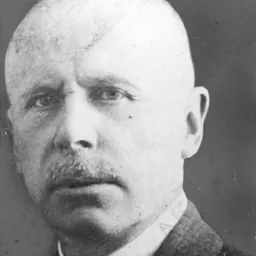


Contemporaries
People whose lives overlapped Carl Josef Bayer's

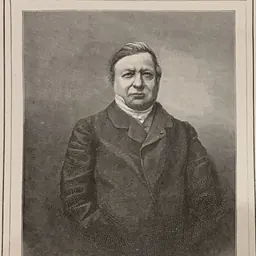
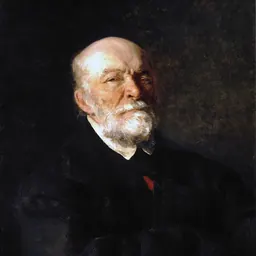

Frequently asked questions
Who was Carl Josef Bayer?
Austrian chemist (1847–1904)
When was Carl Josef Bayer born?
Carl Josef Bayer was born on 4 March 1847 in Bielsko-Biała.
When did Carl Josef Bayer die?
Carl Josef Bayer died on 22 October 1904 in Rečica ob Paki.
What was Carl Josef Bayer's occupation?
Carl Josef Bayer was a chemist.
What nationality was Carl Josef Bayer?
Carl Josef Bayer was Austrian.
Sources & further reading
Cite this page
APA: Biography.guide. (2026). Carl Josef Bayer. https://biography.guide/carl-josef-bayer/
MLA: "Carl Josef Bayer." Biography.guide, https://biography.guide/carl-josef-bayer/.
Chicago: "Carl Josef Bayer." Biography.guide. https://biography.guide/carl-josef-bayer/.
Data last updated: 2026-09-20 · Spot an error? Report a correction.
Page generated 2026-09-27 05:18 UTC