
Carl Gustaf Mosander
Swedish chemist and mineralogist
About Carl Gustaf Mosander
Lived 1797 – 1858 (aged 61). Carl Gustaf Mosander was a Swedish chemist, pharmacologist, mineralogist and pharmazeut, known for Erbium, Lanthanum and Terbium.
Carl Gustaf Mosander (10 September 1797 – 15 October 1858) was a Swedish chemist. He discovered the rare earth elements lanthanum, erbium and terbium.
Early life and education Born in Kalmar, Mosander attended school there until he moved to Stockholm with his mother in 1809. In Stockholm, he became an apprentice at the Ugglan pharmacy. He took his pharmacy examination in 1817, but had an interest in medicine and joined the Karolinska Institute in 1820. He passed his medical examination in 1825. founded by the Swedish Academy of Sciences in 1819. From 1825 he was the owner of a spa in Stockholm where people could go to drink the waters. He was hesitant to report his results, both for fear of embarrassing his mentor Berzelius, by showing that his discovery cerium was not an element; and because he was uncertain that he himself had reduced cerium to all of its components. Berzelius eventually suggested the name "lanthan", for "hidden" for this new discovery.
By 1840, Mosander had separated cerium oxide into yellow cerium oxide, white lanthanum oxide and a pinkish third component which he called "didymium" meaning "twin". In 1879, Lecoq de Boisbaudran isolated samarium,
However, this discovery was hotly contested. Spectroscopist Nils Johan Berlin denied that two elements existed, failing to confirm the existence of "erbia" and suggesting that its name be applied to "terbia". In 1864, Marc Delafontaine used optical spectroscopy to conclusively prove that yttrium, terbium and erbium were separate elements. Ironically, however, the confusion that had been introduced between the names continued. Mosander's proposed names were switched, giving the amethyst compound the name "erbium" oxide and the yellow substance the name "terbium" oxide, instead of the other way around as originally proposed.
Mosander suffered from cataracts in later life. He died in 1858, at his summer house on the island of Lovön, Stockholm County.
Don’t just read it —
keep it.
Full-length biographies made to live with: read them, listen on the way to work, watch them tonight.
- E-book
- Audio
- Video
Instant download · yours to keep · every purchase keeps this site free
Important facts
People in Carl Gustaf Mosander's life
Named in this biography and alive at the same time

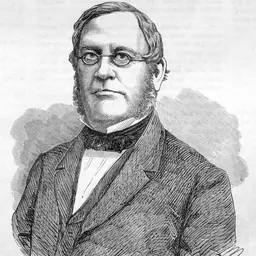
Related people
Same field, nearest in time



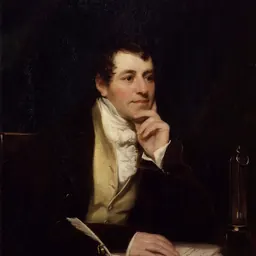
Contemporaries
People whose lives overlapped Carl Gustaf Mosander's





Frequently asked questions
Who was Carl Gustaf Mosander?
Swedish chemist and mineralogist (1797–1858)
When was Carl Gustaf Mosander born?
Carl Gustaf Mosander was born on 10 September 1797 in Kalmar.
When did Carl Gustaf Mosander die?
Carl Gustaf Mosander died on 15 October 1858 in Lovö church parish.
What was Carl Gustaf Mosander's occupation?
Carl Gustaf Mosander was a chemist, pharmacologist, mineralogist and pharmazeut.
What was Carl Gustaf Mosander known for?
Carl Gustaf Mosander was known for Erbium, Lanthanum and Terbium.
What nationality was Carl Gustaf Mosander?
Carl Gustaf Mosander was Swedish.
Sources & further reading
· Wikipedia: Carl Gustaf Mosander
· DBpedia: Carl Gustaf Mosander
Cite this page
APA: Biography.guide. (2026). Carl Gustaf Mosander. https://biography.guide/carl-gustaf-mosander/
MLA: "Carl Gustaf Mosander." Biography.guide, https://biography.guide/carl-gustaf-mosander/.
Chicago: "Carl Gustaf Mosander." Biography.guide. https://biography.guide/carl-gustaf-mosander/.
Data last updated: 2026-09-25 · Spot an error? Report a correction.
Page generated 2026-09-27 05:12 UTC