
About Carl Frühling
Lived 1868 – 1937 (aged 68). Carl Frühling was an Austrian composer and pianist.
Carl Frühling (28 November 186825 November 1937) was an Austrian composer and pianist.
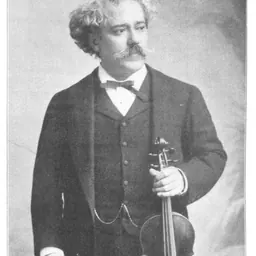
Born in Lemberg (now Lviv, Ukraine), he attended from 1887 until 1889 the Gesellschaft der Musikfreunde where he was taught the piano by Anton Door and music theory by Franz Krenn. He became a piano accompanist and teacher, working with Bronisław Huberman, Pablo de Sarasate, Egon Wellesz, and the Rosé Quartet. He died in Vienna in poverty.
His early piano works are salon pieces, while his Piano Quintet, Op. 30, and Clarinet Trio, Op. 40, are more substantial, written in the Romantic tradition. In 2009, his Piano Quintet was reprinted by Edition Silvertrust. Much of his music is lost or has yet to be uncovered. Steven Isserlis, the cellist, has championed his music, some of which he has rediscovered and performed.
Compositions
Orchestral Piano Concerto, Op. 12 Festmarsch, Op. 23 Scènes de ballet, Op. 34 Suite in F major, Op. 36 Heitere Ouvertüre, Op. 75 Miniaturen, suite, Op. 78 Humoreske, Op. 87
Chamber Sonata, Op. 22, for cello and piano String Quartet in E major, Op. 25 Piano Quintet in F minor, Op. 30 Piano Trio in E major, Op. 32 Piano Quartet in D major, Op. 35 Trio in A minor, Op. 40, for clarinet, cello and piano (published 1925 by ) Fantasie, Op. 55, for flute and piano Duettino, Op. 57, for 2 flutes Rondo, Op. 66, for flute and piano
Piano Lucie, mazurka, Op. 1 La piquante, polka française, Op. 5 Mazurka brillante, Op. 11 Serenade, Op. 13 Pas des sylphides, waltz, Op. 14 5 pièces, Opp. 15–19 3 Klavierstücke, Op. 21 Konzertwalzer, Op. 24 2 Klavierstücke, Op. 37
Choral Große Messe in G major, Op. 6 Cantata (A. Silesius), Op. 54, for solo voices, mixed chorus and organ 3 Sinnsprüche (Assim Agha), Op. 62, for mixed chorus Lied der Eintagsfliegen (C. Schneller), Op. 63, for female chorus and piano (4 hands) Am Strome, Op. 67, for male chorus 2 Lieder im Volkston, Op. 68, for mixed chorus Brudergruss, Op. 73, for male chorus Matt gießt der Mond, Op. 74, for mixed chorus Opp. 77, 89, 91, 93, 102, for mixed chorus Opp. 80, 83, 86, 106, for male chorus
Solo vocal Der Landsturm (M. Marton), Op. 39, for voice and orchestra 3 Gesänge nach altjapansichen Gedichten, Op. 47, for voice and orchestra Gesang Buddhas, Op. 59, for baritone and wind orchestra 2 Gesänge, Op. 70, for tenor and orchestra 5 Lieder, for voice and orchestra Lieder for voice and piano
Don’t just read it —
keep it.
Full-length biographies made to live with: read them, listen on the way to work, watch them tonight.
- E-book
- Audio
- Video
Instant download · yours to keep · every purchase keeps this site free
Important facts
People in Carl Frühling's life
Named in this biography and alive at the same time
Related people
Same field, nearest in time



Contemporaries
People whose lives overlapped Carl Frühling's



Frequently asked questions
Who was Carl Frühling?
Austrian composer (1868–1937)
When was Carl Frühling born?
Carl Frühling was born on 28 November 1868 in Lviv.
When did Carl Frühling die?
Carl Frühling died on 25 November 1937 in Vienna.
What was Carl Frühling's occupation?
Carl Frühling was a composer and pianist.
What nationality was Carl Frühling?
Carl Frühling was Austrian.
Sources & further reading
Cite this page
APA: Biography.guide. (2026). Carl Frühling. https://biography.guide/carl-fruhling/
MLA: "Carl Frühling." Biography.guide, https://biography.guide/carl-fruhling/.
Chicago: "Carl Frühling." Biography.guide. https://biography.guide/carl-fruhling/.
Data last updated: 2026-09-20 · Spot an error? Report a correction.
Page generated 2026-09-27 05:06 UTC