
Carl Friedländer
German pathologist and microbiologist
About Carl Friedländer
Lived 1847 – 1887 (aged 39). Carl Friedländer was a German microbiologist, physician, university teacher, pathologist and bacteriologist.
Carl Friedländer (19 November 1847, Brieg (Brzeg), Silesia – 13 May 1887, Meran (Merano), County of Tyrol) was a German pathologist and microbiologist who helped discover the bacterial cause of pneumonia in 1882. He also first described thromboangiitis obliterans.
Edwin Klebs had seen bacteria in the airways of individuals who died from pneumonia in 1875; however, it was not until 1882 when Friedländer recognized that bacteria (Klebsiella pneumoniae) were nearly always observable in persons dying from pneumonia that the bold statement was made that these were the likely cause of pneumonia. Friedländer's second communication on the micrococci of pneumonia, which appeared on 15 November 1883, touched off a controversy over the causative agent of pneumonia that continued for the next three years. In this second report he noted that he had examined more than 50 additional cases of pneumonia and that he had identified bacteria in nearly all of them and that sections from which the bacteria were absent were from the lungs of patients dying late in the course of the disease. Friedländer also noted that it was necessary to use special stains (e.g. the Gram Stain) to see the bacteria because using ordinary stains (H&E) nuclei and fibrin stained the same way as bacteria and thus obscured the ability to see the bacteria. As a result, Klebsiella pneumoniae is often called Friedländer's bacterium or Friedländer's bacillus. It is unclear if the bacteria that he observed in persons dying of pneumonia were truly all Klebsiella, some may well have been Streptococcus pneumoniae.
In 1886, he introduced the ampoule in medicine.
He died a premature death, aged 39 or 40, after a brief stint with a respiratory disease, believed to be caused by his discovered infectious organism, the Friedlander's Bacillus.
Works Friedländer, C. Über die Schizomyceten bei der acuten fibrösen Pneumonie. Virchow's Arch pathol. Anat. u. Physiol., 87 (2):319-324, Feb. 4, 1882. Carl Friedländer: Arteriitis obliterans. Zentralblatt für die medizinischen Wissenschaften, Berlin, 1876, 14.
Don’t just read it —
keep it.
Full-length biographies made to live with: read them, listen on the way to work, watch them tonight.
- E-book
- Audio
- Video
Instant download · yours to keep · every purchase keeps this site free
Important facts
People in Carl Friedländer's life
Named in this biography and alive at the same time

Related people
Same field, nearest in time
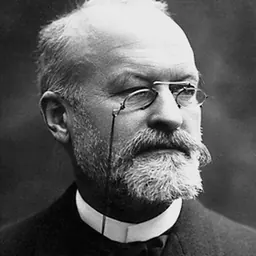


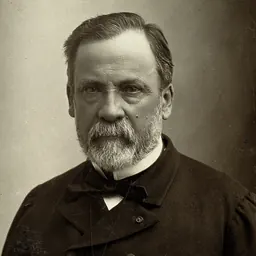

Contemporaries
People whose lives overlapped Carl Friedländer's

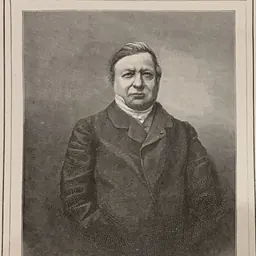
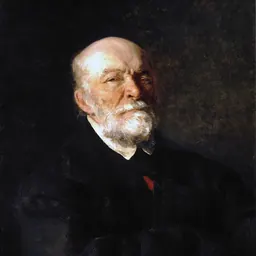


Frequently asked questions
Who was Carl Friedländer?
German pathologist and microbiologist (1847–1887)
When was Carl Friedländer born?
Carl Friedländer was born on 19 November 1847 in Brzeg.
When did Carl Friedländer die?
Carl Friedländer died on 13 May 1887 in Merano.
What was Carl Friedländer's occupation?
Carl Friedländer was a microbiologist, physician, university teacher, pathologist and bacteriologist.
What nationality was Carl Friedländer?
Carl Friedländer was German.
Sources & further reading
Cite this page
APA: Biography.guide. (2026). Carl Friedländer. https://biography.guide/carl-friedlander/
MLA: "Carl Friedländer." Biography.guide, https://biography.guide/carl-friedlander/.
Chicago: "Carl Friedländer." Biography.guide. https://biography.guide/carl-friedlander/.
Data last updated: 2026-09-20 · Spot an error? Report a correction.
Page generated 2026-09-27 04:58 UTC