
About Carl Everton Moon
Lived 1878 – 1948 (aged 69). Carl Everton Moon was an American painter and photographer.
Carl Everton Moon (October 5, 1878 – June 24, 1948) was an American photographer, book and magazine illustrator, painter and writer focused on Native American subjects. He has been called "the imitator of Edward Curtis" and "the last of the great early photographers to go west".
Early life and early career
Carl Everton Moon (or Karl, as he spelled his name prior to anti-German sentiment during World War I) was born in Wilmington, Ohio, on October 5, 1878. In addition, as a boy, Moon had determined to head West after reading James Fenimore Cooper's adventure stories.
Bessie died shortly after their arrival in Albuquerque. Moon began his work with the Indians alone. As a result of a meeting with publisher James Adams Thayer, Moon's photos appeared on the covers of Ridgway Magazine, The Literary Digest, Century, The Burr McIntosh Monthly and The New York Times. The photos would become the Fred Harvey Collection of Southwest Indian Pictures. Harvey ordered hundreds of thousands of DPC Phostints to sell in his hotel gift shops alongside the Native American jewelry, blankets and baskets he commissioned from local artisans.
During the same time frame, Moon also sold photos to major companies such as Stetson Hats and Wells Fargo for use in advertisements, calendars and logos.
In addition to his photographic duties at The Harvey Co., Moon served as the director of art. In this position, he assisted Harvey and the American Museum of Natural History in acquiring paintings of Indians.
Indian Legends in Rhyme (1917) Lost Indian Magic (1918) Wongo and the Wise Old Crow (1923) Chi-Wee, The Adventures of a Little Indian Girl (1925) Chi-Wee and Loki of the Desert (1926) Nadita-(Little Nothing) (1927) The Flaming Arrow (1927) The Runaway Papoose (1928) The Magic Trail (1929) The Missing Kachina (1930) The Arrow of Tee-May (1931) Painted Moccasin (1931) The Book of Nah-Wee (1932) Far-Away Desert (1932) Tah-Kee The Boy from Nowhere (1932) Shanty Ann (1935) Singing Sands (1936) White Indian (1937) Solita (1938) Daughter of Thunder (1942) One Little Indian (1950)
Runaway Papoose won a Newbery Medal in 1929.
Moon continued to make photographs and paintings at the Pasadena studio. He painted 24 Indian studies for Henry E. Huntington, four for the Otto Vollbehr collection in Charlottenburg, Germany, and 26 oil paintings of Southwest Indians for the Smithsonian Institution.
Moon died at the home of his daughter in 1948. for Leslie's Illustrated Weekly Newspaper, in which he explained his photographic objective and approach.
And later in the same article:
In a joint biography of the Moons, In Search of the Wild Indians: Photographs & Life Works by Carl and Grace Moon, author Tom Dreibe offers the highest praise for the artist, "Perhaps if his travels had led him West ten years earlier, he may have been considered the greatest Indian photographer of all time".
Collections Moon's artwork is in the collections of Hubbell Trading Post, Huntington Library, Montclair Art Museum, Southwest Museum of the American Indian, Library of Congress, American Museum of Natural History, The Getty Museum, the Smithsonian American Art Museum and the Metropolitan Museum of Art, among others.
The Huntington Library holds the largest collection, the 24 oil paintings made specifically for Henry Huntington and 293 photographic prints purchased by the collector.
Don’t just read it —
keep it.
Full-length biographies made to live with: read them, listen on the way to work, watch them tonight.
- E-book
- Audio
- Video
Instant download · yours to keep · every purchase keeps this site free
Important facts
Family & relationships
People in Carl Everton Moon's life
Named in this biography and alive at the same time




Related people
Same field, nearest in time

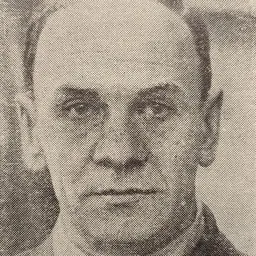
Contemporaries
People whose lives overlapped Carl Everton Moon's



Frequently asked questions
Who was Carl Everton Moon?
American painter and photographer (1878-1948)
When was Carl Everton Moon born?
Carl Everton Moon was born on 5 October 1878 in Wilmington.
When did Carl Everton Moon die?
Carl Everton Moon died on 24 June 1948 in Los Angeles.
What was Carl Everton Moon's occupation?
Carl Everton Moon was a painter and photographer.
What nationality was Carl Everton Moon?
Carl Everton Moon was American.
Sources & further reading
· Wikipedia: Carl Everton Moon
Cite this page
APA: Biography.guide. (2026). Carl Everton Moon. https://biography.guide/carl-everton-moon/
MLA: "Carl Everton Moon." Biography.guide, https://biography.guide/carl-everton-moon/.
Chicago: "Carl Everton Moon." Biography.guide. https://biography.guide/carl-everton-moon/.
Data last updated: 2026-09-22 · Spot an error? Report a correction.
Page generated 2026-09-27 05:21 UTC