
About Carl Andre
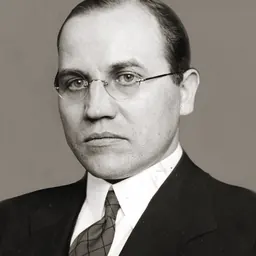
Lived 1935 – 2024 (aged 88). Carl Andre was an American writer, poet, land artist, visual artist, illustrator and draftsperson.
Carl Andre (September 16, 1935 – January 24, 2024) was an American minimalist artist recognized for his ordered linear and grid format sculptures. His stark minimal art sculptures range from large public artworks (such as Stone Field Sculpture, 1977, in Hartford, Connecticut, and Lament for the Children, 1976, in Long Island City, New York), to large interior works exhibited on the floor (such as , 1969 ), to small intimate works (such as , 1989, and , 2011 ).
Andre died in Manhattan on January 24, 2024, at the age of 88. ) and Margaret (Johnson) Andre. He completed primary and secondary schooling in the Quincy public school system and studied art at Phillips Academy in Andover, Massachusetts, from 1951 to 1953. While at Phillips Academy, he became friends with Hollis Frampton, who would later influence Andre's radical approach to sculpture through their conversations about art and through introductions to other artists.
Andre served in the U.S. Army in North Carolina from 1955 to 1956, and moved to New York City in 1956. While in New York, Frampton introduced Andre to the work of Constantin Brâncuși and Andre became re-acquainted with a former classmate from Phillips Academy, Frank Stella, in 1958. Andre shared studio space with Stella from 1958 through 1960. but his conversations with Stella about space and form led him in a different direction. While sharing a studio with Stella, Andre developed a series of wooden "cut" sculptures
Mature work
In 1965, Andre had his first public exhibition of his work in the Shape and Structure show curated by Henry Geldzahler at the Tibor de Nagy Gallery.
In the late 1960s, entrepreneur Karl Ströher from Darmstadt, Germany, acquired three major works from Andre to give them on loan to the Hessisches Landesmuseum Darmstadt. Peter Iden then acquired these works for the Museum für Moderne Kunst Frankfurt in 1981. The works have since been shown in various "Change of Scene" exhibitions (1992–2002) at the museum in Frankfurt and internationally.
In 1969, Andre helped organize the Art Workers Coalition.
In 1970, he had a solo exhibition at the Solomon R. Guggenheim Museum.
Equivalent VIII
In 1972, Britain's Tate Gallery acquired Andre's Equivalent VIII, an arrangement of 120 firebricks.
The piece was exhibited several times without incident, but became the center of controversy in 1976 after being featured in an article in The Sunday Times and later being defaced with blue food dye. The "Bricks controversy" became one of the most famous public debates in Britain about contemporary art.
Lever
Andre's Lever consists of a single line of 137 firebricks. The work concisely divides a space as the bricks hug the floor. The exhibition of Lever at the 1966 exhibition Primary Structures at the Jewish Museum in New York brought considerable recognition to Carl Andre.
Criticism The gradual evolution of consensus about the meaning of Andre's art was compiled in the book About Carl Andre: Critical Texts Since 1965, published by Ridinghouse in 2008. The most significant essays and exhibition reviews were collated into this volume, including texts written by some of the most influential art historians and critics: Clement Greenberg, Donald Kuspit, Lucy R. Lippard, Robert C. Morgan, Barbara Rose and Roberta Smith.
Personal life Andre was married four times. The first two marriages ended in divorce. In 1988 he was acquitted of the murder of his third wife Ana Mendieta and in 1999 he married his fourth wife, artist Melissa Kretschmer. through a mutual friendship with artists Leon Golub and Nancy Spero at AIR Gallery in New York City. Andre and Mendieta married in January 1985. Mendieta fell to her death from Andre's 34th-story apartment window in September 1985, after an argument with Andre. Andre was quoted from a 9-1-1 call after her death to have said, "What happened was we had ... my wife is an artist and I am an artist and we had a quarrel about the fact that I was more, eh, exposed to the public than she was and she went to the bedroom and I went after her and she went out of the window". The same night Andre was charged with second-degree murder. He elected to be tried before a judge with no jury. In 1988, he was acquitted of all charges related to Mendieta's death.
Museums that exhibit Andre's work have been met with outrage from Mendieta's supporters. The 2022 podcast Death of an Artist detailed a culture of secrecy around Mendieta's death and Andre's potential involvement. In 2017, protestors attended the opening of his exhibition at The Geffen Contemporary at MOCA in Los Angeles, distributing postcards that read, "Carl Andre is at MOCA Geffen. .
Artist books Quincy Book. Andover: Addison Gallery of American Art, 1973. Artist book by Carl Andre which features commissioned photographs of landscapes and monuments in his hometown of Quincy, Massachusetts. Quincy was originally printed in conjunction with Andre's 1973 solo show at Addison Gallery, and reprinted by Primary Information in 2014. America Drill: Red Cut, White Cut, Blue Cut. Brussels: Maîtres de Forme Contemporains/Michèle Didier, and Paula Cooper Gallery, 2003. Limited edition of 100 numbered, signed and stamped copies, 400 numbered copies and 100 artist's proofs.
Don’t just read it —
keep it.
Full-length biographies made to live with: read them, listen on the way to work, watch them tonight.
- E-book
- Audio
- Video
Instant download · yours to keep · every purchase keeps this site free
Important facts
Family & relationships
People in Carl Andre's life
Named in this biography and alive at the same time




Related people
Same field, nearest in time



Contemporaries
People whose lives overlapped Carl Andre's





Frequently asked questions
Who was Carl Andre?
American artist (1935-2024)
When was Carl Andre born?
Carl Andre was born on 16 September 1935 in Quincy.
When did Carl Andre die?
Carl Andre died on 24 January 2024 in New York City.
What was Carl Andre's occupation?
Carl Andre was a writer, poet, land artist, visual artist, illustrator and draftsperson.
What nationality was Carl Andre?
Carl Andre was American.
Sources & further reading
Cite this page
APA: Biography.guide. (2026). Carl Andre. https://biography.guide/carl-andre-writer/
MLA: "Carl Andre." Biography.guide, https://biography.guide/carl-andre-writer/.
Chicago: "Carl Andre." Biography.guide. https://biography.guide/carl-andre-writer/.
Data last updated: 2026-09-20 · Spot an error? Report a correction.
Page generated 2026-09-27 05:32 UTC