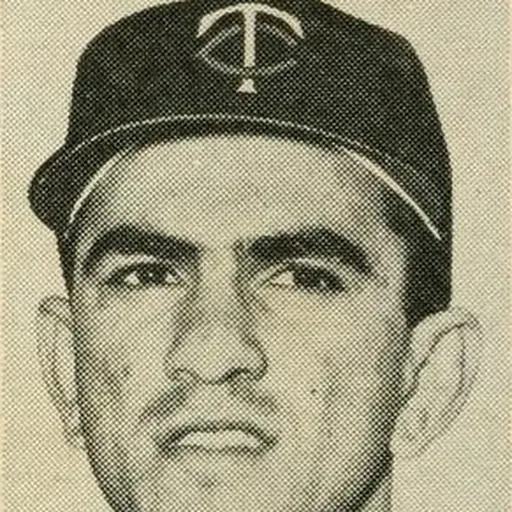
About Camilo Pascual
Born 1934. Camilo Pascual is a Cuban baseball player.
Camilo Alberto Pascual Lus (born January 20, 1934) is a Cuban former Major League Baseball right-handed pitcher. During an 18-year baseball career (1954–71), he played for the original modern Washington Senators franchise (which became the Minnesota Twins in 1961), the second edition of the Washington Senators, Cincinnati Reds, Los Angeles Dodgers, and Cleveland Indians. He was also known by the nicknames "Camile" and "Little Potato."
Pascual's best pitches were his fastball and devastating overhand curveball, described by Ted Williams as the "most feared curveball in the American League for 18 years". His curveball has been rated in the top 10 of all-time. Over his career, he compiled 174 wins, 2,167 strikeouts, and a 3.63 earned run average. He was elected to the American League All-Star team 5 times (from 1959 to 1962, and in 1964). In the second 1961 All-Star Game, he pitched three hitless innings and struck out four.
Early life Pascual was born on January 20, 1934, in Havana, Cuba. His older brother Carlos was also a future pitcher in Cuba and in American major league baseball. Carlos had the Cuban-Spanish nickname Patato, meaning short or a runt. Pascual, as the younger brother, became known as Patato Pequeño. When they later came to the United States, patato, sounding like potato, was mistranslated; and the brothers became known in the U.S. as Potato and Little Potato. The latter team was made up largely of Cuban players signed by Washington Senator's scout Joe Cambria, including future Minnesota Twins teammate Julio Bécquer. Pascal finished the season with a combined record of 5–4 with a 4.64 ERA and 46 walks in 64 innings. Despite his less than overwhelming stats, the 18-year-old Pascual was signed by the Washington Senators as an amateur free agent prior to the start of the 1952 season.
Major leagues
Washington Senators/Minnesota Twins Pascual would go north with the Senators in 1954 and would make his major league debut on April 15, mopping up the last 3 innings of a 6–1 loss to the Boston Red Sox for losing pitcher Bob Porterfield. The 20-year-old Pascual had an encouraging rookie season for the 66–88 Senators, finishing 4–7 with a 4.22 ERA, 3 saves and one complete game in 48 appearances (3 starts). However, Pascual steadily improved, lowering his ERA and increasing his win total every year from 1955 to 1959. (though not the July 1959 team ). Pascual finished 1959 with 17–10 record, a 2.64 ERA, and 185 strikeouts in innings.
The period from 1959 to 1964 would see Pascual's peak years. He would win at least 12 games every season while leading the league in complete games, shutouts, and strikeouts three times each. the second 1961 All-Star team, both 1962 All-Star teams, and the 1964 team, in addition to his 1959 selection); actually playing in three of those games (1961–62, 1964). During that time, the Senators moved to Minnesota, beginning the 1961 season as the Minnesota Twins, and Pascal moved with the team. In a reversal from his earlier career, his 3.5–1 strikeout to walk ratio also led the American League. In 1963, he had arguably his best season with a 21-9 win lost record, a 2.46 ERA, leading the league in complete games and 202 strikeouts.
1965 saw the Twins/Washington franchise return to the World Series for the first time since Washington lost the 1933 series to the New York Giants. Pascual continued to have arm problems in 1966 and only pitched 103 innings in 21 games, both career lows. Although no longer over-powering or the durable innings-eater he had once been, Pascual had a minor renaissance during the 1967 and 1968 seasons while in Washington. He won a total of 25 games while leading the Senator' staff in wins and finishing second in both innings and strikeouts both seasons.
Pascal was the Senators opening day pitcher in 1969, the seventh time he had the honor. However, Pascual got off to a brutal start in 1969 (2-5, 6.83 ERA, 38 walks in innings) and Washington sold his rights to the Cincinnati Reds on July 7, where he gave up seven runs in seven innings over the rest of the year. or April 13, 1970, with the Los Angeles Dodgers signing him on April 13, 1970. and for the Cleveland Indians for the first half of the 1971 season, but only saw action in a total of 19 games and he retired at the end of the season. However, he was also in the top 10 in the league in walks and home runs allowed five times in his career and is 87th and 120th all-time in those categories as of the start of the 2025 season. Pascual led the league in complete games three times (1959, 62, 63), Pascual was a 20-game winner twice, in 1962–63, and also finished with a career-high in complete games (18) in both of those seasons. and the second on April 27, 1965 in the 1st inning of a game against the Cleveland Indians.
Yankee shortstop Tony Kubek said of Pascual's curveball, “'He’d come straight over the top with it and it would just dive off the table. The spin was so tight, you couldn’t identify the pitch until it was too late. It didn’t flutter, it didn’t hang, it just kept biting. When Pascual was right, nobody had a chance. That curve was unhittable.'” Among the major leaguers Pascual has signed are Jose Canseco, Alex Cora, Omar Daal, Miguel Cairo, and Franklin Gutiérrez. He served as an international scout until he had almost turned 80.
Honors In 1983, Pascual was elected to the Cuban Baseball Hall of Fame. Then, in 1996 he gained induction into the Caribbean Baseball Hall of Fame as part of their first class. He later became the 24th former Twins player inducted into the Twins Hall of Fame, during a ceremony held on July 15, 2012.
He was honored on February 18, 2017, when his name was added to the "Pitching Wall of Great Achievement" at the Ted Williams Museum in St. Petersburg, Florida.
He was named Cuba's outstanding athlete of 1959.
In 2020, The Athletic ranked Pascal's 1963 season as the third best by a right-handed pitcher in Twins history, and his 1962 season as eighth best.
Don’t just read it —
keep it.
Full-length biographies made to live with: read them, listen on the way to work, watch them tonight.
- E-book
- Audio
- Video
Instant download · yours to keep · every purchase keeps this site free
Important facts
People in Camilo Pascual's life
Named in this biography and alive at the same time
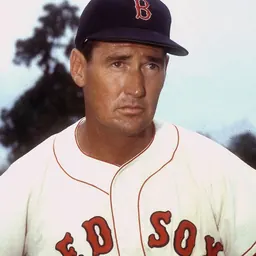





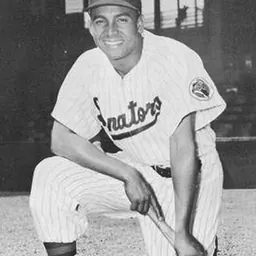

Related people
Same field, nearest in time
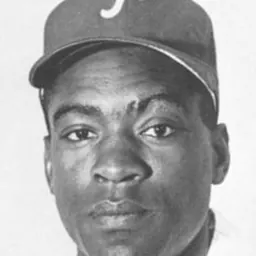

Contemporaries
People whose lives overlapped Camilo Pascual's





Frequently asked questions
Who is Camilo Pascual?
Cuban baseball player
When was Camilo Pascual born?
Camilo Pascual was born on 20 January 1934 in Havana.
What is Camilo Pascual's occupation?
Camilo Pascual is a baseball player.
What nationality is Camilo Pascual?
Camilo Pascual is Cuban.
Sources & further reading
Cite this page
APA: Biography.guide. (2026). Camilo Pascual. https://biography.guide/camilo-pascual/
MLA: "Camilo Pascual." Biography.guide, https://biography.guide/camilo-pascual/.
Chicago: "Camilo Pascual." Biography.guide. https://biography.guide/camilo-pascual/.
Data last updated: 2026-09-20 · Spot an error? Report a correction.
Portrait: Wikimedia Commons · author & licence
Page generated 2026-09-27 04:58 UTC