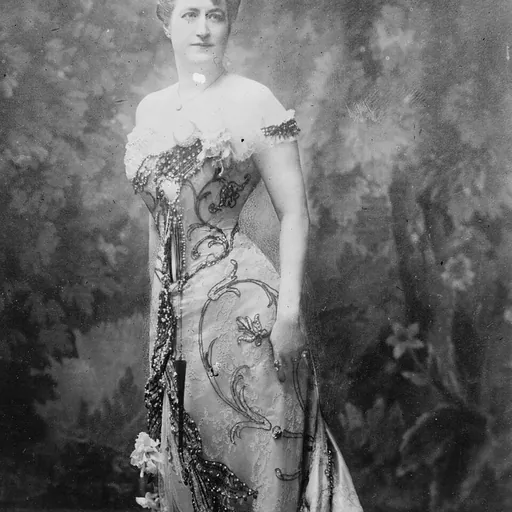
About Camille du Gast
Lived 1868 – 1942 (aged 73). Camille du Gast was a French nurse, fencer, balloonist, racing automobile driver, explorer and feminist.
Camille du Gast (Marie Marthe Camille Desinge du Gast, Camille Crespin du Gast, 30 May 1868 – 24 April 1942) was one of a trio of pioneering French female motoring celebrities of the Belle Époque, together with Hélène de Rothschild (Baroness Hélène van Zuylen) and Anne de Rochechouart de Mortemart, the Duchess of Uzès.
Du Gast was known as one of the richest and most accomplished widows in France due to her many achievements. She was an accomplished sportswoman—a balloonist, parachute jumper, fencer, tobogganist, skier, rifle and pistol shot, horse trainer—as well as a concert pianist and singer. She was the second woman to compete in an international motor race. Some sources report that she had originally started competitive ballooning and parachuting activities under her maiden name, du Gast, at her husband's behest in order to avoid them being mistaken for publicity stunts. Gordon Bennett described her as "the greatest sportswoman of all time".
She is also commemorated by the technical school 'Lycée professionnel des métiers de l'automobile Camille du Gast' at Chalon-sur-Saône
La Femme au Masque
La Femme au Masque affair involved Madame du Gast in three discrete court cases in Paris in 1902, with its salacious and colourful detail being reported worldwide. In 1885 Henri Gervex painted La Femme au Masque (The Masked Model), a notorious picture of his 22-year-old model Marie Renard standing naked apart from a Domino mask concealing her face. Her identity was never publicly revealed, causing great speculation and many accusations over time.
Ballooning and parachuting Madame du Gast and her husband were enthusiastic hot air balloonists, and she flew with the semi-professional pilot Louis Capazza. In 1895 she jumped from a hot air balloon at an elevation of using a parachute.
1902 In 1902 du Gast competed in the Paris to Vienna race. She also applied to enter the New York to San Francisco race but was refused by the governing body because she was a woman. Other racing activities were precluded when she took an extended cruise.
Paris–Madrid 1903 – Camille du Gast pilots her 30 hp De Dietrich, with starting number 29. Her upright seating position has been ascribed to the corsetry that the fashion of the time demanded.
1903 Paris–Madrid For the 1903 Paris–Madrid race du Gast was engaged by Adrien de Turckheim to drive one of his works 5.7-litre 30 hp De Dietrichs. Although she was popular with the French public, the hostility to female drivers was exemplified by the comment about her in The Autocar: "The gallant Frenchmen applauded and raised their hats, but for ourselves we must confess to a feeling of doubt as to whether fierce long-distance racing is quite the thing for ladies."
1904 In 1904 the Benz factory team offered du Gast a race seat for the Gordon Bennett Cup because of her performance in the 1903 Paris–Madrid, but by then the French government had barred women from competing in motorsport, citing 'feminine nervousness'.
The Algiers-Toulon race was organized by the Paris newspaper Le Matin, sponsored by Mercedes Paris and supported by the French Minister of Marine who provided both a prize and 'torpedo destroyers' to accompany each of the seven competitors. This encouraged the construction of especially heavy racing boats adapted for the open sea – from to feet in length, and 35–200 horse-power. The Camille had a steel hull, a 90 horse power Charron, Girardot et Voigt (C.G.V.) engine, and was built by the Pitre Company in Paris.
Travel and government work
After her husband's death she began to travel extensively. In September 1906 she decided to explore Morocco on horseback. She documented this experience in her article Ce que m'a dit le Rogui, (What the Rogui said to me.) published in Je sais tout in 1909. She described her unconventional modes of travel, alone in dangerous areas, and stated that she "adventured alone to Morocco, that country infested with brigands, [and] full of dangers for Europeans and especially for the French." Laura Godsoe observed in her study Exploring their Boundaries: Gender and Citizenship in Women's Travel Writing, 1880–1914 that du Gast worked with local women handing out medicines and candy in the tiniest hamlets. She endeavoured to help the French government gain influence and demonstrate the benefits of French rule. She noted that 'after eleven months of travel she felt she had improved the image of France, the key to this task being; "a nice horse, a calm demeanor, authority and generosity."
Charity work Madame du Gast was known in France for her extensive charity work.
Animal welfare After the trauma of her attempted assassination by her daughter in 1910 she steadily became more devoted to animal welfare. She worked at the Paris refuge for stray and injured dogs that was founded in 1903 by Gordon Bennett. She served as president of the 'French Society for the Prevention of Cruelty to Animals' (SPA) from 1910 until her death in 1942. In 1927 she used her own funds to modernize and enlarge the animal shelter at Gennevilliers.
Women's welfare Du Gast also worked with disadvantaged women and children, establishing centers for orphans and impoverished women. She continued to provide health-care to disadvantaged women and children in German-occupied Paris, until her death in 1942.
Feminism Madame du Gast was a feminist concerned with advancing the rights and emancipation of women, a frequent traveler, and a devoted Republican. She became vice-president of the Ligue Française du Droit des Femmes (The French League for the Rights of Women) after World War I. Her pre-eminence and The Role of Sports in the feminist victory is discussed in the book Cinquante-ans de féminisme : 1870–1920 published by the French League for Women's rights in 1921.
Don’t just read it —
keep it.
Full-length biographies made to live with: read them, listen on the way to work, watch them tonight.
- E-book
- Audio
- Video
Instant download · yours to keep · every purchase keeps this site free
Important facts
People in Camille du Gast's life
Named in this biography and alive at the same time

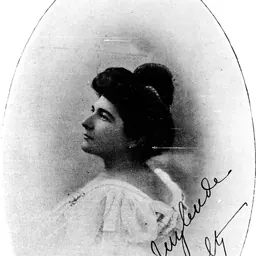
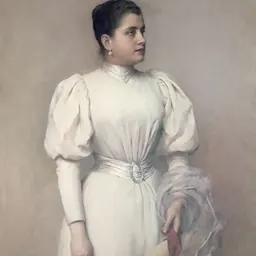
Related people
Same field, nearest in time

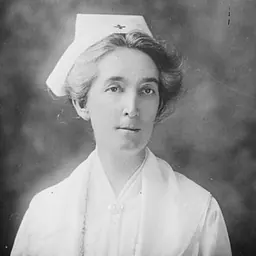
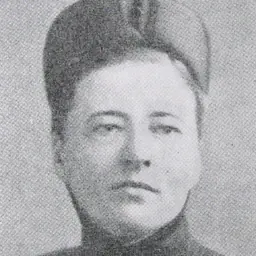


Contemporaries
People whose lives overlapped Camille du Gast's


Frequently asked questions
Who was Camille du Gast?
French racing driver (1868-1942)
When was Camille du Gast born?
Camille du Gast was born on 30 May 1868 in Paris.
When did Camille du Gast die?
Camille du Gast died on 24 April 1942.
What was Camille du Gast's occupation?
Camille du Gast was a nurse, fencer, balloonist, racing automobile driver, explorer and feminist.
What nationality was Camille du Gast?
Camille du Gast was French.
Sources & further reading
Cite this page
APA: Biography.guide. (2026). Camille du Gast. https://biography.guide/camille-du-gast/
MLA: "Camille du Gast." Biography.guide, https://biography.guide/camille-du-gast/.
Chicago: "Camille du Gast." Biography.guide. https://biography.guide/camille-du-gast/.
Data last updated: 2026-09-23 · Spot an error? Report a correction.
Portrait: Wikimedia Commons · author & licence
Page generated 2026-09-27 05:07 UTC