
About Callistus Ndlovu
Lived 1936 – 2019 (aged 83). Callistus Ndlovu was a Zimbabwean revolutionary and politician.
Callistus Dingiswayo Ndlovu (9 February 1936 – 13 February 2019) was a Zimbabwean academic, diplomat, and politician. He joined the Zimbabwe African People's Union (ZAPU) in 1963 as a teacher in Matabeleland, and went on to serve as its representative to the United Nations and North America in the 1970s. After Zimbabwe's independence in 1980, he was a member of the House of Assembly from 1980 to 1985 and served as a senator from 1985 to 1990. He left ZAPU and joined the ruling ZANU–PF party in 1984.
Ndlovu held several portfolios in Prime Minister Robert Mugabe's cabinet in the 1980s, serving as Minister of Construction from 1982 to 1984, Minister of Mines from 1984 to 1985, and Minister of Industry and Technology between 1985 and 1989. In 1989, he was implicated in the Willowgate corruption scandal and resigned from the cabinet after being accused of lying to the official panel investigating the allegations. He ran unsuccessfully for Parliament in 2000 and again for the Senate in 2013, and served on the ZANU–PF Central Committee and as the party's provincial chairman for Bulawayo. He died in 2019 in South Africa, where he was being treated for cancer.
Early life and education Callistus Dingiswayo Ndlovu was born on 9 February 1936 in Plumtree, a town near the western border of what was then Southern Rhodesia. He grew up in a Kalanga family of four. As a boy, Ndlovu herded cattle and often harvested mopane worms to pay for his schooling. His doctoral dissertation was titled Missionaries and Traders in the Ndebele Kingdom.
Academic career and revolutionary activity In 1960, Ndlovu joined the National Democratic Party, an African nationalist party founded by Joshua Nkomo. On 16 April 1982, he was named Minister of Construction by Prime Minister Robert Mugabe, replacing Clement Muchachi, who resigned as Minister of Works after ZAPU leader Joshua Nkomo was sacked from the cabinet. His appointment strained the already difficult relations between Nkomo and Ndlovu, who in previous instances had opposed Nkomo at party councils, and who had chaired a parliamentary committee enquiring into Nkomo's and ZAPU's companies. At a party meeting in Bulawayo on 8 May 1982, Ndlovu defended his decision to join Mugabe's cabinet and accused ZAPU leadership of employing a double standard for refusing to support his appointment, as the party had approved the appointment of three other ZAPU ministers in the past. On 14 April 1984, Ndlovu announced his resignation from ZAPU. The following month, on 16 May, he announced he had joined the ruling party, ZANU, a move commended by Prime Minister Mugabe and described as "opportunistic" by ZAPU leader Joshua Nkomo. That year, Ndlovu became ZANU's provincial chairman for Bulawayo, an office he held until 1987. He was then appointed to represent Matabeleland North Province in the Senate, where he served until 1990.
Ndlovu was implicated in the 1988–1989 Willowgate scandal in which The Bulawayo Chronicle revealed the illegal resale of automobiles at inflated prices on the black market by senior government officials, who had been given early access to purchase them from an assembly plant in Willowvale, Harare. When The Chronicle first published the revelations in 1988, Ndlovu had called the reporting "a shoddy piece of slander conceived by tricksters and mobsters." He ultimately resigned on 13 April 1989 along with several other senior officials after being accused of lying to the official commission appointed by Prime Minister Mugabe to investigate the allegations. Announcing the resignations the following day, Mugabe told reporters Ndlovu and the other officials had been seduced by "the evils of the capitalist system we still have," but said, "I am still proud of them. All these men are good men, by and large."
Later life and death After resigning, Ndlovu returned to the private sector, working in 1990 as an executive consultant with the Treger Group of Companies and in 1991 as chief executive officer at Calding Consultants.
Ndlovu was chairman of the board of directors of the cellular network operator Net*One and headed the founding task force of Gwanda State University, a new government university established in Matabeleland South Province in 2012. However, ZANU–PF received just 23.8% of the vote in Bulawayo in the 2013 election, and Ndlovu did not receive a Senate seat, which were allotted using proportional representation. He continued to serve on the ZANU–PF Central Committee and as the party's provincial chairman for Bulawayo until his death. Following his death, ZANU–PF's Bulawayo province requested he be declared a national hero, which was approved unanimously by the party's politburo two days later. In a statement, President Emmerson Mnangagwa described Ndlovu as "a principled and disciplined cadre who was always prepared to sacrifice for the greater good of our people" The following day, his body was flown on an Air Force helicopter to his rural home in Sanzukwi village near Brunapeg. There, hundreds of mourners and government and party officials gathered to view his body, before it was flown back to Bulawayo lay in state at his home the next day. On 22 February, a Catholic funeral service was held at St. Mary's Cathedral Basilica, followed by a service at Bulawayo City Hall. His body was then flown to Harare, and was buried at the National Heroes' Acre the next day. Ndlovu is survived by his wife Angeline and seven children.
Don’t just read it —
keep it.
Full-length biographies made to live with: read them, listen on the way to work, watch them tonight.
- E-book
- Audio
- Video
Instant download · yours to keep · every purchase keeps this site free
Important facts
People in Callistus Ndlovu's life
Named in this biography and alive at the same time


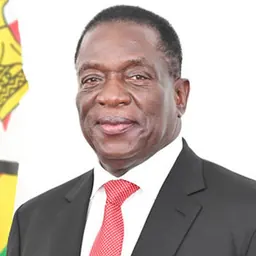
Related people
Same field, nearest in time

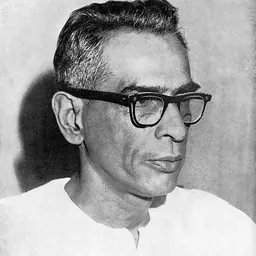




Contemporaries
People whose lives overlapped Callistus Ndlovu's




Frequently asked questions
Who was Callistus Ndlovu?
Zimbabwean politician (1936–2019)
When was Callistus Ndlovu born?
Callistus Ndlovu was born on 9 February 1936.
When did Callistus Ndlovu die?
Callistus Ndlovu died on 13 February 2019.
What was Callistus Ndlovu's occupation?
Callistus Ndlovu was a revolutionary and politician.
What nationality was Callistus Ndlovu?
Callistus Ndlovu was Zimbabwean.
Sources & further reading
Cite this page
APA: Biography.guide. (2026). Callistus Ndlovu. https://biography.guide/callistus-ndlovu/
MLA: "Callistus Ndlovu." Biography.guide, https://biography.guide/callistus-ndlovu/.
Chicago: "Callistus Ndlovu." Biography.guide. https://biography.guide/callistus-ndlovu/.
Data last updated: 2026-09-20 · Spot an error? Report a correction.
Page generated 2026-09-27 05:00 UTC