
About Calistrat Hogaș
Lived 1847 – 1917 (aged 70). Calistrat Hogaș was a Romanian writer.
Calistrat Hogaș (born Calistrat Dumitriu; April 19, 1848 – August 28, 1917) was a Moldavian, later Romanian prose writer. The son of a Tecuci priest, he studied at the University of Iași before beginning an over four-decade career as a high school teacher, often at Piatra Neamț. Meanwhile, he made several false starts as a writer before finding a suitable genre, namely stories drawn from his mountain rambles that appeared starting in 1907. He did not manage to collect his works during his lifetime, but these appeared to great success in 1921.
Biography
Origins and literary career Born in Tecuci, his parents were Gheorghe Dumitriu, a Romanian Orthodox archpriest, and his wife Mărioara (née Stanciu), His adopted surname was a nickname of his grandfather's that was assigned to him in primary school as a way to distinguish him from other pupils named Dumitriu. After completing the primary grades in his native town, he attended middle and high school at Academia Mihăileană and at the National College in Iași from 1859 to 1867. From 1867 to 1869, he attended the literature faculty of the University of Iași. In January 1870, he married Elena Gheorghiu, the daughter of a Piatra Neamț priest; the couple had eight children. A lover of Greek and Roman culture, he gave them names such as Cleopatra, Cornelia, Sidonia and Aețiu. In 1878, he left Piatra Neamț for a period of three years, teaching first at the gymnasium in Tecuci and then at a normal school in Iași, and then lived in the former town from 1881 to 1885. He subsequently taught in Tecuci, Alexandria, and Roman (at the Roman-Vodă High School); From 1898, he was a teacher at the Boarding High School in Iași. It was only in 1921 that his collected works appeared: covering two volumes, Amintiri dintr-o călătorie and În munții Neamțului, the second was prefaced by Mihail Sadoveanu, and he was posthumously granted the Romanian Writers' Society Prize in 1921. A storyteller full of charm, he referred to himself as an "explorer" of Moldavia's "colossal" mountains.
While George Călinescu considered him merely "a talented, one-dimensional dilettante", other critics, including Ibrăileanu, Tudor Vianu, Vladimir Streinu (who edited his works between 1944 and 1947), Șerban Cioculescu, (who put out another edition in 1956), , and treated his writings with understanding and objectivity. They commented on his literary discourse, his romanticism, evocation of landscapes and classical allusions. In 1944, Cioculescu classified him as a practitioner of the Baroque, while Alexandru Călinescu observed that his corpus is an amalgam, a mosaic of styles and mannerisms. A critical edition, with preface and commentary by Săndulescu, appeared in 1984. Zigu Ornea noted the "observer's and moralist's talent" with which he imagined "tales of an ineffable quality. He was not just a poet of the forest universe but also had an excellent, memorable ability to sketch characters, an extraordinary gift for recreating dialogue." He went on to deny that Hogaș was another Ion Creangă, as had been claimed, "but a city dweller who knew the habits of the mountain environment and the practices of the mountain people", endowed with "a rare capacity for depicting nature, with all its meanings and its beauties", "a seductive refinement and charm and surprise and delight".
After his death, his widow and two of his daughters continued to reside in his house in Piatra Neamț; in 1939, his daughter Sidonia opened a private museum in one of the rooms. In 1969, the entire house was opened to the public as a state-owned museum, and since 1994 it has attempted to reconstitute the appearance it had during the writer's last five years. Several sites connected with Hogaș are listed as historic monuments by Romania's Ministry of Culture and Religious Affairs. In Tecuci, there are two: his mid-19th century house and a more modern bust. Piatra Neamț has three: the 19th century house that is now a museum, a 1924 bas-relief that features him in the center, and his grave. His 19th century villa in Roman is also listed. Calistrat Hogaș National College in Piatra Neamț, where he taught, has borne his name since 1970, while Tecuci's Calistrat Hogaș National College has done so since 1990.
Don’t just read it —
keep it.
Full-length biographies made to live with: read them, listen on the way to work, watch them tonight.
- E-book
- Audio
- Video
Instant download · yours to keep · every purchase keeps this site free
Important facts
People in Calistrat Hogaș's life
Named in this biography and alive at the same time

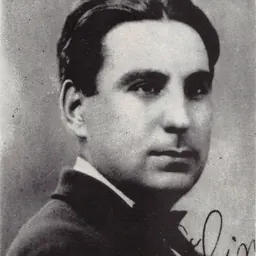
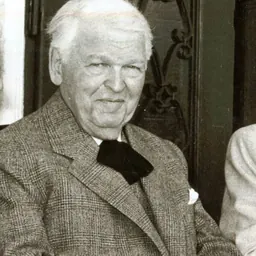
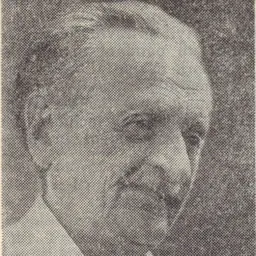
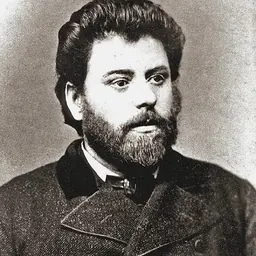
Related people
Same field, nearest in time

Contemporaries
People whose lives overlapped Calistrat Hogaș's




Frequently asked questions
Who was Calistrat Hogaș?
Romanian writer
When was Calistrat Hogaș born?
Calistrat Hogaș was born on 19 April 1847 in Tecuci.
When did Calistrat Hogaș die?
Calistrat Hogaș died on 28 August 1917 in Roman.
What was Calistrat Hogaș's occupation?
Calistrat Hogaș was a writer.
What nationality was Calistrat Hogaș?
Calistrat Hogaș was Romanian.
Sources & further reading
Cite this page
APA: Biography.guide. (2026). Calistrat Hogaș. https://biography.guide/calistrat-hogas/
MLA: "Calistrat Hogaș." Biography.guide, https://biography.guide/calistrat-hogas/.
Chicago: "Calistrat Hogaș." Biography.guide. https://biography.guide/calistrat-hogas/.
Data last updated: 2026-09-24 · Spot an error? Report a correction.
Page generated 2026-09-27 05:00 UTC