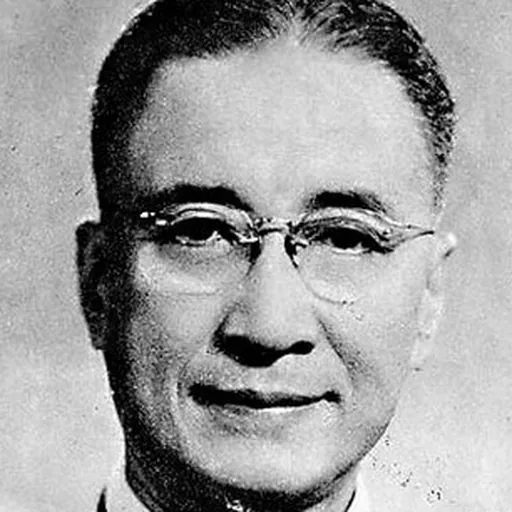
About Cai Chusheng
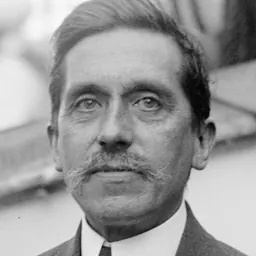
Lived 1906 – 1968 (aged 62). Cai Chusheng was a Chinese film director, screenwriter, politician, film producer and director.
Cai Chusheng (January 12, 1906 – July 15, 1968) was a Chinese film director of the pre-Communist era, and was the first Chinese director to win an international film award at the Moscow International Film Festival, with his film Song of the Fishermen. Best known for his progressive output in the 1930s, Cai Chusheng was later severely persecuted and died during the Cultural Revolution. His ashes are kept at the Babaoshan Revolutionary Cemetery in Beijing.
Biography
Early career Cai was born in Shanghai to Cantonese parents, but raised in Chaoyang, Guangdong. He only had four years of formal education, and was home-schooled after he had spoken up for his class about the misbehavior of a teacher. While home-schooled, he studied Confucianism and practiced calligraphy and painting. Cai Chusheng initially worked in low-level positions in several small studios during the 1920s, before eventually joining Mingxing Film Company as a director's assistant to Zheng Zhengqiu, another Chaoyang-native. Cai later joined the Lianhua Film Company where he directed a handful of mainstream popular films including Spring in the South and Pink Dream (both 1932). and it would also become the first Chinese film to win an international prize, doing so at the Moscow International Film Festival.
Hong Kong and wartime During the war, Cai fled first to Hong Kong, where he helped launch Mandarin-language cinema with Situ Huimin. In Hong Kong, Cai would also direct two films, including an anti-Japanese thriller. Cai was also a pioneer in making films in local dialects, and the first to make movies in Cantonese. He also made movies in Chaozhou dialect. When Hong Kong fell to the Japanese, Cai fled to Chongqing, China's wartime capital, where he joined the government-run Nationalist Central Film Studio.
Post-war career Cai's post-war career saw him returning to Shanghai and becoming a leading member of the Lianhua Film Society (later incorporated as the Kunlun Film Company). His collaboration with Zheng Junli The Spring River Flows East (1947) also proved to be a major film and popular success in the brief "Second Golden Age" of Cinema that followed the end of the Second World War. Following the Communist revolution, Cai worked mainly in major government administrative tasks. He was also actively involved in promoting Chinese film industry and also formed an organization to monitor the quality of movies and to recognize talented artists in the industry. He did make one major post-1949 film, Waves on the Southern Shore (1963).
Death and legacy As the Cultural Revolution began to gain momentum in the late 1960s, Cai Chusheng, like many artists and intellectuals, became the target of persecution. Cai was forced to self-criticize and admit his mistakes in writing. Cai died in 1968. His ashes are now placed at the Babaoshan Revolutionary Cemetery. The house where Cai spent his youth is now a museum which is designated by the Chinese government as a certified historical attraction. Cai is honored from time to time at major events like the World Expo 2010 and film festivals.
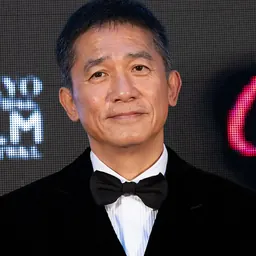
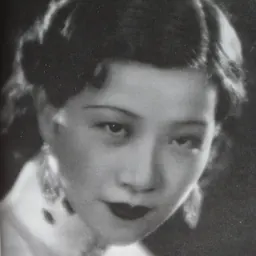
In Stanley Kwan's 1991 biopic of Ruan Lingyu, Center Stage, Cai Chusheng is portrayed by Hong Kong actor Tony Leung Ka Fai. Ruan was one of the Chinese most prominent actresses. This film is about Ruan's life, including her suicide following release of New Women. Cai condemned the press, which had sparked a ripple effect to raise awareness for responsible conduct in the media. Cai was also very active in promoting the social status and literacy of women: when he had time available, he would teach classes to Chinese women to improve their literacy.
Selected filmography
Don’t just read it —
keep it.
Full-length biographies made to live with: read them, listen on the way to work, watch them tonight.
- E-book
- Audio
- Video
Instant download · yours to keep · every purchase keeps this site free
Important facts
People in Cai Chusheng's life
Named in this biography and alive at the same time


Related people
Same field, nearest in time



Contemporaries
People whose lives overlapped Cai Chusheng's

Frequently asked questions
Who was Cai Chusheng?
Chinese film director (1906-1968)
When was Cai Chusheng born?
Cai Chusheng was born on 12 January 1906 in Chaoyang District.
When did Cai Chusheng die?
Cai Chusheng died on 15 July 1968.
What was Cai Chusheng's occupation?
Cai Chusheng was a film director, screenwriter, politician, film producer and director.
What nationality was Cai Chusheng?
Cai Chusheng was Chinese.
Sources & further reading
Cite this page
APA: Biography.guide. (2026). Cai Chusheng. https://biography.guide/cai-chusheng/
MLA: "Cai Chusheng." Biography.guide, https://biography.guide/cai-chusheng/.
Chicago: "Cai Chusheng." Biography.guide. https://biography.guide/cai-chusheng/.
Data last updated: 2026-09-23 · Spot an error? Report a correction.
Portrait: Wikimedia Commons · author & licence
Page generated 2026-09-27 05:06 UTC