
About C. V. Boys
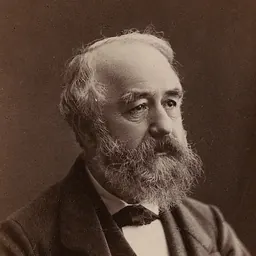
Lived 1855 – 1944 (aged 89). C. V. Boys was a British physicist.
Early life
Boys was the eighth child of the Reverend Charles Boys, the Anglican vicar of Wing, Rutland. He was educated at Marlborough College and the Royal School of Mines, where he learned physics from Frederick Guthrie and taught himself higher mathematics while completing a degree in mining and metallurgy. As a student at the School of Mines he invented a mechanical device (which he called the "integraph") for plotting the integral of a function. He worked briefly in the coal industry before accepting Guthrie's offer of a position as "demonstrator."
Experimental physics
Boys achieved recognition as a scientist for his invention of the fused quartz fibre torsion balance, which allowed him to measure extremely small forces. He made the fused quartz fibres for his instrument by attaching one end of a quartz rod to a crossbow quarrel, the other end to a fixed surface, heating the rod to the point of melting, and shooting the crossbow. This "drew out" the rod into a long thin string, often less than one micron in width, a fiber so thin it could not be resolved with an optical microscope of the time.
Boys was a critic of the solar engine design of Frank Shuman, which led to Shuman hiring him as a technical consultant. Together they patented a "Sun-Boiler", which is similar to modern day parabolic trough solar power plants.
He also worked on high-speed photography and invented a device (the "Boys camera") that allowed him to observe in some detail what occurs during a lightning strike. According to the Feynman Lectures,
Public service and educational works
In 1897 Boys became a Metropolitan Gas Referee, charged with assessing a fair price for coal gas. He initially worked on the replacement of the standard candle, used to determine the quality of the gas for lighting, by the Harcourt pentane lamp. As heating grew to become the principal use of coal gas, Boys undertook fundamental work on calorimetry to measure and record the heat content of the gas, achieving a substantial increase in precision of measurement. At this time the national gas bill for the United Kingdom was fifty million pounds, so a one-percent correction to the bill represented a very significant amount of money.
Personal life
Boys married Marion Amelia Pollock in 1892, and the couple had two children. Boys was granted a divorce in 1910 on the grounds that Marion had been having an adulterous affair with mathematician Andrew Forsyth. This caused a scandal that forced Forsyth to resign his chair at the University of Cambridge. Marion and Forsyth were then wed, but Boys never remarried.
Aside from his serious contributions to science, Boys was known to be a remarkably colourful and well-liked man. He enjoyed playing practical jokes; one of his favourite pastimes was blowing perfectly-timed bubbles and smoke rings out of his office window so they would engulf people passing by. There are also reports that exhibited several unconventional behaviours; he was known to drink his tea from a saucer if it was too hot, and on at least one occasion, attempted to hide a stain on his shirt by tucking sheets of paper behind his waistcoat. He also had several of his award medals, including his Royal Medal, melted down to help fund the education of students at his alma mater, Marlborough College. His personal interests included gardening and biology.
Boys began losing his eyesight later in life, and died at his home at age 89 in St Mary Bourne, Andover in Hampshire on 30 March 1944.
Don’t just read it —
keep it.
Full-length biographies made to live with: read them, listen on the way to work, watch them tonight.
- E-book
- Audio
- Video
Instant download · yours to keep · every purchase keeps this site free
Important facts
People in C. V. Boys's life
Named in this biography and alive at the same time
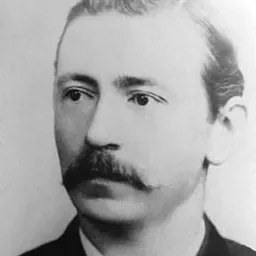
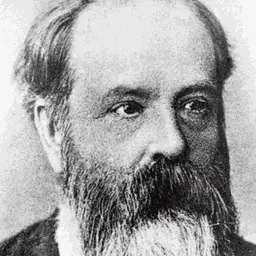
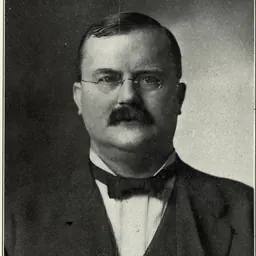
Related people
Same field, nearest in time

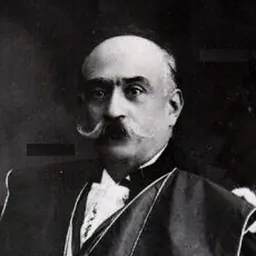


Contemporaries
People whose lives overlapped C. V. Boys's





Frequently asked questions
Who was C. V. Boys?
British physicist (1855-1944)
When was C. V. Boys born?
C. V. Boys was born on 15 March 1855 in Rutland, Wing.
When did C. V. Boys die?
C. V. Boys died on 30 March 1944 in Andover, St Mary Bourne.
What was C. V. Boys's occupation?
C. V. Boys was a physicist.
What nationality was C. V. Boys?
C. V. Boys was British.
Sources & further reading
Cite this page
APA: Biography.guide. (2026). C. V. Boys. https://biography.guide/c-v-boys/
MLA: "C. V. Boys." Biography.guide, https://biography.guide/c-v-boys/.
Chicago: "C. V. Boys." Biography.guide. https://biography.guide/c-v-boys/.
Data last updated: 2026-09-20 · Spot an error? Report a correction.
Page generated 2026-09-27 05:22 UTC