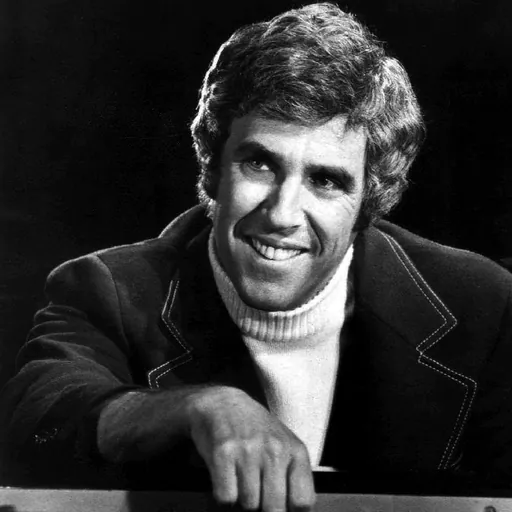
Burt Bacharach
American pianist, composer, producer
About Burt Bacharach
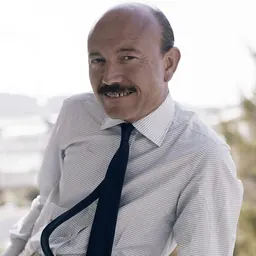
Lived 1928 – 2023 (aged 94). Burt Bacharach was an American pianist, songwriter, film score composer, record producer, recording artist and music arranger.
Early life and education Bacharach was born in Kansas City, Missouri, and grew up in Forest Hills, Queens, New York City, graduating from Forest Hills High School in 1946. He was the son of Irma M. (née Freeman) and Mark Bertram "Bert" Bacharach, a well-known syndicated newspaper columnist. His mother was an amateur painter and songwriter and encouraged Bacharach to practice piano, drums and cello during his childhood. His family was Jewish, but he said that they did not practice or give much attention to Judaism. "But the kids I knew were Catholic," he added. "I was Jewish, but I didn't want anybody to know about it."
Bacharach showed a keen interest in jazz as a teenager, disliking his classical piano lessons, and often used a fake ID to gain admission into 52nd Street nightclubs.
Bacharach studied music (Associate of Music, 1948) at McGill University in Montreal, under Helmut Blume, at the Mannes School of Music in New York City, and at the Music Academy of the West in Montecito, California. During this period he studied a range of music, including jazz, whose sophisticated harmony is a distinctive feature of many of his compositions. His composition teachers included Darius Milhaud, and Bohuslav Martinů. Bacharach cited Milhaud, under whose guidance he wrote a "Sonatina for Violin, Oboe and Piano", He was stationed in Germany and played piano in officers' clubs there, and at Fort Dix and Governors Island. During this time, he arranged and played music for dance bands.
Bacharach met the popular singer Vic Damone while they were both serving in the army in Germany. He later worked in a similar capacity for various other singers, including Polly Bergen, Steve Lawrence, the Ames Brothers, and Paula Stewart (who became his first wife). When he was unable to find better jobs, Bacharach worked at resorts in the Catskill Mountains of New York, where he accompanied singers such as Joel Grey.
In 1956, at the age of 28, Bacharach's productivity increased when composer Peter Matz recommended him to Marlene Dietrich, who needed an arranger and conductor for her nightclub shows. He then became a part-time music director for Dietrich, the actress and singer who had been an international screen star during the golden age of Hollywood. They toured worldwide off and on until the early 1960s. When they were not touring, he wrote songs. As a result of his collaboration with Dietrich, he gained his first major recognition as a conductor and arranger.
In her autobiography, Dietrich wrote that Bacharach particularly loved touring in Russia and Poland, because he thought very highly of the violinists performing there, and appreciated the public's reaction. According to Dietrich, he also liked Edinburgh and Paris, along with the Scandinavian countries, and "he also felt at home in Israel", she wrote, "where music was similarly much revered". In the early 1960s, after about five years with Dietrich, their working relationship ceased, with Bacharach telling Dietrich that he wanted to devote himself full-time to songwriting. She thought of her time with him as "seventh heaven ... As a man, he embodied everything a woman could wish for ... How many such men are there? For me he was the only one." Soon afterward, "Magic Moments" was recorded by Perry Como for RCA Records, and reached No. 4 on the Most Played by Disc Jockeys chart. These two songs were also the first singles by a songwriting duo to ever reach back-to-back No. 1 in the UK (The British chart-topping "The Story of My Life" version was sung by Michael Holliday). Between 1956 and the dissolution of their partnership in the mid-1970s, Bacharach and David wrote over 230 songs together for the pop market, motion pictures, television, and Broadway.
1960s Despite Bacharach's early success with Hal David, he spent several years in the early 1960s writing songs with several other lyricists in addition to continuing his work with David. During this period, Bacharach found the most success with songs written with lyricist Bob Hilliard, including "Please Stay" (The Drifters, 1961), "Tower of Strength" (Gene McDaniels, 1961), "Any Day Now (My Wild Beautiful Bird)" (Chuck Jackson, 1962), and "Mexican Divorce" (The Drifters, 1962). In 1961, Bacharach was credited as arranger and producer, for the first time on both label and sleeve, for the song "Three Wheels on My Wagon", written jointly with Hilliard for Dick Van Dyke.
In 1961 Bacharach discovered singer Dionne Warwick, who was working as a session backup singer at the time. That year the two, along with Dionne's sister Dee Dee Warwick, released the single "Move It on the Backbeat" under the name Burt and the Backbeats. The lyrics for this Bacharach composition were provided by Hal David's brother Mack David.
Bacharach and Hal David were both excited by Warwick's singing and decided to form a production company, Blue JAC Productions, so they could write for Warwick and produce her recordings. Warwick signed with Bacharach and David's new company, and the team subsequently secured a recording contract with Scepter Records for Warwick's recordings. Warwick made her solo recording debut in 1962 with "Don't Make Me Over", which also became her first hit. As business partners, Bacharach and David began writing almost exclusively with each other from 1962 until the dissolution of their partnership in the mid-1970s.
Bacharach and David's partnership with Warwick became one of the most successful teams in popular music history. Over the next 20 years, Warwick's recordings of Bacharach and David songs sold over 12 million copies, with 38 singles making the charts and 22 in the Top 40. Among the hits were "Walk On By", "Anyone Who Had a Heart", "Alfie", "I Say a Little Prayer", "I'll Never Fall in Love Again", and "Do You Know the Way to San Jose".
Bacharach released his first solo album in 1965 on the Kapp Records label. Hit Maker!: Burt Bacharach Plays the Burt Bacharach Hits was largely ignored in the U.S. but rose to No. 3 on the UK album charts, where his version of "Trains and Boats and Planes" had become a top five single. In 1967, he signed with A&M Records both as an artist and a producer, recording several solo albums (all consisting in a mix of new material and rearrangements of his best-known songs) until 1978.
In addition to having his work recorded by pop and R&B acts, Bacharach's songs were occasionally recorded during these years by jazz and rock acts. The Bacharach/David composition "My Little Red Book", originally recorded by Manfred Mann for the film What's New Pussycat?, was also recorded by the psychedelic rock band Love and released as the band's first single. The Love version of the song went to number 52 on the U.S. Billboard Hot 100 pop singles chart and is considered by some writers to be a 1960s rock classic. In 1968, jazz musician Stan Getz recorded twelve Bacharach and David songs for What the World Needs Now: Stan Getz Plays Burt Bacharach and Hal David.
Bacharach and David also collaborated with Broadway producer David Merrick on the 1968 musical Promises, Promises, which yielded two hits, including the title tune and "I'll Never Fall in Love Again". Bacharach and David wrote the latter song when the producer realized the play urgently needed another before its opening the next evening. Bacharach, who had just been released from the hospital after contracting pneumonia, was still sick, but worked with David's lyrics to write the song which was performed for the show's opening. It was later recorded by Dionne Warwick and was on the charts for several weeks.
Also in 1968, the duo's song "This Guy's in Love with You" was recorded by Herb Alpert, who was best known at the time as a fellow songwriter and a trumpet player as the leader of the Tijuana Brass.
Bacharach and David's other Oscar nominations for Best Song in the latter half of the 1960s were for "The Look of Love", "What's New Pussycat?", and "Alfie".
1970s and 1980s
Throughout the late 1960s and early 1970s, Bacharach continued to write and produce for artists, compose for stage, TV, and film, and release his own albums. He enjoyed a great deal of visibility in the public spotlight, appearing frequently on TV and performing live in concert. Between November 1969 and January 1974, Bacharach and his music were the focus of nine U.S. network television specials, including five on NBC, three on ABC, and one on CBS. Newsweek magazine gave him a lengthy cover story entitled "The Music Man 1970".
In 1971, Barbra Streisand appeared on the special Singer Presents Burt Bacharach, where they discussed their careers and favorite songs and performed songs together. The other guests on the television special were dancers Rudolph Nureyev and Bettie de Jong, and singer Tom Jones.
In 1973, Bacharach and David wrote the songs for Lost Horizon, a film-musical remake of the 1937 dramatic adventure film of the same title. A conflict arose between the two songwriters during the film's production, and strained their professional relationship to the point that they stopped working together regularly. As Bacharach explained the situation in his 2013 memoir, he grew dissatisfied with his share of the potential film profits, because, in addition to providing the music for the songs, he was also doing underscore music for the film, which he felt he was not being fairly paid for. Bacharach asked David for a larger share of the profits, and David refused to renegotiate. When the film was released, it was poorly received and lost an estimated $9 million, but by that point, Bacharach was refusing to work on additional projects with David. Dionne Warwick, whose lucrative 1971 Warner Bros. Records contract was based on having Bacharach and David as her production team, sued the songwriters because they could not fulfill the terms of their agreement with her, putting her relationship with Warner Bros. Records in jeopardy. David in turn sued Bacharach for abandoning their legal partnership, and the lawsuits among the three parties took many years to resolve.
Despite the ongoing lawsuits, Bacharach and Warwick reunited in the studio in 1974 to record three new Bacharach songs for Warner Brothers, though the songs remained unreleased until 2013. Bacharach and David also reunited briefly, in 1975, to write and produce Stephanie Mills' second album, For The First Time, released by Motown.
Following the Stephanie Mills album, the Bacharach & David partnership was effectively over, and both songwriters began working with other collaborators. During the 1990s, they briefly reunited on two occasions, in 1993 to write a song for a Warwick album, and in 1999, to write two songs for the soundtrack of the film Isn't She Great. Bacharach eventually expressed regret over his actions during the Lost Horizon production, and wrote in his autobiography:
From 1975 to 1980, Bacharach wrote songs with a number of lyricists including Paul Anka, James J. Kavanaugh, Norman Gimbel, Libby Titus, Anthony Newley, and playwright Neil Simon. His solo albums from the late 1970s, including Futures and Woman, failed to yield hits.
By the early 1980s, Bacharach's marriage to Angie Dickinson had ended, but a new partnership with lyricist Carole Bayer Sager proved rewarding, both commercially and personally. The first song they collaborated on was "Where Did the Time Go" by The Pointer Sisters, released as a single in 1980. Bacharach and Bayer Sager co-wrote 11 of the songs on Bayer Sager's 1981 album Sometimes Late at Night, and Bacharach produced the album. Music critic Joe Viglione called the album "the Sgt. Pepper of singer/songwriter recordings" and "the epitome of '70s and '80s adult contemporary....a classic of the genre."
The two married and collaborated on several major hits during the decade, including "Arthur's Theme (Best That You Can Do)" (Christopher Cross), co-written with Christopher Cross and Peter Allen, which won an Academy Award for Best Song; "Making Love" (Roberta Flack); and "On My Own" (Patti LaBelle with Michael McDonald).
Another of their hits, "That's What Friends Are For" in 1985, reunited Bacharach and Warwick.
Other artists continued to revive Bacharach's earlier hits in the 1980s and 1990s. Examples included Luther Vandross's recording of "A House Is Not a Home", Naked Eyes' 1983 pop hit version of "(There's) Always Something There to Remind Me", and Ronnie Milsap's 1982 country version of "Any Day Now". Bacharach continued a concert career, appearing at auditoriums throughout the world, often with large orchestras. He occasionally joined Warwick for sold-out concerts in Las Vegas, Los Angeles, and New York City, where they performed at the Rainbow Room in 1996.
1990s and beyond
Bacharach's visibility increased in the second half of the 1990s due to his appearances as himself in the Austin Powers films, a U.S. box set release of his music and a new songwriting partnership that produced a Grammy-winning album. Bacharach formed his songwriting partnership with Elvis Costello initially to write one song, "God Give Me Strength", for the 1996 film Grace of My Heart. The film told the story of a fictional 1960s female Brill Building songwriter and was inspired by songwriters like Carole King and Bacharach.
In 1998, Bacharach and Costello released the album Painted from Memory, on which the pair continued to work in the 1960s and 1970s pop style that they used for their initial collaboration. The album's song "I Still Have That Other Girl" won a Grammy for Best Pop Collaboration with Vocals. The duo would later reunite for Costello's 2018 album, Look Now, working on several tracks together. Also in 1998, Rhino Records released a 3-CD box set, The Look of Love, that licensed the original recordings of most of his best-known songs. Music writer Richie Unterberger called the set "the best representation of [Bacharach's] music likely to ever be assembled."
In 2003, he arranged and produced Ronald Isley's album Here I Am, on which Isley sang a program of Bacharach songs mostly drawn from Bacharach's 1960s-era hits. Bacharach's 2005 solo album At This Time was a departure from past works in that Bacharach penned his own lyrics, some of which dealt with political themes.
In 2008, Bacharach opened the BBC Electric Proms at The Roundhouse in London, performing with the BBC Concert Orchestra accompanied by guest vocalists Adele, Beth Rowley, and Jamie Cullum. The concert was a retrospective look back at his six-decade career. In early 2009, Bacharach worked with Italian soul singer Karima Ammar and produced her debut single "Come In Ogni Ora".
Bacharach's autobiography, Anyone Who Had a Heart, was ghostwritten by Robert Greenfield and published in 2013. It incorporated the (not always positive) recollections of many of his close friends, colleagues and relatives.
In June 2015, Bacharach performed in the UK at the Glastonbury Festival, and a few weeks later appeared on stage at the Menier Chocolate Factory in Southwark, South London, to launch What's It All About? Bacharach Reimagined, a 90-minute live arrangement of his hits.
In 2016, Bacharach, at 88 years old, composed and arranged his first original score in 16 years for the film A Boy Called Po (along with composer Joseph Bauer ). The score was released on September 1, 2017. The entire 30-minute score was recorded in just two days at Capitol Studios. The theme song, "Dancing with Your Shadow", was composed by Bacharach, with lyrics by Billy Mann, and performed by Sheryl Crow. After seeing the film, a true story about a child with autism, Bacharach decided he wanted to write a score for it, as well as a theme song, in tribute to his daughter Nikki—who had gone undiagnosed with Asperger syndrome, and who died by suicide because of depression at the age of 40. "It touched me very much", the composer said. "I had gone through this with Nikki. Sometimes you do things that make you feel. It's not about money or rewards."
In July 2020, Bacharach collaborated with songwriter and multi-instrumentalist Daniel Tashian on the EP Blue Umbrella, Bacharach's first new material in 15 years. It earned Bacharach and Tashian a Grammy Award nomination for Best Traditional Pop Vocal Album at the 63rd Annual Grammy Awards.
In March 2023, a collection of Bacharach's collaborations with Elvis Costello, The Songs of Bacharach & Costello, was released. The collection includes 16 tracks from the proposed stage musical Taken From Life.
Film and television Throughout the 1960s and 1970s, Bacharach was featured in a dozen television musical and variety specials videotaped in the UK for ITC; several were nominated for Emmy Awards for direction (by Dwight Hemion). The guests included artists such as Joel Grey, Dusty Springfield, Dionne Warwick, and Barbra Streisand.
In 1969, Harry Betts arranged Bacharach's instrumental composition "Nikki" (named for Bacharach's daughter) into a new theme for the ABC Movie of the Week, a television series that ran on the U.S. network until 1976.
During the 1970s, Bacharach and then-wife Angie Dickinson appeared in several television commercials for Martini & Rossi beverages, and Bacharach even penned a short jingle ("Say Yes") for the spots. He also occasionally appeared on television/variety shows such as The Merv Griffin Show, The Tonight Show Starring Johnny Carson, and others.
In the 1990s and 2000s Bacharach had cameo roles in Hollywood movies, including all three Austin Powers movies, inspired by his score for the 1967 James Bond parody film Casino Royale. Mike Myers said the first film in the series, Austin Powers: International Man of Mystery (1997), was partially inspired by the song "The Look of Love". After hearing the song on the radio, Myers began reminiscing about the 1960s, which helped him conceive the film. In 2008, Bacharach was featured in the BBC Electric Proms at The Roundhouse with the BBC Concert Orchestra. He performed similar shows the same year at the Walt Disney Concert Hall and with the Sydney Symphony.
Musical style
Bacharach's music is characterized by unusual chord progressions, influenced by jazz harmony, with striking syncopated rhythmic patterns, irregular phrasing, frequent modulation, and odd, changing meters. Though his style is sometimes called easy listening, he expressed apprehension regarding that label, as some of his frequent collaborators did. Bacharach's selection of instruments included flugelhorns, bossa nova sidesticks, breezy flutes, tack piano, molto fortissimo strings, and cooing female voices. as he did during a televised performance on The Hollywood Palace.
Bacharach wrote fifty-two US Top 40 hits.
Other business interests Bacharach once owned the Dover House restaurant, which was located across the street from Roosevelt Raceway in Westbury, New York. It was the site of a press conference in which the New York Islanders unveiled their name and logo and introduced Bill Torrey as their first general manager.
Personal life
Bacharach married four times. to Paula Stewart for 5 years (1953–1958). to actress Angie Dickinson, for 16 years (1965–1981), though they were separated the last five. Dickinson believed Bacharach had affairs. They had one daughter, Lea Nikki Bacharach, who was born prematurely in 1966, weighing 1 lb 10 oz, and then being isolated from human touch for 3 months. She had eyesight problems to lyricist Carole Bayer Sager for 9 years (1982–1991). to Jane Hansen, in 1993. They had two children, son Oliver, born the year before their marriage, and daughter Raleigh, born in 1995.
Awards and nominations
Television and film appearances An Evening with Marlene Dietrich Austin Powers: International Man of Mystery Austin Powers: The Spy Who Shagged Me Nip/Tuck The Nanny Jake in Progress 1965 Hit Maker!: Burt Bacharach Plays the Burt Bacharach Hits| — Director (orchestra and chorus), arrangement, producer, aongwriter — 1967 Reach Out| 96 Producer, composer, arrangement, conductor, co-writer (Hal David) Gold (solo, standard), July 21, 1971 1969 Make it Easy on Yourself| 51 Arrangement, producer Gold (solo, standard), November 13, 1970 Gold (solo, standard), May 22, 1970 Gold (solo, standard), July 21, 1971 — 1977 Futures| — Producer, keyboard, arrangement — 1979 Woman| — Composed, arrangement, conductor — 2005 At This Time| — Producer, arrangement, conductor, lyrics, music —
Collaboration projects With Elvis Costello Painted from Memory (1998) Marlene Dietrich with the Burt Bacharach Orchestra (2007)Burt Bacharach: Live at the Sydney Opera House with the Sydney Symphony Orchestra (2008)
Soundtracks Films What's New Pussycat? (1965) After the Fox (1966)AlfieCasino Royale (1967) Together? (1979)Arthur (1981) Night Shift (1982) André DeShield's Haarlem Nocturne (1984): revue – featured songwriterThe Look of Love (2003): revue – composer The Boy from Oz (2003): musical – additional composerSome Lovers (2011) – composer with Steven SaterMy Best Friend's Wedding (2021) – composer with Hal David
Compilations Portrait in Music (1971)Portrait in Music Vol. II (1973)Burt Bacharach's Greatest Hits (1973)The Best of Burt Bacharach (1999)The Look of Love: The Burt Bacharach Collection (U.S. edition 1998) Wiedersehen mit Marlene (1960) Dietrich in London (1964) Мари = Marie–Marie (1964)
For Neil Diamond Heartlight (1982) Primitive (1984)Headed for the Future (1986)
For Dionne Warwick Reservations for Two (1987)Friends Can Be Lovers (1993)
For others Carole Bayer Sager – Sometimes Late at Night (1981) Roberta Flack – I'm the One (1982) Aretha Franklin – What You See Is What You Sweat (1991) Carly Simon – Christmas Is Almost Here (2002) Ronan Keating – When Ronan Met Burt (2011) Elvis Costello – Look Now'' (2018)
Don’t just read it —
keep it.
Full-length biographies made to live with: read them, listen on the way to work, watch them tonight.
- E-book
- Audio
- Video
Instant download · yours to keep · every purchase keeps this site free
Important facts
People in Burt Bacharach's life
Named in this biography and alive at the same time





Related people
Same field, nearest in time


Contemporaries
People whose lives overlapped Burt Bacharach's



Frequently asked questions
Who was Burt Bacharach?
American pianist, composer, producer (1928–2023)
When was Burt Bacharach born?
Burt Bacharach was born on 12 May 1928 in Kansas City, Kansas City.
When did Burt Bacharach die?
Burt Bacharach died on 8 February 2023 in Los Angeles.
What was Burt Bacharach's occupation?
Burt Bacharach was a pianist, songwriter, film score composer, record producer, recording artist and music arranger.
What nationality was Burt Bacharach?
Burt Bacharach was American.
Sources & further reading
Cite this page
APA: Biography.guide. (2026). Burt Bacharach. https://biography.guide/burt-bacharach/
MLA: "Burt Bacharach." Biography.guide, https://biography.guide/burt-bacharach/.
Chicago: "Burt Bacharach." Biography.guide. https://biography.guide/burt-bacharach/.
Data last updated: 2026-09-23 · Spot an error? Report a correction.
Portrait: Wikimedia Commons · author & licence
Page generated 2026-09-27 05:07 UTC