
About Burhan Shahidi
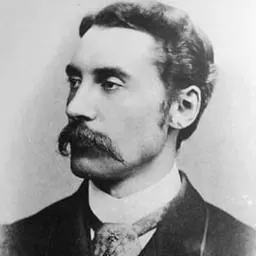
Lived 1894 – 1989 (aged 94). Burhan Shahidi was a Chinese politician.
Burhan Shahidi (3 October 1894 – 27 August 1989) was a Chinese Tatar politician who occupied several top positions in Xinjiang, initially in the government of the Republic of China (ROC) and then government of the People's Republic of China (PRC). He served as the ROC's vice-chairman in the Coalition Government of Xinjiang Province, formed between the ROC and the Second East Turkestan Republic in 1946. After the coalition government's dissolution the following year and the incorporation of Xinjiang into the PRC in 1949, Burhan joined the Chinese Communist Party and was appointed the first and only chairman of the Xinjiang Provincial People's Government, before it became the Xinjiang Uyghur Autonomous Regional Government in 1955. He later served as the vice-chairman of the second, third, fifth, and sixth national committees of the Chinese People's Political Consultative Conference. He was also the founder and inaugural president of the Islamic Association of China.
Life
Early life Burhan Shahidi was born in 1894 in the Russian Kazan Governorate to a Tatar family. His family was poor and he received little schooling in his early years. In 1912, after the Qing dynasty was overthrown, he accompanied Tatar merchants to Dihua (now Ürümqi) in Xinjiang and worked as an apprentice and store-clerk.
In 1914, he was able to apply and receive Chinese citizenship from the Republic of China on account of his family's ancestry. He spoke Tatar, Uyghur, Mandarin Chinese, Russian, Turkish and some Arabic and acted as the interpreter for Yang Zengxin, the leader of Xinjiang at the time.
In 1929, he was sent to Weimar Germany by Xinjiang's next leader Jin Shuren and studied political-economy in Berlin. He returned to Xinjiang in 1933 and held a number of roles in the provincial government including manager of a land development company. He played a key role in the Xinjiang Nationalities Congress of 1934. At this Congress, the ethnonym Uyghur was adopted to describe the majority Turkic Muslims in the oases of the Tarim Basin.
Republic of China In 1935, he became a member of the Xinjiang People's Anti-Imperialist Association, initially serving as deputy minister of the Popular Department, and subsequently as acting vice-chairman of the Association in 1936. During this time, he met Yu Xiusong, a CCP member and the chairman of the Association, and began to study the history of the CPC's struggles, as well as its principles and objectives.
In 1937, he was dispatched by the next governor, Sheng Shicai, to the Soviet Union to serve as a consular official in the border district of Zaysan. While in prison, Burhan wrote a Uyghur-Chinese-Russian Dictionary and translated Sun Yat-sen's Three People's Principles into Uyghur. Burhan (2nd row, 2nd from the left) at the founding of the Association for the Advancement of Han Culture in Xinjiang in 1937, chaired by the governor Sheng Shicai (1st row, 3rd from left). He was released by Wu Zhongxin, the Chinese Nationalist official who replaced Sheng Shicai. In 1946, Burhan became the vice-chairman of a provincial coalition government formed between the Chinese Nationalists and the revolutionaries who had founded the Second East Turkestan Republic (Second ETR) in the "Three Districts". He was considered a political moderate between the Nationalist Chinese and Second ETR members of the coalition.
In 1947, Burhan was transferred to Nanjing and became an official in the central government under Chiang Kai-shek. Sabri was anti-Soviet and opposed the Soviet-backed Ehmetjan Qasimi, who was the vice-chairman of the provincial government. He helped stabilize the province's finances, which was ravaged by the spread of inflation throughout Nationalist China, by restoring the local currency. Anti-Soviet sentiment was espoused by Isa Yusuf Alptekin while Pro Soviet sentiment was espoused by Burhan. The Soviets were angered by Isa.
In September of that year, he negotiated with Deng Liqun, the Chinese Communist representative sent by Mao Zedong to the province during the waning days of the Chinese Civil War. On 26 September, Burhan joined Nationalist general Tao Zhiyue in announcing the surrender of the province to the People's Liberation Army, paving the way for the "peaceful liberation" of Xinjiang.
People's Republic of China Gathering of Chinese Communist leaders in Beijing in June 1950. From left to right: Zhu De, Liu Shaoqi, Seypidin Azizi, Mao Zedong, Burhan, Zhou Enlai, Deng Liqun and Delin (Sibo translator of Seypidin).
On 17 December 1949, the Xinjiang Provincial People's Government was established, and Burhan became the chairman. In December, he joined the Northwest Military and Political Committee, assumed the role of Chairman of the Xinjiang Provincial People's Government, and became President of the Xinjiang Academy. He chaired the First Committee of the Whole of the Xinjiang Provincial People's Government, which ratified the "Current Policy of Governance of the Xinjiang Provincial People's Government Committee." In 1952, he headed the preparatory committee to create the Xinjiang Uyghur Autonomous Region (XUAR). In February 1956, he led a cultural and religious delegation on a tour of Egypt, Sudan, Ethiopia, Syria and Lebanon. On the same trip, he also met with President Nazim al-Kudsi of Syria and Amir Muhammad al-Badr of North Yemen. Both countries switched their recognition to the PRC in 1956. In the spring of 1959, he led a delegation to Iraq to support Prime Minister Abd al-Karim Qasim who had overthrown the Iraqi monarchy the previous year and founded a pro-socialist republic. He assumed the presidency of Xinjiang University in October 1960.
In February 1962, he served as the director of the Institute of Ethnic Studies at the Chinese Academy of Sciences. In April, he assumed the role of vice-president of the Asian-African Society of China. Following the Yi–Ta incident in Xinjiang in June–July, he was instructed to return to Xinjiang to aid the CCP Xinjiang Autonomous Region in managing the incident's repercussions.
Burhan supervised Chinese Muslim participation in the hajj until the Cultural Revolution, when he was accused of being a collaborator and a foreigner, and imprisoned for eight years. and in September, he was co-opted as a vice-chairman of the Chinese People's Political Consultative Conference (CPPCC), and then served as a vice-chairman of the second, third, fifth, sixth and seventh Chinese People's Political Consultative Conference National Committee. His memoir, Fifty Years in Xinjiang was published in 1984.
In 1985, to support the return of the critically endangered Père David's deer to China, Burhan helped found and chair the China Milu Foundation, now known as the China Biodiversity Conservation and Green Development Foundation.
He died on 27 August 1989 in Beijing and is buried in Ürümqi Revolutionary Martyrs Cemetery, the foothills of the Tian Shan in Xinjiang.
Don’t just read it —
keep it.
Full-length biographies made to live with: read them, listen on the way to work, watch them tonight.
- E-book
- Audio
- Video
Instant download · yours to keep · every purchase keeps this site free
Important facts
Family & relationships
People in Burhan Shahidi's life
Named in this biography and alive at the same time



Related people
Same field, nearest in time





Contemporaries
People whose lives overlapped Burhan Shahidi's


Frequently asked questions
Who was Burhan Shahidi?
Chinese Tatar politician (1894–1989)
When was Burhan Shahidi born?
Burhan Shahidi was born on 3 October 1894 in Aqsu.
When did Burhan Shahidi die?
Burhan Shahidi died on 27 August 1989 in Beijing.
What was Burhan Shahidi's occupation?
Burhan Shahidi was a politician.
What nationality was Burhan Shahidi?
Burhan Shahidi was Chinese.
Sources & further reading
Cite this page
APA: Biography.guide. (2026). Burhan Shahidi. https://biography.guide/burhan-shahidi/
MLA: "Burhan Shahidi." Biography.guide, https://biography.guide/burhan-shahidi/.
Chicago: "Burhan Shahidi." Biography.guide. https://biography.guide/burhan-shahidi/.
Data last updated: 2026-09-26 · Spot an error? Report a correction.
Page generated 2026-09-27 05:16 UTC