
Burhan Muzaffar Wani
Kashmiri militant
About Burhan Muzaffar Wani
Lived 1994 – 2016 (aged 21). Burhan Muzaffar Wani was an Indian.
Burhan Wani (19 September 1994 – 8 July 2016) was the leader of Hizbul Mujahideen, an Islamist terrorist organization of the Kashmir conflict. He had become a popular figure amongst the local Kashmiri populace, having done so primarily through a strong social media presence, and was responsible for moulding the insurgency in Jammu and Kashmir into a youth-oriented movement. Wani was a militant leader and had reportedly recruited numerous foot-soldiers through his personal efforts.
As a militant leader, Wani was actively sought by Indian security forces, who had imposed a bounty for his capture. He was located in a remote village in the Anantnag district of Jammu and Kashmir and subsequently killed in a firefight with Indian forces on 8 July 2016. Wani's killing sparked massive protests across the entire Kashmir Valley in what became the worst span of unrest in the region since the 2010 unrest. As a result, the state of Jammu and Kashmir was placed under 53 consecutive days of curfew, which was fully lifted by 31 August 2016. The protests that followed Wani's killing resulted in the deaths of more than 96 people and injuries to over 15,000 civilians and 4,000 Indian security personnel.
Early life Wani was born in 1994 in Dadasara, a village situated on the outskirts of the town of Tral in the Pulwama district of India Union Territory of Jammu and Kashmir, to Muzaffar Ahmad Wani, the principal of a public higher-secondary school, and Maimoona Muzaffar, a postgraduate of science who taught Qur'an classes in her village. Burhan had four siblings. The town of TraI has been a perpetual militant hotbed of hardline separatism.
Militancy career Wani planned to be a doctor and had obtained more than 90% marks in his Class 8 exam but left his home on 16 October 2010, ten days before his secondary exam and enrolled for the militant cause at about an age of 15, joining Hizbul Mujahideen.
There was a remarkable increase in the anti-India rhetoric of Burhan's speeches, after his brother Khalid was killed by the Indian Army on 13 April 2015 when he went to meet him (Burhan), along with three friends. The army claimed that Khalid was a militant sympathizer who had taken his friends to get them recruited and was subsequently killed in an encounter. The family of Khalid however alleged that he died in custody, claiming that his body showed no bullet wounds but clinical signs of physical torture. The three friends of Khalid meanwhile escaped but ran into an army cordon, where they alleged being tortured before being rescued by the state police. A Facebook post about a month back showing Burhan along with 10 other militants in militant attire with heavy arms had gone viral in Kashmir. Police have often approached the judiciary, for enacting bans on social networking pages that disseminated Burhan's messages. He also urged the state-police to stay out of their way, threatening to attack all security forces. Although no attack has ever been traced back to him, he is believed to have masterminded several of them. Some army and police officials later said that the security forces had received intelligence regarding the presence of Sheikh but did not know Wani too was present along with him. The state's Chief Minister Mehbooba Mufti and the Deputy Chief Minister Nirmal Kumar Singh also stated that the security forces were unaware of his presence and would have given him a chance had they known about his presence there.
According to police officials, the security forces faced resistance from locals who resorted to stone-pelting. The encounter began at 16:30 and ended at 18:15. The militants were hiding in a house during the operation and started firing on the troops conducting search operations. All three were killed in the ensuing encounter. Jammu and Kashmir Police's Director General K. Rajendra confirmed that Wani was killed in an exchange of fire between security personnel and the militants.
The local residents denied awareness of Wani's presence in the village. According to them, the police arrived around noon and said that they were combing the area in preparation for an inauguration by the Chief Minister Mehbooba Mufti. They cordoned off the area by 16:00 and took positions around the house where Burhan and his associates were present. When the militants tried to come out and escape, they were shot down. After their death, hundreds of villagers came out mourning the death and clashed with the police, CRPF and attacked army camps in the area. He is believed to have been succeeded by Sabzar Bhat, who was also killed by Indian security forces shortly afterwards.
Reaction
A large crowd attended his funeral on 9 July. The crowd was estimated to number 200,000 and was described by reporters as the largest ever gathering. The last rite prayers were also performed in absentia in all major towns of Kashmir. His body wrapped in the flag of Pakistan was buried next to that of his brother Khalid in Tral.
After the news of his death spread, violent protests erupted in some areas of Kashmir Valley. Separatist leaders called for shutdown in Kashmir which was repeatedly extended before being called off in February 2017. Police stations and security forces were attacked by mobs. Stone pelting was reported from many parts in Kashmir, including upon transit camps of Kashmiri Pandits. Internet services along with train services were suspended and the national highway was shut down. The Amarnath pilgrimage was repeatedly resumed and suspended due to the unrest. More than 200 Kashmiri Pandit employees fled the transit camps during night time on 12 July due to the attacks by protesters on the camps. The house where Burhan was killed was set ablaze by a mob on suspicion that its residents had tipped-off the security forces about Burhan. The curfew was lifted from all parts on 31 August 2016. and over 15,000 civilians were injured. Over 4,000 security personnel were also injured during the unrest. Deputy Chief Minister Nirmal Singh refused, stating that it was an anti-terrorist operation and there was no need for an inquiry.
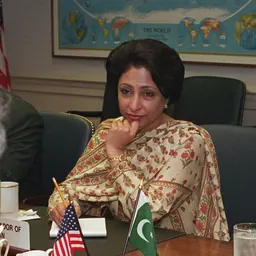
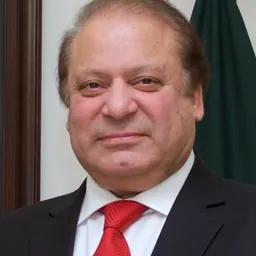
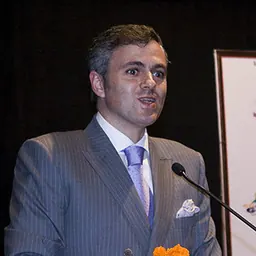
A day after Wani's death former Chief Minister of state Omar Abdullah said that his killing had made him the new icon of the disaffected section of the Kashmiri society and further warned that more Kashmiris will join the militancy after his death. On 12 July, Pakistan's Prime Minister Nawaz Sharif in a statement expressed "shock" over the killing of Burhan Wani which was criticised by the Indian government. Sharif called Wani a "martyr" on 15 July. The Indian Ministry of External Affairs in response criticized Pakistan for "glorifying" terrorists belonging to proscribed terrorist organisations. Indian Prime Minister Narendra Modi criticised the media alleging it was portraying the slain Wani as a hero. Pakistan's Ambassador to the United Nations Maleeha Lodhi during meeting with UN officials raised the killing of Wani describing it as an "assassination of a Kashmiri youth leader". During his speech at the United Nations General Assembly on 21 September, Sharif described Burhan Wani as a "young leader" who had emerged as a symbol of the latest "Kashmiri Intifada".
His family was allowed to be given ex-gratia compensation of ₹4,00,000 by the Jammu and Kashmir government in December 2016 for the controversial killing of his older brother Khalid. This led to protest by opposition parties as well as Bharatiya Janta Party. Chief Minister Mufti denied on 18 January 2017 that any compensation had been paid.
Legacy
India India arrested journalist Asif Sultan in August 2019, after he wrote a piece titled "The Rise of Burhan Wani".
Wani became the face of the Kashmir independence movement, and was also compared with the revolutionary Bhagat Singh.
Wani had released a group photo on 1 July 2015 of himself seated with ten other militants, all armed and dressed in army fatigues, which went viral. The militants in the photo were Sabzar Ahmad Bhat, Waseem Malla, Naseer Ahmad Pandit, Ishfaq Hameed, Tariq Ahmad Pandit, Afaaquallah Bhat, Adil Ahmad Khanday, Saddam Padder, Waseem Ahmad Shah and Anees. They have all since been killed, apart from Tariq, who surrendered in May 2016.
In 2021, Muzaffar Wani, the father of Burhan Wani, was photographed unfurling the Indian national flag at a government school in Tral during an Independence Day event.
Several separatist and terrorist organizations were accused of inciting unrest in Jammu and Kashmir following the killing of Burhan Wani, allegedly acting under instructions from Pakistan’s Inter-Services Intelligence (ISI) according to Indian sources. In 2024, six such groups—including four factions of the Jammu and Kashmir Peoples League and two factions of the Muslim Conference—were banned under the Unlawful Activities (Prevention) Act (UAPA). The Centre stated that these groups organized violent protests and issued hartal calls that led to 86 civilian deaths and injuries to thousands. Despite multiple opportunities, including public hearings in Srinagar, none of the organizations challenged the bans, and the tribunal upheld the government's decision after reviewing the evidence, interpreting their silence as an acceptance of the charges.
Pakistan In July 2017, Pakistan Today praised Wani and compared his death to the death of Che Guevara, stating "History repeats itself".
On the Pakistani independence day in August 2017, Wani was featured on a special train named Azadi Train which was organised by Pakistan Railways in the memory of the country's national heroes.
Don’t just read it —
keep it.
Full-length biographies made to live with: read them, listen on the way to work, watch them tonight.
- E-book
- Audio
- Video
Instant download · yours to keep · every purchase keeps this site free
Important facts
People in Burhan Muzaffar Wani's life
Named in this biography and alive at the same time



Contemporaries
People whose lives overlapped Burhan Muzaffar Wani's



Frequently asked questions
Who was Burhan Muzaffar Wani?
Kashmiri militant (1994-2016)
When was Burhan Muzaffar Wani born?
Burhan Muzaffar Wani was born on 14 September 1994 in Dadasara, Tral tehsil.
When did Burhan Muzaffar Wani die?
Burhan Muzaffar Wani died on 8 July 2016 in Bumdoor, Kokernag.
What nationality was Burhan Muzaffar Wani?
Burhan Muzaffar Wani was Indian.
Sources & further reading
· Wikipedia: Burhan Muzaffar Wani
Cite this page
APA: Biography.guide. (2026). Burhan Muzaffar Wani. https://biography.guide/burhan-muzaffar-wani/
MLA: "Burhan Muzaffar Wani." Biography.guide, https://biography.guide/burhan-muzaffar-wani/.
Chicago: "Burhan Muzaffar Wani." Biography.guide. https://biography.guide/burhan-muzaffar-wani/.
Data last updated: 2026-09-20 · Spot an error? Report a correction.
Page generated 2026-09-27 05:14 UTC