
About Buddy Collette
Lived 1921 – 2010 (aged 89). Buddy Collette was an American clarinetist, jazz musician, saxophonist and musician.
William Marcel "Buddy" Collette (August 6, 1921 – September 19, 2010) was an American jazz flutist, saxophonist, clarinetist, and studio musician. He was a founding member of the Chico Hamilton Quintet.
Early life William Marcel Collette was born in Los Angeles on August 6, 1921. He grew up in Watts, surrounded by diverse people. He lived in a house built by his father on cheap land in the Central Gardens neighborhood. He attended the 96th Street School for black students.
Collette was initially inspired to be a musician by the Woodman brothers, Britt, Coney, and Bill, whose father had schooled them to be professional musicians by grade school. He and others who lived in the area, such as Charles Mingus, looked up to them as they could play multiple instruments and sight read, forming the sound of a much larger band. His family also encouraged him along. They had friends who played instruments that would come to the Collette house and jam. His parents also took him to see Louis Armstrong in concert which had a great impact on him.
Collette began playing piano at age ten, at his grandmother's request. His love for music came not only from his community, but from his parents—his father learned to play the alto saxophone in his adult years and his mother sang lead vocals in the church choir. Though he continued piano for two years, he "didn't like it" and switched to his brother's alto saxophone which he practiced hard on despite not having formal tutelage. Later, he reflected that his early piano training did give him a good foundation to make it in the grade school band.
During middle school, he began formally learning the saxophone. That same year, he formed his first band. They played the music of Dootsie Williams, which Collette's parents had received while at a party. The following year, Collette started a band with Ralph and Raleigh Bledsoe. Together they played for less than a dollar each at parties put on by people in the area on Saturday nights.
Following this, Collette started a third group which eventually included Charles Mingus on bass. He and Mingus became very good friends. Collette was a factor in getting Mingus to switch from cello to bass, as well as his development on the instrument. In Collette's first band at age twelve, Mingus was playing bass tuba and cello, but Collette wanted a stringed bass in the group he was putting together, as the popularity of bands using it was on the rise. He told Mingus, "If you get a bass, you'll have a job", meaning his chances in music would be high. In later years, Mingus would often ask Collette for guidance and advice.
In 1941, age 20, he joined Cee Pee Johnson's band for a year until enlisting in the Navy. During World War II, Collette served with the U.S. Navy Band attached to the pre-flight school at St. Mary's College. Led by Marshal Royal, it was one of two regimental bands of African-American musicians. His bandmates included Jerome Richardson and Jackie Kelson. He worked his way up to co-leader next to Marshal Royal and attained the rank of Musician 1st Class.
According to Collette, he formed the second dance band at St. Mary's after he refused to join the Bombardiers on baritone saxophone, and along with most of the remaining fellows in the marching band, realized that the dance band service was much easier than general musicians duty. Also in his band were Orlando Stallings on saxophone; James Ellison, Myers Franchot Alexander, and Henry Godfrey on trumpet; George Lewis on first trombone; Ralph Thomas on bass tuba; and a few fellows he recalls only by nickname: "the Indian" on bass; "the Spider" and "the Crow" on tenor saxophones. It was during his time leading these dance bands that he began to hone his arranging and composition skills, as they often needed material to play.
In 1949, Collette was the first black musician to be hired by a nationally broadcast TV studio orchestra, on You Bet Your Life, hosted by Groucho Marx. It has been noted that the conductor of the orchestra, Jerry Fielding, received hate mail for standing by Collette. Collette's job and job security on the popular television show signaled that opportunities were becoming more readily available for black musicians by the 1950s. In the 1950s, he worked as a studio musician with Frank Sinatra, Ella Fitzgerald, Duke Ellington, Count Basie, Nat King Cole, and Nelson Riddle.
Fielding formed a 13-piece dance band in 1952 as professional outlet for studio musicians, and Collette joined. He recorded with the Jerry Fielding Orchestra during the 1950s. He remained with the band until forming his own group in 1954, which included Larry Bunker, Ernie Freeman, and Buddy Woodson. The group went largely unnoticed by record companies and did not record. The group gained national prominence and became one of the most influential West Coast jazz bands, synonymous with the laidback "cool jazz" of the 1950s. In the quintet, Collette played the reeds (tenor and alto saxophones, flute, and clarinet). Later that year, Collette collaborated with Horn in his own flutist ensemble, the Swinging Shepherds, a four flute lineup.
In November 1958, Langston Hughes read poems to accompaniment by Collette and his band at the Screen Directors Theatre in Los Angeles.
Collette was both present in the orchestra and helped write some of the music for Charles Mingus's infamous Town Hall Concert in 1962. Mingus asked his old friend to help with composing after trombonist and arranger Jimmy Knepper left, following Knepper's altercation with Mingus.
Involvement in music unions Around the early 1900s, Los Angeles was primarily divided into two music unions: Local 47, a union for white musicians, and Local 767, a union for black musicians. Collette and several other black musicians including Bill Green, Charles Mingus, Britt Woodman, and Milt Holland made concentrated efforts to merge the two unions into one color-blind union in the early 1950s.
Collette was active in education and taught a number of other musicians. His students included Mingus, James Newton, Eric Dolphy, Charles Lloyd, Sonny Criss, and Frank Morgan.
Collette joined the faculty at the California State University, Pomona, campus in 1992, where he was a conductor of the jazz and combo band. Collette held important faculty positions at CSULA, CSULB, California State University, Dominguez Hills, and was a musical director for the jazz band program at Loyola Marymount University.
He was designated a Los Angeles Living Cultural Treasure by the city of Los Angeles in the late 1990s, and, in the early 2000s, he was composing music for JazzAmerica, a band of teen jazz virtuosos he co-founded.
In 1996, when the Library of Congress commissioned Collette to write and perform a special big band concert to highlight his long career, he brought together some old collaborators to perform with him, including Chico Hamilton.
As sideman With Harry Babasin The Jazzpickers (Mercury/EmArcy, 1957) With Chet Baker Blood, Chet and Tears (Verve, 1970) With Louis Bellson Music, Romance and Especially Love (Verve, 1957) Louis Bellson Swings Jule Styne (Verve, 1960) With Brass Fever Brass Fever (Impulse!, 1975) Time Is Running Out (Impulse!, 1976) With James Brown Soul on Top (King, 1969) With Red Callender Swingin' Suite (Crown, 1957) The Lowest (MetroJazz, 1958) With Conte Candoli Little Band Big Jazz (Crown, 1960) With Benny Carter Aspects (United Artists, 1959) Additions to Further Definitions (Impulse!, 1966) With June Christy Something Cool (Capitol, 1955) Ballads for Night People (Capitol, 1959) With Nat King Cole L-O-V-E (Capitol, 1965) With Miles Davis and Michel Legrand Dingo (Warner Bros., 1991) With Sammy Davis Jr. The Wham of Sam (Reprise, 1961) With Ella Fitzgerald Ella Fitzgerald Sings the George and Ira Gershwin Songbook (Verve, 1959) With Gil Fuller Gil Fuller & the Monterey Jazz Festival Orchestra featuring Dizzy Gillespie (Pacific Jazz, 1965) With Ted Gärdestad Blue Virgin Isles (Epic, 1978) With Jimmy Giuffre The Jimmy Giuffre Clarinet (Atlantic, 1956) With John Graas Jazzmantics (Decca, 1958) Coup De Graas (EmArcy, 1958) With Chico Hamilton Chico Hamilton Quintet featuring Buddy Collette (Pacific Jazz, 1955) The Original Chico Hamilton Quintet (World Pacific, 1955 ) Chico Hamilton Quintet in Hi Fi (Pacific Jazz, 1956) Ellington Suite (World Pacific, 1959) The Three Faces of Chico (Warner Bros., 1959) With Eddie Harris How Can You Live Like That? (Atlantic, 1976) With Jon Hendricks ¡Salud! João Gilberto, Originator of the Bossa Nova (Reprise, 1961) With Freddie Hubbard The Love Connection (Columbia, 1979) With Quincy Jones Go West, Man! (ABC Paramount, 1957) With Fred Katz Soul° Cello (Decca, 1958) Folk Songs for Far Out Folk (Warner Bros., 1958) With Stan Kenton Kenton / Wagner (Capitol, 1964) With Barney Kessel Easy Like (Contemporary, 1956) Music to Listen to Barney Kessel By (Contemporary, 1957) Carmen (Contemporary, 1958) With Wade Marcus Metamorphosis (Impulse!, 1976) With Les McCann Les McCann Sings (Pacific Jazz, 1961) With Rod McKuen Beatsville (HiFi Records, 1959) With Carmen McRae Carmen for Cool Ones (Decca, 1958) Portrait of Carmen (Atlantic, 1968) With Charles Mingus The Complete Town Hall Concert (Blue Note, 1962 ) With Blue Mitchell Bantu Village (Blue Note, 1969) With Lyle Murphy Four Saxophones in Twelve Tones (GNP, 1955) With Oliver Nelson Zig Zag (Original Motion Picture Score) (MGM, 1970) Skull Session (Flying Dutchman, 1975) Stolen Moments (East Wind, 1975) With Red Norvo Ad Lib (Liberty, 1957) Music To Listen To Red Norvo By (Contemporary, 1957) With Dory Previn On My Way to Where (United Artists, 1970) Mythical Kings and Iguanas (United Artists, 1971) Dory Previn (Warner Bros., 1974) With Don Ralke Bongo Madness (Crown, 1957) With Buddy Rich This One's for Basie (Norgran, 1956) With Little Richard Mr. Big (Joy, 1965 ) With Shorty Rogers The Fourth Dimension in Sound (Warner Bros., 1961) With Pete Rugolo The Music from Richard Diamond (EmArcy, 1959) Behind Brigitte Bardot (Warner Bros., 1960) With Horace Silver Silver 'n Wood (Blue Note, 1974) Silver 'n Brass (Blue Note, 1975) The Continuity of Spirit (Silverto, 1985) With Frank Sinatra Sinatra's Swingin' Session!!! (Capitol, 1961) L.A. Is My Lady (Qwest, 1984) With Gábor Szabó and Bob Thiele Light My Fire (Impulse!, 1967) With The Three Sounds Soul Symphony (Blue Note, 1969) Persistent Percussion (1960, Kent, KST 500) With Mel Tormé Comin' Home Baby! (Atlantic, 1962) With Stanley Turrentine Everybody Come On Out (Fantasy, 1976) With Gerald Wilson You Better Believe It! (Pacific Jazz, 1961) Lomelin (Discovery, 1981) With Nancy Wilson Broadway – My Way (Capitol, 1964)
Don’t just read it —
keep it.
Full-length biographies made to live with: read them, listen on the way to work, watch them tonight.
- E-book
- Audio
- Video
Instant download · yours to keep · every purchase keeps this site free
Important facts
People in Buddy Collette's life
Named in this biography and alive at the same time
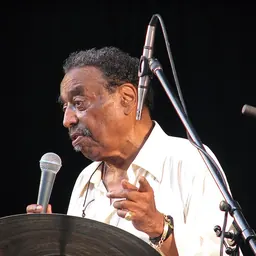


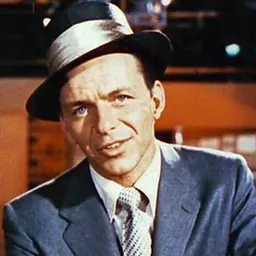

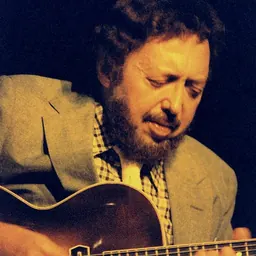


Related people
Same field, nearest in time
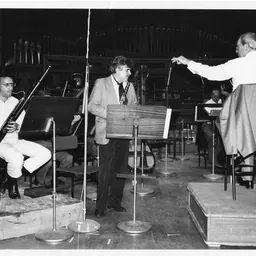
Contemporaries
People whose lives overlapped Buddy Collette's





Frequently asked questions
Who was Buddy Collette?
American jazz musician (1921–2010)
When was Buddy Collette born?
Buddy Collette was born on 6 August 1921 in Los Angeles.
When did Buddy Collette die?
Buddy Collette died on 19 September 2010 in Los Angeles.
What was Buddy Collette's occupation?
Buddy Collette was a clarinetist, jazz musician, saxophonist and musician.
What nationality was Buddy Collette?
Buddy Collette was American.
Sources & further reading
Cite this page
APA: Biography.guide. (2026). Buddy Collette. https://biography.guide/buddy-collette/
MLA: "Buddy Collette." Biography.guide, https://biography.guide/buddy-collette/.
Chicago: "Buddy Collette." Biography.guide. https://biography.guide/buddy-collette/.
Data last updated: 2026-09-20 · Spot an error? Report a correction.
Page generated 2026-09-27 05:19 UTC