
About Buddhadeb Bose
Lived 1908 – 1974 (aged 65). Buddhadeb Bose was an Indian poet and writer.
Buddhadeva Bose (;2 September 1908 – 14 August 1974), also spelt Buddhadeb Bosu, was an Indian Bengali writer of the 20th century. Frequently referred to as a poet, he was a versatile writer who wrote novels, short stories, plays and essays in addition to poetry. He was an influential critic and editor of his time. He is recognised as one of the five poets who moved to introduce modernity into Bengali poetry. It is said that since Rabindranath Tagore, there has not been a more versatile talent in Bengali literature.
Biography
Bose studied English language and literature at the University of Dhaka. He was a resident of Jagannath Hall. As a student of Dhaka University, he, along with fellow student Nurul Momen (who later became the Natyaguru), obtained the highest possible marks in the first Binnet Intelligence Test (which later came to be known as IQ test). Only the two of them were able to achieve that distinction. After completing his MA in English there, with distinction marks that remain unsurpassed , he moved to Calcutta in 1931. Initially he had no regular job and offered private lessons to earn his livelihood.
While a student he became associated with the famous poetry magazine Kallol (কল্লোল). The modernist literary movement of the 1930s is often referred to as the Kallol era. He also worked as an editor of the literary magazine Pragati (started 1926).
He married Pratibha Basu (née Shome) in 1934. They had three children, Minakshi Dutta (b. 1936), Damayanti Basu Singh (b. 1940) and Suddhashil Bose (1945–1987). Pratibha Basu was an accomplished singer in her teens but later concentrated on literature and became a distinguished writer in her own right.
Buddhadeva Bose taught at the Ripon College (now Surendranath College) an affiliated college of the University of Calcutta. In 1956 he set up the Department of Comparative literature in Jadavpur University, and was on its faculty for a number of years. He was also a visiting professor at many universities in the United States.
One of his most important contributions to the Bengali literary scene was the establishment of the Kavita (কবিতা, tr. Poetry) – the flagship poetry magazine in Bengali, which he edited and published for 25 years.
BB has been described as a disciplined, almost obsessed, worker by Nabaneeta Dev Sen. After meeting Buddhadeva Bose, Clinton B. Seely remarked that Buddhadeva was a very intense person. He spoke quickly, with emotion. He laughed wonderfully. He was interested in everything ... He was what I would come to refer to as "jyanto," "alive," "vibrant," "energetic." Conversations were often at fever pitch. He was bubbling over with things to say.
BB who grew up almost as an orphan showed deep love and care for his children. In a letter to his daughter Damayanti Basu Singh who just flew to the US for studies he wrote:
Damayanti wrote that, '...And I remember that Dad used to write late into the night. He used to place books beside the table lamp to block the light so that it wouldn't disturb our sleep.'
Literary life His first book of poetry, namely, Bandir Bandana (বন্দীর বন্দনা) was published when he was only seventeen years old. Although he worked as a teacher at different colleges and universities, he devoted his whole life to literature. This is symbolized by the name of his residence in Calcutta which was Kavita Bhavan (tr. 'The House of Poetry'). His first novel, Saara (সাড়া), was published when he was 18, in 1930. He wrote more than 40 novels, but his epic novel Tithidore (তিথিডোর), published in 1949, became his most admired novel and is now considered a classic. He published more than 160 titles during his lifetime. So far 200 books have been published. However, many pieces remain to be anthologized as yet. He was a hard worker and writing was his life. He began his day at 9 in the morning and would regularly work until 10 at night. Work, for him, meant writing.
Literary style Buddhadeva Bose wrote poetry essentially under the influence of Western literature, although in his early works he showed the clear influence of Rabindranath Tagore. But both in terms of theme and style, he reflected the marked influence of renowned Western poets, especially Baudelaire. He was also influenced by Ezra Pound, William Butler Yeats, Rilke and T. S. Eliot. Allegedly, he believed in "art for art's sake". He was a perfectionist as a writer and emphasized technical perfection in his works. Although he mostly wrote in free verse, his command of rhyme and rhythm was great. As an editor of his historical magazine Kavita (Poetry), the first magazine in India devoted only to the cause of modern Bengali poetry, he demonstrated his ability to identify the best talents of 20th century Bengal. His prose style was also established on a diction developed by himself. His novels remain modern even by the standards of the 21st century. He established a style of appreciative literary criticism that remains unparalleled. Also, his verse plays, written at the end phase of his life, created a poetic style all his own.
Accusation of obscenity frame|Cover of Rat Bhore Brishti
While the literary circles of Bengal did not hesitate to recognize him as a leading post-Tagore literary personality, Buddhadeva Bose achieved mass popularity when his novel Raat Bho're Brishti (রাত ভ'রে বৃষ্টি) was banned by the government on charges of obscenity. It depicted a love triangle which explicitly allowed sex to play a critical role in human relationships. Eventually, the High Court absolved the novel of the charges of obscenity. Raat Bho're Brishti has been translated by Clinton B. Seely with the title Rain through the Night.
Literary organizations In his school days BB took various literary initiatives. He was the editor, principal contributor and scriptor of the Pataka, a hand-written literary magazine published by the school students. Since then he was continuously engaged and involved in many literary organizations including publications of literary journals and books. While studying at the Dhaka University he was elected as the literary secretary of the students' association of his hall of residence, namely the Jagannath Hall. In this capacity he edited the Basantika (বাসন্তিকা), the annual literary magazine of the Jagannath Hall. BB published one of his memorable poems, namely, 'Kankaboti' in the Basantika.
BB actively participated in the Progressive Writers' Association in the late 1930s. He also joined the Anti-Fascist Writers and Artists' Association in the early 1940s.
Kavita Bhavan Literally Kavita Bhavan (tr. 'The House of Poetry') is the name of the house at 202 Rasbehari Avenue where BB lived for a long time since 1937 (till 1966). 'Kavita Bhavan' which soon became a coveted hang-out for literary personalities including poets, novelists, magazine editors, publishers, intellectuals and professors, eventually emerged as a publishing house. After settling in Calcutta in 1931 Bose realized there was hardly any publishing house that was eager to publish a book of poetry. He himself published two poetry books, one of his own and the other of Achintyakumar Sengupta. Then he introduced a publishing house styled Granthakar Mandali. However, books published later on by BB carried the name Kavita Bhavan as the publishing house. Damayanti said, "My father, Buddhadeva Bose, was a small man and a frugal eater. He was never greedy for food, but used to be upset if there wasn't a generous spread on the dining table." Quoting Goethe, BB would say, "my eyes are larger than my appetite". So there was always both variety and excess of food even for the daily meals. The essay was translated by BB himself into English and was published in Hindustan Standard, published from Calcutta.
Recognition Apart from formal recognition mentioned below, BB remains one of the most important literary personalities of the 20th century Bengali literature. Buddhdaeb became the central figure in a cluster of poets who came to embody Bengali modernism in early 20th century. In emphasizing BB's importance, Ashok Mitra commented, 'These days we buy tickets to hear a poet. There was a time 60–70 years ago when a poet was considered to be unemployed and mad. If Buddhadeva Bose had not come up with a poetry magazine, things would not have been the same. There would have been no Jibanananda Das but for Buddhadeva Bose.'
Buddhadeva Bose received the Sahitya Akademi Award in 1967 for his verse play Tapaswi-O-Tarangini, received the Rabindra Puraskar in 1974 for Swagato Biday (poetry) and was honoured with a Padma Bhushan in 1970.
Works So far about 200 titles have been published, including 'collected works' in several volumes. Some of them are mentioned below.
Poetry Mormorani (1924) Bondir Bondona (1930) Prithibir Pothe (1933) Konkaboti (1937) Notun Pata (1940) Domoyonti (1943) Droupodir Sari (1948) Sreshto Kobita (1953) Sheter Prarthona: Bosonter Uttor (1955) Je Adhar Alor Odhik (1958) Morche Pora Pereker Gan (1966) Bloomington, Indiana (?)
Novels Shara (1930) Akormonnya (1931) Mono Deya Neya (1932) Jobonika Poton (1932) Rhododendron Guchho (1932) Sanonda (1933) Amar Bondhu (1933) Jedin Futlo Komal (1933) He Bijoyi Bir (1933) Dhusor Godhuli (1933) Lalmegh (1934) Bashor Ghar (1935) Kalo Haoa (1942) Tithi Dore (1949) Nirjon Swakhor (1951) Moner Moto Meye (1951) Moulinath (1952) Sonpangshu (1959) Shesh Pandulipi (1956) Ratvor Brishti (1967) Golap Keno Kalo (1967)
Short story collections Ovinoy, Ovinoy Noy, Rekhachitro, Era Ar Ora, Abong Aro Oneke, Odrisho Satru, Misses Gupta, Premer Bichitra Goti, Ghorete Bhromro Elo, Notun Nesha, Feriwala O Onnano Golpo, Khatar Shhesh Pata, Ekti Sokal O Ekti Shyandhya, Golpo Songkolon, Shreshtho Golpo, Hridoyer Joyogan, Vashao Amar Vela.
Plays Mayamalancha, Taposhi O Torongini, Kalshandhya (from Mahabharat), Punormilon, Kolkatar Electra, Anamni Angana, Pratham Partha.
Essay Hothat Alor Jhalkani, Uttor Tirish, Kaler Putul, Sahityacharcha, Rabindranath: Kotha Sahitya, Sanga Nishangata Rabindranath, Prabandha Sonkolon, Mohavarater Kotha, An acre of green grass — a review of modern Bengali literature, Tagore — portrait of a poet.
Works of translation Kalidasa's Meghdut, Charles Baudelaire O Tar Kobita. Bose also translated works by Friedrich Hölderlin, and Rilke into Bengali.
Works in translation The Love Letter and Other Stories translation by Arunava Sinha, published 2014 by Rainlight, Rupa & Co. Black Rose translation by Arunava Sinha, published 2013 by HarperCollins India. Originally Golap Keno Kalo. When the Time is Right translation by Arunava Sinha, published 2011 by Penguin Books India. Originally Tithidore. My Kind of Girl 2008 translation by Arunava Sinha, published 2010 by Archipelago Books. Originally Moner Moto Meye, published 1951 by Deb Sahitya Kutir publishing firm. It Rained All Night translation by Clinton B. Seely, published 2010 by Penguin Books India. Originally Raat bha're brishhti, 1967; M.C. Sarkar, Calcutta, 1st Ed. 1967; (7th Reprint 1990.) The Selected Poems of Buddhadeva Bose, Translated and Introduced by Ketaki Kushari Dyson. New Delhi, OUP, 2003; 'Comparative Literature in India' by Buddhadeva Bose, Yearbook of Comparative and General Literature, Vol. 8 (1959), 1–10. Hard Times by Rabindranath Tagore, translated by Buddhadeva Bose Three Mahabharata Verse Plays, Works of Buddhadeva Bose Translated by Introduced by Kanak Kanti De, Published by WRITERS WORKSHOP, CALCUTTA, 1992. Copy Available in University of Chicago Library, Library of Congress, Oxford Bodelain Library, Harvard Library etc. An Acre of Green Grass Kolkata's Elektra translation by Sreejata Guha, published 2009 by Parabaas – Buddhadeva Bose Section. Originally Kolkatar Elektra.
Don’t just read it —
keep it.
Full-length biographies made to live with: read them, listen on the way to work, watch them tonight.
- E-book
- Audio
- Video
Instant download · yours to keep · every purchase keeps this site free
Important facts
Family & relationships
People in Buddhadeb Bose's life
Named in this biography and alive at the same time

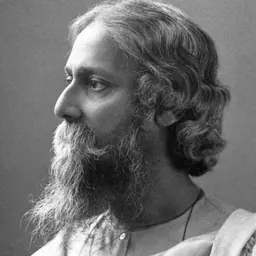


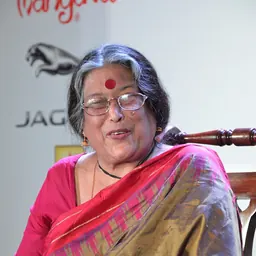

Related people
Same field, nearest in time

Contemporaries
People whose lives overlapped Buddhadeb Bose's

Frequently asked questions
Who was Buddhadeb Bose?
Indian writer (1908–1974)
When was Buddhadeb Bose born?
Buddhadeb Bose was born on 30 November 1908 in Cumilla District.
When did Buddhadeb Bose die?
Buddhadeb Bose died on 18 March 1974 in Kolkata.
What was Buddhadeb Bose's occupation?
Buddhadeb Bose was a poet and writer.
What nationality was Buddhadeb Bose?
Buddhadeb Bose was Indian.
Sources & further reading
Cite this page
APA: Biography.guide. (2026). Buddhadeb Bose. https://biography.guide/buddhadeb-bose/
MLA: "Buddhadeb Bose." Biography.guide, https://biography.guide/buddhadeb-bose/.
Chicago: "Buddhadeb Bose." Biography.guide. https://biography.guide/buddhadeb-bose/.
Data last updated: 2026-09-20 · Spot an error? Report a correction.
Page generated 2026-09-27 05:24 UTC