
Bud Day
United States Air Force Medal of Honor recipient
About Bud Day
Lived 1925 – 2013 (aged 88). Bud Day was an American military officer, lawyer, aircraft pilot and soldier.
George Everette "Bud" Day (24 February 1925 – 27 July 2013) was a United States Air Force officer, aviator, and veteran of World War II, Korean War and Vietnam War. He was also a prisoner of war, and recipient of the Medal of Honor and Air Force Cross. , he is the only person to be awarded both the Medal of Honor and Air Force Cross. He was posthumously advanced to the rank of brigadier general effective March 27, 2018, as directed by the 2017 National Defense Authorization Act.
Day's actions from 26 August 1967 through 14 March 1973 were the last to earn the Medal of Honor prior to the end of U.S. involvement in the Vietnam War on 30 April 1975, though some honorees (e.g. Leslie H. Sabo Jr., honored on 16 May 2012) were cited for their medals after Day's recognition on 4 March 1976. Having earned over 70 awards, decorations, and medals, Day is considered to be the most decorated United States military officer since Douglas MacArthur.
Early life and education Day was born in Sioux City, Iowa, on 24 February 1925. In 1942 he dropped out of Central High School and enlisted in the United States Marine Corps (USMC).
After the war, Day attended Morningside College on the G.I. Bill, earning a Bachelor of Science degree, followed by law school at the University of South Dakota School of Law, receiving a Juris Doctor. Day passed the bar exam in 1949 and was admitted to the bar in South Dakota. In later life, Day was also awarded a Master of Arts degree from Saint Louis University, a doctor of humane letters from Morningside, and a doctor of laws from Troy State University. Day was admitted to the Florida Bar in 1977.
Military career Enlisting in the USMC on 10 December 1942, Day served 30 months in the North Pacific during World War II as a member of a 5-inch gun battery with the 3rd Defense Battalion on Johnston Island, but he never saw combat. He was discharged (the first time) on 24 November 1945.
Day was Assistant Professor of Aerospace Science at the Air Force ROTC detachment at Saint Louis University in St. Louis, Missouri, from June 1959 to August 1963. Under the project name Commando Sabre, twin-seat USAF F-100Fs were evaluated as a Fast Forward Air Controller (Fast FAC) aircraft in high threat areas, given that F-4 Phantom II aircraft were in high demand for strike and Combat Air Patrol (CAP) roles. Using the call sign Misty, the name of Day's favorite song, his detachment of four two-seat F-100Fs and 16 pilots became pioneer "Fast FACs" over Laos and North Vietnam. All Misty FAC crews were volunteers with at least 100 combat missions in Vietnam and 1,000 minimum flight hours. Tours in Commando Sabre were temporary and normally limited to four months or about 60 missions.
Prisoner of war On 26 August 1967, Major Day was flying F-100F-15-NA, AF Serial No. 56-3954, call sign Misty 01, on his 26th Fast FAC sortie, directing a flight of F-105 Thunderchiefs in an air strike against a surface-to-air missile (SAM) site north of Thon Cam Son and west of Đồng Hới, north of the DMZ in North Vietnam. Day was on his 65th mission into North Vietnam and acting as check pilot for Captain Corwin M. "Kipp" Kippenhan, who was upgrading to aircraft commander. 37 mm antiaircraft fire crippled the aircraft, forcing the crew to eject. In the ejection, Day's right arm was broken in three places when he struck the side of the cockpit, and he also received eye and back injuries.
Kippenhan was rescued by a USAF HH-3E, but Day was unable to contact the rescue helicopter by survival radio and was quickly captured by North Vietnamese local militia. On his fifth night, when he was still within 20 miles (32 kilometers) of the DMZ, Day escaped from his initial captors despite his serious injuries. Although stripped of both his boots and flight suit, Day crossed the DMZ back into South Vietnam. Within 2 miles (3 kilometers) of the U.S. Marine firebase at Con Thien and after 12 to 15 days of evading, he was captured again, this time by a Viet Cong patrol that wounded him in the leg and hand with gunfire.
Taken back to his original camp, Day was tortured for escaping, breaking his right arm again. He then was moved to several prison camps near Hanoi, where he was periodically beaten, starved, and tortured. In December 1967, Day shared a cell with Navy Lieutenant Commander and future senator and presidential candidate John McCain. Air Force Major Norris Overly nursed both back to health, and McCain later devised a makeshift splint of bamboo and rags that helped heal Day's seriously atrophied arm.
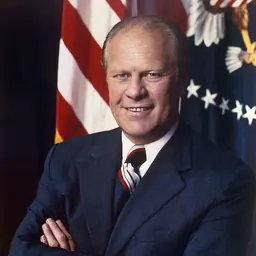
On 14 March 1973, Day was released after five years and seven months as a North Vietnamese prisoner. Within three days Day was reunited with his wife, Doris Sorensen Day, and four children at March Air Force Base, California. On 4 March 1976, President Gerald Ford awarded Day the Medal of Honor for his personal bravery while a captive in North Vietnam.
Day had been promoted to lieutenant colonel and then to colonel while a prisoner, and he decided to remain in the Air Force in hopes of being promoted to brigadier general. Although initially too weak to resume operational flying, he spent a year in physical rehabilitation and with 13 separate medical waivers, he was returned to active flying status. He underwent conversion training to the F-4 Phantom II and was appointed vice commander of the 33rd Tactical Fighter Wing at Eglin Air Force Base, Florida.
Day, in 2008, said of his imprisonment, "As awful as it sounds, no one could say we did not do well. ...[Being a POW] was a major issue in my life and one that I am extremely proud of. I was just living day to day. One bad cold and I would have been dead."
Retirement After being passed over for nomination to brigadier general, Day retired from active duty in 1977 to resume practicing law in Florida. At his retirement he had nearly 8,000 total flying hours, 4,900 in single-engine jets, and had flown the F-80 Shooting Star, F-84 Thunderjet, F-100 Super Sabre, F-101 Voodoo, F-104 Starfighter, F-105 Thunderchief, F-106 Delta Dart, FB-111, F-4 Phantom II, A-4 Skyhawk, A-7 Corsair II, CF-5 Tiger, F-16, and F-15 Eagle jet fighters.
Following his retirement, Day wrote an autobiographical account of his experiences as a prisoner of war, Return with Honor, followed by Duty, Honor, Country, which updated his autobiography to include his post-Air Force years. Among other endeavors, in 1996 Day filed a class action lawsuit for breach of contract against the United States government on behalf of military retirees who were stripped of their promised free lifetime military medical care benefits at age 65 and told to pay for Medicare. Although winning the case in the district court in 2001, the judgment against the U.S. was overturned by the U.S. Court of Appeals in 2002. Congress later redressed this situation by establishing the TRICARE for Life (TFL) program, which restored TRICARE military medical benefits for retired military retirees over the age of 65. However, Medicare became the primary payer with TRICARE as the secondary payer. Retirees would be required to pay for Medicare in order to retain Tricare supplemental coverage.
Posthumous advancement of rank Day was posthumously advanced to the rank of brigadier general during a Heritage to Horizons summer concert series at the Air Force Memorial in Arlington, Virginia, on June 8, 2018. The ceremony was presided over by the Chief of Staff of the Air Force, General David L. Goldfein, and attended by his widow, Doris Day. The posthumous advancement of Day was introduced by former prisoner of war cell mate John McCain and was directed by the 2017 National Defense Authorization Act. The rank advancement was effective from March 27, 2018.
Political activity and controversy Day was an active member of the Florida Republican Party, was involved in the 527 group Swift Vets and POWs for Truth, and campaigned with John McCain in 2000 and 2008. In the months leading up to the 2004 U.S. presidential election, Day appeared in television advertisements—along with other members of the 527 group Swift Vets and POWs for Truth—decrying John Kerry's antiwar activities following his military service during the Vietnam War and declaring him "unfit" for service and of a "dishonest" disposition for comments and actions made by Kerry after the Vietnam War, including his testimony before Congress in Washington, D.C. During a 2008 teleconference with reporters from the Miami Herald, Day made comments regarding John McCain's stance on the Iraq War, stating that "I don't intend to kneel, and I don't advocate to anybody that we kneel, and John [McCain] doesn't advocate to anybody that we kneel." Also during this interview he sparked controversy by making a broad generalization about what some saw as an ideological divide between Islam and America: "The Muslims have said either we kneel, or they're going to kill us." In the same interview when questioned about the role of 527 organizations in contemporary American politics, particularly his work for the Swift Boat Veterans for Truth, Day stated "the bottom line is this: 527 groups can do very effective, truthful things, and the Swift Boat attack was totally truthful."
Personal life and death Day lived in Shalimar, Florida. In 1949, he married Doris (1929-2025). He had 14 grandchildren and was a member of the Lutheran Church–Missouri Synod.
Day died on 27 July 2013 surrounded by family at his home in Shalimar. He was buried on August 1 at Barrancas National Cemetery at NAS Pensacola, Florida, U.S.
John McCain, Day's prisoner-of-war cellmate, said on Day's death, "He was the bravest man I ever knew, and his fierce resistance and resolute leadership set the example for us in prison of how to return home with honor."
In May 2014, Florida's state legislature designated the U.S. Highway 98 overpass in front of the Hurlburt Field main gate "Colonel Bud Day Overpass."
On 4 January 2008 Day was awarded the Freedom Communications Spirit of Freedom Award on behalf of the Northwest Florida Daily News.
On 15 March 2014, he was named the class exemplar for the Class of 2017 at the United States Air Force Academy. Day was chosen for this honor because of his embracing of the Air Force Core Values: integrity first, service before self, excellence in all we do.
It was announced Day will be inducted into the National Aviation Hall of Fame on October 1, 2016, in Dayton, Ohio.
A road in the city of Sikeston, Missouri is named after Day. The original name was Col. George E. Day Pkwy but was revised, after his posthumous advancement, to Gen. George E. Day Pkwy.
Day was the only person ever to have been awarded both the Medal of Honor and the Air Force Cross. He is widely considered to be the most-decorated airman in history.
Medal of Honor citation
Rank and organization: Colonel (then Major), U.S. Air Force, Forward Air Controller Pilot of an F-100 aircraft. Place and date: North Vietnam, 26 August 1967. Entered service at: Sioux City, Iowa. Born: February 24, 1925, Sioux City, Iowa. General Orders: GB-180, 22 March 1976
Air Force Cross citation The Air Force Cross is presented to George Everett Day, Colonel, United States Air Force, for extraordinary heroism in military operations against an opposing armed force as a Prisoner of War in North Vietnam from 16 July 1969 to 14 October 1969. During this period, Colonel Day was subjected to maximum punishment and torture by Vietnamese guards to obtain a detailed confession of escape plans, policies, and orders of the American senior ranking officer in the camp, and the communications methods used by the Americans interned in the camp. Colonel Day withstood this punishment and gave nothing of value to the Vietnamese, although he sustained many injuries and open wounds to his body. Through his extraordinary heroism and willpower, in the face of the enemy, Colonel Day reflected the highest credit upon himself and the United States Air Force. General Orders: Department of the Air Force, Special Orders GB-1152, (October 29, 1974)
Badges and awards
US Air Force Command Pilot Badge Medal of Honor Distinguished Flying Cross Bronze Star Medal with Valor device and three bronze oak leaf clusters (3 awards for Valor) Purple Heart with three bronze oak leaf clusters Defense Meritorious Service Medal Air Medal with silver and four bronze oak leaf clusters Air Force Presidential Unit Citation with two bronze oak leaf clusters Air Force Outstanding Unit Award with Valor device and three bronze oak leaf clusters Prisoner of War Medal Combat Readiness Medal Army Good Conduct Medal Marine Corps Good Conduct Medal American Campaign Medal Asiatic-Pacific Campaign Medal with two bronze stars World War II Victory Medal National Defense Service Medal with bronze service star Korean Service Medal Vietnam Service Medal with two silver and four bronze service stars Air Force Longevity Service Award with four oak leaf clusters Armed Forces Reserve Medal Small Arms Expert Marksmanship Ribbon China War Memorial Medal National Order of Vietnam, Knight Vietnam Gallantry Cross with palm Vietnam Psychological Warfare Medal 1st Class Vietnam Veteran's Medal 1st Class Vietnam Gallantry Cross Unit Award United Nations Korea Medal Vietnam Campaign Medal Republic of Korea War Service Medal Medal of Valor,Iowa Air National Guard Vietnam Master Parachutist Badge Plus, Brig Gen Day was wearing one unidentified badge on his right pocket.
Don’t just read it —
keep it.
Full-length biographies made to live with: read them, listen on the way to work, watch them tonight.
- E-book
- Audio
- Video
Instant download · yours to keep · every purchase keeps this site free
Important facts
more
George DayPeople in Bud Day's life
Named in this biography and alive at the same time





Related people
Same field, nearest in time



Contemporaries
People whose lives overlapped Bud Day's



Frequently asked questions
Who was Bud Day?
United States Air Force Medal of Honor recipient (1925–2013)
When was Bud Day born?
Bud Day was born on 24 February 1925 in Sioux City.
When did Bud Day die?
Bud Day died on 27 July 2013 in Fort Walton Beach.
What was Bud Day's occupation?
Bud Day was a military officer, lawyer, aircraft pilot and soldier.
What nationality was Bud Day?
Bud Day was American.
Sources & further reading
Cite this page
APA: Biography.guide. (2026). Bud Day. https://biography.guide/bud-day/
MLA: "Bud Day." Biography.guide, https://biography.guide/bud-day/.
Chicago: "Bud Day." Biography.guide. https://biography.guide/bud-day/.
Data last updated: 2026-09-20 · Spot an error? Report a correction.
Page generated 2026-09-27 05:24 UTC