
About Bucura Dumbravă
Lived 1868 – 1926 (aged 57). Bucura Dumbravă was a Romanian and Austrian pianist, essayist, biographer, music critic, writer and mountaineer.
Bucura Dumbravă, pen name of Ștefania "Fanny" Szekulics, Szekulicz or Seculici (December 28, 1868 – January 26, 1926), was a Hungarian-born Romanian genre novelist, cultural promoter, hiker and Theosophist. Her literary work, mainly written in German, covers romantic stories about the legendary feats of hajduk heroes. They brought her commercial success in both German-speaking Europe and Romania, and were prefaced by Queen-consort Elisabeth of Wied.
Dumbravă promoted many causes, and was involved with several cultural projects, but is mainly remembered for her activity in promoting tourism and environmentalism in Romania. She was an avid traveler and mountaineer, who established some of the country's first hiking clubs. Her travel writing remains a standard in Romanian literature, even though her fiction work is generally forgotten.
Throughout most of her career, Szekulics promoted the inclusion of women in the Romanian Freemasonry. In old age, her essays came to focus on Spiritualist subjects, and, as disciple of Jiddu Krishnamurti, set up the Romanian lodge of the Theosophical Society. She died on her return trip from the British Raj, having attended the Theosophical Conference in Adyar.
Biography
Early life The future writer was born in the city of Bratislava (Pressburg). Her father was either Hungaro-Slovak or Slovak-Hungarian. Dumbravă herself was raised into German culture, and therefore perceived as a German. Fanny spent her earliest childhood moving between the various parts of Austria-Hungary, visiting Vienna at age 4. At the court in Sinaia, she became a confidant and lady-in-waiting In 1905, she established, together with politician Vintilă Brătianu, Chindia Society, for the preservation and cultivation of Romanian folklore, specifically folk dances. She was joined there by socialite Frozy Nenițescu, who recalled that, at least originally, the society fought against oriental influences in Romanian dress and shunned the "noise-making" tarafuri, and was in turn criticized for its "exclusivity". Their work was documented in a 1913 film by Nicolae Barbelian, which commits to cultural memory ten individual national dances taught at Chindia.
Fanny followed her father's Masonic beliefs and joined into the controversial "Rites of Adoption" Masonry. She corresponded with Annie Besant and Le Droit Humain, becoming recognized as Diva of the Rosy Cross 9th Degree, and probably used the Chindia group in the recruitment of new members. Pseudonymous, the book enjoyed the allure of mystery, and some assumed that it was in fact a literary attempt by Queen Elisabeth. The latter had in fact suggested Szekulics' pen name, which echoes the mountainous surroundings of Sinaia: Lake Bucura and the common noun dumbravă ("grove").
A historical novel, Der Haiduck was described in Mercure de France as a fresco of "Romania's first patriots", with an "entrapping subject matter" and a "perfectly adequate sobriety" of tone. In Transylvania, critic Ilarie Chendi reported being pleasantly surprised by both the book and the good reception it received in Germany. According to Chendi, the work was notable for its sympathetic depiction of the Romanian peasants, with their "clean and ancient way of life". Critics were drawn to Szekulics' minute historical research, which included the verification of historical records in the Hurmuzachi collection, but also inspiration from the popular novels of N. D. Popescu-Popnedea. The work was also criticized for perpetuating the negative myth of Nikola Abraš (or "Iabraș"), Jianu's main ally, as a traitor to the hajduk insurgency.
Der Haiduck came out a second time, in 1912, with a foreword by Elisabeth (signed with her pen name, Carmen Sylva). The same year, Dumbravă completed her "history of the Wallachian uprising of 1821", as Der Pandur ("The Pandur"). It too was published by Wunderling in Germany, and, in Eliza Brătianu's translation, by Carol Sfetea,
Der Pandur was a sequel to Der Haiduck. The final part of this trilogy, focusing on the Wallachian Revolution of 1848, was burned, by accident, before it could be published. Dumbravă never returned to it, but, by 1918, was conceiving of another novel, tentatively called Book of Sibyl.
Hiker and philanthropist During those decades, the friendship between Dumbravă and Queen Elisabeth centered on their shared interest for hiking through the Southern Carpathians, to and from Sinaia. For Dumbravă, traveling was already a weekly pastime. As recalled by witnesses of these escapades, the physically unattractive and myopic Dumbravă was much admired for her joyful spirit and her adventure-seeking. She wore tailor-made mountaineer's clothes, rode a "famous mare" named Liza, and set up her main camp at the Ialomiței caves. According to Frozy Nenițescu, Dumbravă also took political risks, crossing back into Austria-Hungary, and irritating the Hungarian Border Guard officials with her presence.
With the discovery of this passion, Szekulics turned her attention to travel literature. According to comparatist Luiza Marinescu, her subsequent work should be regarded as fitting in with the Romanian tradition of "descriptive romantic literature" (Alexandru Odobescu, Alexandru Vlahuță, Calistrat Hogaș, Nicolae Iorga), but also as informing the German public about "Romanian specificity". More specifically, critic Mihail Dragomirescu suggests, Szekulics was a disciple of the Junimea society. Himself a member of Junimea, Dragomirescu places the female novelist among the authors illustrating the neoromantic "national ideal" literature promoted, ca. 1900, by cultural theorist Titu Maiorescu.
By 1914, Fanny Szekulics was helping with Queen Elisabeth's charities, a member of the "Ladies' Committee" at the Queen Elisabeth Polyclinic, Bucharest, and a co-manager of Țesătoarea Career School. With Mărgărita Miller Verghy, Izabela Sadoveanu-Evan and other women writers, Sadoveanu was also a founding member of the Româncele Cercetașe Association, an early branch of Romanian Scouting, and, in this respect, predecessor the Asociația Ghidelor și Ghizilor din România.
Soon after, Carol I died, leaving Elisabeth a widow. Reportedly, Dumbravă was able to revive her friend's interest in hiking and literature even after this loss, and, together with the queen, began work on a book of meditation, the never-completed Cartea Îngerilor ("Book of Angels"). She delivered one of Elisabeth's funeral orations upon her death in November 1916. At the traditionalist review Transilvania, literary chronicler Ion Georgescu upheld Ceasuri sfinte as the antithesis of modernist literature, and as such "a blessing on the Romanian soul".
The new writings blended cultural activism, social ideals, and contemplation of natural beauty. Cartea munților thus stands out for promoting environmental protection, with exhortations such as: "Demand, for each and all, the right to rest in the bosom of nature, the right to sunlight, to fresh air, to the green forest, to the thrills of the desire to climb up mountains". She was welcoming in influences from the Western Spiritualists, quoting at length from Emanuel Swedenborg's views on the purified and purifying energy of the mountains, concluding: "The discovery of alpine beauty has been a victory of soul over matter."
Szekulics' literary fragments and chronicles were published in various magazines of the day, including Convorbiri Literare, Ideea Europeană, Cuget Românesc, Henric Sanielevici's Curentul Nou, Gala Galaction's Cultul Eroilor Noștri, and George Bacaloglu's Cele Trei Crișuri. Such essays included a 1919 introduction to the Synarchist ideas of Alexandre Saint-Yves d'Alveydre, explaining them as a superior mix of "nationalism" and "humanitarianism".
Dumbravă's activism resulted in the creation of modern national tourism associations: in 1921, Hanul Drumeților (Travelers' Inn), followed in 1925 by the Romanian Touring Club. She co-opted other locally famous hikers: physician Nestor Urechia, who is mentioned in her writings as "The Great Bear", geographer Mihai Haret, and writer Emanoil Bucuța of Boabe de grâu journal, who recognized in her one of the founders of Romanian "Carpathianism". According to Bucuța, Dumbravă presided over a "school" of hiking, which was less daring and more accessible than the mountaineering promoted by her male colleagues.
At its height, the Touring Club enlisted 4,000 members, grouped into 12 regional subsections, publishing specialized topographic maps, marking tourist paths, and actively protecting the environment. and by Mircea Eliade, the future novelist and historian of religions.
Despite old age, Szekulics resumed her active lifestyle. In 1923, she was in Switzerland, where she climbed the Matterhorn, returning in 1925 to escalate one of the Mont Blanc glaciers. Back in Romania, she set up a regional standard for women's rock climbing, after reaching the summit of Omu Peak.
Theosophy and final years During the latter part of her life, Szekulics became an avid participant in Theosophy, a modern spiritual movement centered on the teachings of Helena Blavatsky. According to Bucuța, this was a natural step from her "credo", the love of travel as physical exercise, to her belief in eternal transition, or reincarnation.
Her circle introduced Romanians to the writings of Jiddu Krishnamurti, with the 1924 collection La picioarele învățătorului ("By the Feet of the Teacher"), translated in her own hand. She held Spiritist sessions at the Marmorosch Blank Hall, with Luca's brother, Mateiu Caragiale, and feminist Eugenia de Reuss Ianculescu as (more or less implicated) witnesses. She was also involved as an auditor and reviewer for the feminist Romanian Women Writers' Society, alongside Sofia Nădejde and Laura Vampa.
As a result of her Theosophical conversion, Szekulics became fascinated with the concepts of Indian philosophy, and dreamed of traveling to the British Raj. She got her chance in late 1925, when she was invited to the Theosophical Society Conference, in Adyar. Frozy Nenițescu, who walked her off to Gara de Nord, recalls that Dumbravă was highly emotional traveling "into the land of her dreams." At Adyar, she met Krishnamurti. The —at , the second highest peak in the Bucegi Mountains, and identified by some with the sacred Kogaionon—was named in the writer's honor. A "friends of Bucura Dumbravă" circle still reunited periodically in commemoration of her death, and, in 1934, published a tribute volume, Când trec anii ("As Years Pass").
Her books went through several reprints, before, during, and after World War II, and inspired illustrations by woman artist Olga Greceanu. In 1942, Der Haiduck was used by C. N. Mihăilescu and Ion Șahighian as the basis for another feature film, Iancu Jianul. Writing in 1935, essayist Petru Comarnescu opined that Bucura Dumbravă's work had a "local" character, and was far less important than that of her modernist peers—Hortensia Papadat-Bengescu, Henriette Yvonne Stahl. Still, Perpessicius writes, Cartea munților survives as the "vade mecum of hiking".
After the establishment of a communist regime, Dumbravă's work, with its monarchist connections, was removed from the literary canon. In the Romanian diaspora, however, two more editions of her work were published (1954, 1956). At home, such reconsideration came in 1969, when historian Dumitru Almaș and Editura Tineretului republished Brătianu's 1912 translation; literary critic Mircea Handoca also put up a 1970 reprint of Cartea munților, at Editura Stadion.
Don’t just read it —
keep it.
Full-length biographies made to live with: read them, listen on the way to work, watch them tonight.
- E-book
- Audio
- Video
Instant download · yours to keep · every purchase keeps this site free
Important facts
People in Bucura Dumbravă's life
Named in this biography and alive at the same time




Related people
Same field, nearest in time


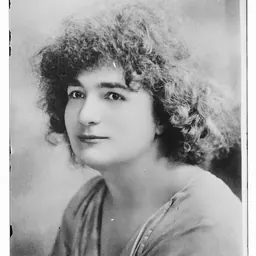
Contemporaries
People whose lives overlapped Bucura Dumbravă's


Frequently asked questions
Who was Bucura Dumbravă?
Romanian writer
When was Bucura Dumbravă born?
Bucura Dumbravă was born on 28 December 1868 in Bratislava.
When did Bucura Dumbravă die?
Bucura Dumbravă died on 26 January 1926 in Port Said.
What was Bucura Dumbravă's occupation?
Bucura Dumbravă was a pianist, essayist, biographer, music critic, writer and mountaineer.
What nationality was Bucura Dumbravă?
Bucura Dumbravă was Romanian and Austrian.
Sources & further reading
Cite this page
APA: Biography.guide. (2026). Bucura Dumbravă. https://biography.guide/bucura-dumbrava/
MLA: "Bucura Dumbravă." Biography.guide, https://biography.guide/bucura-dumbrava/.
Chicago: "Bucura Dumbravă." Biography.guide. https://biography.guide/bucura-dumbrava/.
Data last updated: 2026-09-20 · Spot an error? Report a correction.
Page generated 2026-09-27 05:22 UTC